• Product
  • Suppliers
  • Manufacturers
  • Solutions
  • Free tools
  • Knowledges
  • Experts
  • Communities
Search


Free Expert Guides on Power Systems, Circuit Design & Electrical Troubleshooting

Access free engineering resources from IEE Business—covering power design, circuit layout, equipment selection, and troubleshooting. Expert-developed guides help engineers, procurement, and project teams make better decisions. Stay ahead on smart grids, renewables, efficiency, and AI tools. Improve reliability, reduce downtime, and enhance outcomes with real-world solutions. Explore our knowledge hub today.
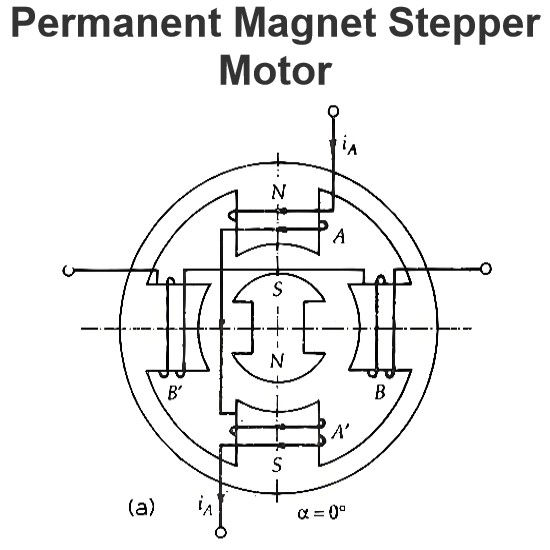
Permanent Magnet Stepper Motor
The permanent magnet stepper motor features a stator construction that closely resembles that of the single - stack variable reluctance motor. Its rotor, cylindrical in shape, is composed of permanent magnet poles made from high - retentivity steel. On the stator, the concentrating windings situated on diametrically opposite poles are connected in series, thereby forming a two - phase winding.The alignment of the rotor poles with the stator teeth is contingent upon the excitation of the winding.
04/19/2025
Consult
Tip
Consult
Tip
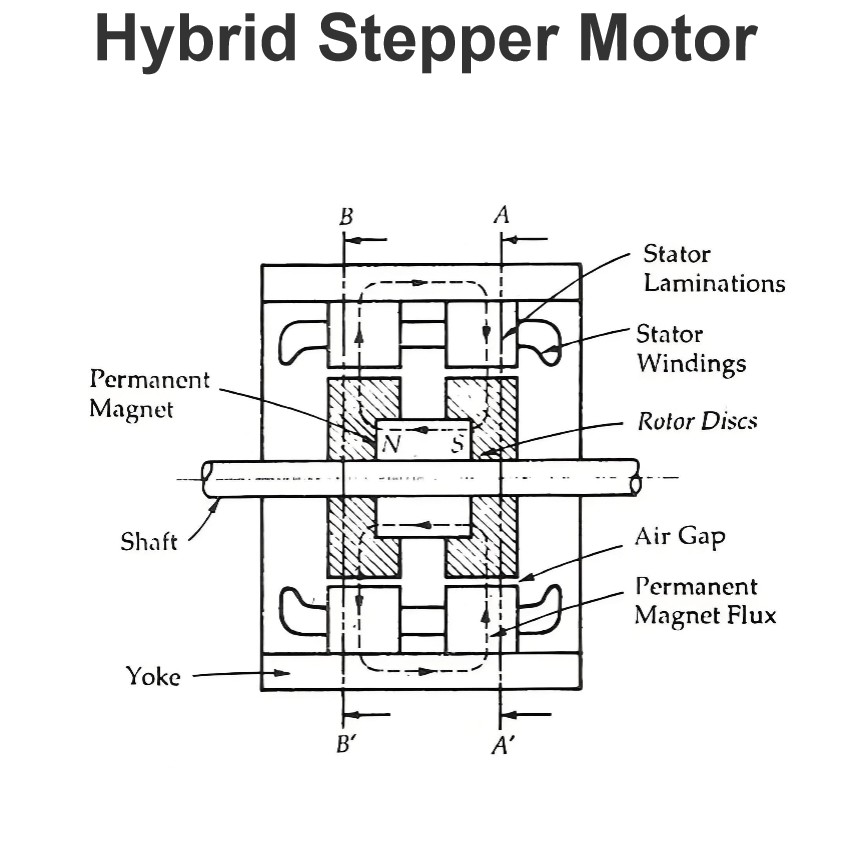
Hybrid Stepper Motor
Meaning and Working of Hybrid Stepper MotorThe term “Hybrid” denotes a combination or mixture. A Hybrid Stepper Motor integrates the characteristics of both the Variable Reluctance Stepper Motor and the Permanent Magnet Stepper Motor. At the core of the rotor, an axial permanent magnet is incorporated. This magnet is magnetized to generate a pair of poles, namely the North (N) and South (S) poles, as illustrated in the figure below:End caps are installed at both ends of the axial magnet. These e
04/18/2025
Consult
Tip
Consult
Tip
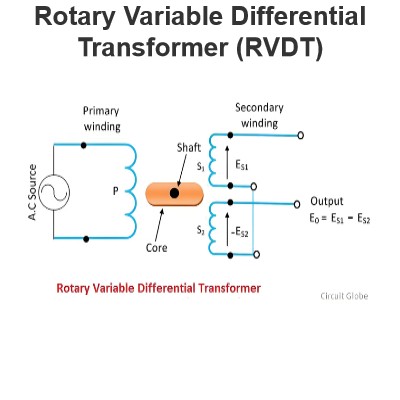
Rotary Variable Differential Transformer (RVDT)
Rotary Variable Differential Transformer (RVDT)The Rotary Variable Differential Transformer (RVDT) is an electromechanical transducer that transforms mechanical motion into an electrical signal. It comprises a rotor and a stator. The rotor is linked to the conductor, while the stator houses the primary and secondary windings.The circuit of the Rotary Variable Differential Transformer (RVDT) is shown in the figure below. The working principle of the RVDT is similar to that of the Linear Variable
04/10/2025
Consult
Tip
Consult
Tip
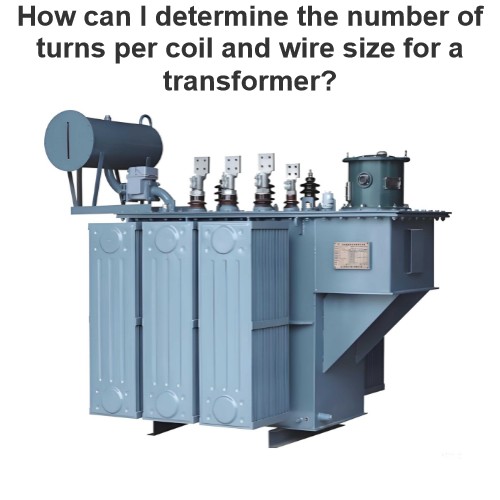
How can I determine the number of turns per coil and wire size for a transformer?
How can I determine the number of turns per coil and wire size for a transformer?Determining the number of turns and wire size for transformer coils requires considering voltage, current, frequency, core characteristics, and load requirements. Below are the detailed steps and formulas:I. Define Basic Transformer Parameters Input/Output Voltage (V1,V2): Primary and secondary voltages (in volts). Rated Power (P): Transformer capacity (in VA or watts). Operating Frequency (f): Typically 50 Hz or 60
04/08/2025
Consult
Tip
Consult
Tip
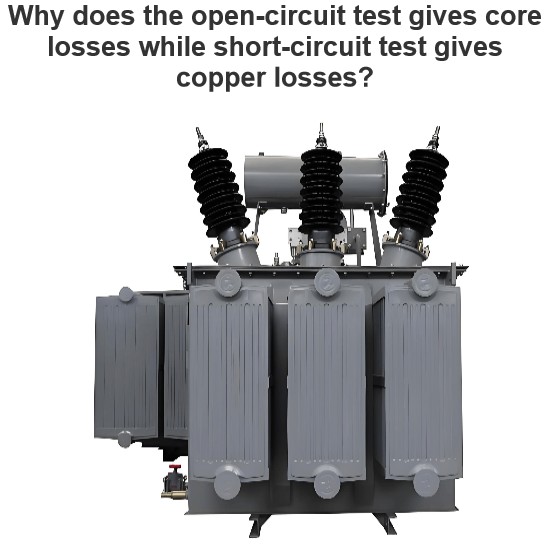
Why does the open-circuit test gives core losses while short-circuit test gives copper losses?
Open circuit tests and short circuit tests are two fundamental methods used in transformer testing to separately determine core losses and copper losses.Open Circuit Test (No-Load Test)In an open circuit test, a rated voltage is typically applied to one winding while the other winding is left open. This setup is primarily used to measure core losses for the following reasons:Core losses mainly consist of hysteresis losses and eddy current losses, which occur in the transformer's core. When an AC
03/07/2025
Consult
Tip
Consult
Tip
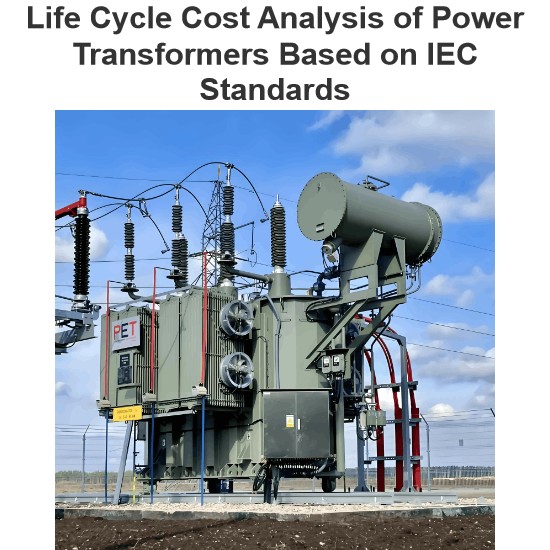
Life Cycle Cost Analysis of Power Transformers Based on IEC Standards
Life Cycle Cost Analysis of Power Transformers Based on IEC StandardsCore Framework Under IEC StandardsAccording to IEC 60300-3-3, the life cycle cost (LCC) of power transformers includes five stages: Initial Investment Costs: Procurement, installation, and commissioning (e.g., 20% of total LCC for a 220kV transformer). Operational Costs: Energy losses (60%-80% of LCC), maintenance, and inspections (e.g., annual savings of 2,600 kWh for a 1250kVA dry-type transformer). Decommissioning Costs: Res
02/25/2025
Consult
Tip
Consult
Tip
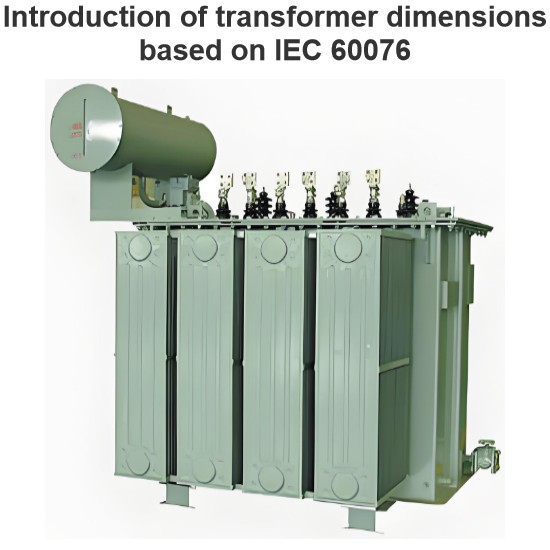
Introduction of transformer dimensions based on IEC 60076
Relationship Between Rated Capacity and DimensionsDefinition of Rated Capacity: According to IEC 60076-1, the rated capacity is the maximum apparent power (kVA or MVA) allowed under continuous load, ensuring compliance with steady-state temperature rise and voltage regulation requirements.Key Parameters Affecting Dimensions: No-load loss (P0)and load loss (Pk)directly influence the physical size of the core and windings. Short-circuit impedance (%) correlates with winding turns and insulation di
02/22/2025
Consult
Tip
Consult
Tip
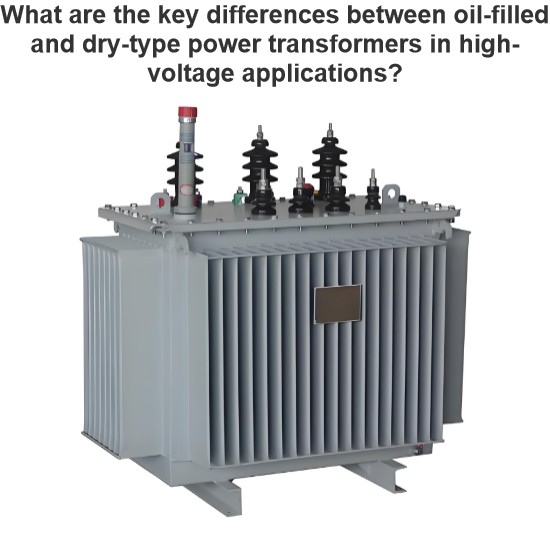
What are the key differences between oil-filled and dry-type power transformers in high-voltage applications ?
Insulating medium Oil - filled type: It uses insulating oil (such as mineral oil, silicone oil) as the main insulating medium. The iron core and coils are immersed in the oil. The insulating property of the oil is utilized to isolate conductors with different potentials, preventing short - circuits and discharges. Dry - type: It adopts air or solid insulating materials, such as epoxy resin, as the insulating medium. Materials like epoxy resin are wrapped around the coils, serving as insulation a
02/19/2025
Consult
Tip
Consult
Tip
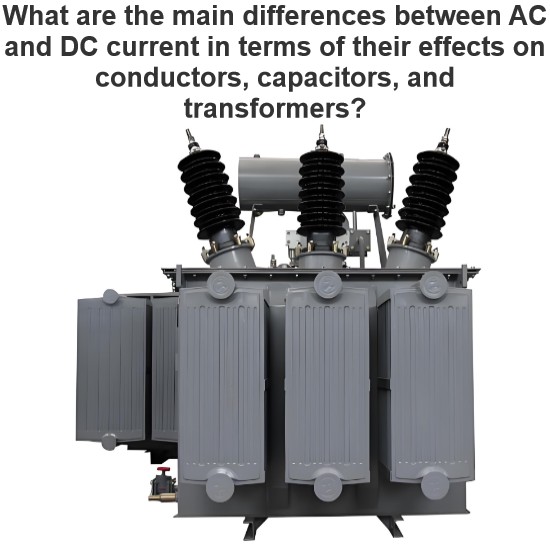
What are the main differences between AC and DC current in terms of their effects on conductors, capacitors, and transformers?
Differences in the Impact of AC and DC on Conductors, Capacitors, and TransformersThe effects of alternating current (AC) and direct current (DC) on conductors, capacitors, and transformers differ significantly, primarily in the following aspects:Impact on Conductors Skin Effect: In AC circuits, due to electromagnetic induction, the current tends to flow near the surface of the conductor, a phenomenon known as the skin effect. This results in a reduced effective cross-sectional area of the condu
02/15/2025
Consult
Tip
Consult
Tip
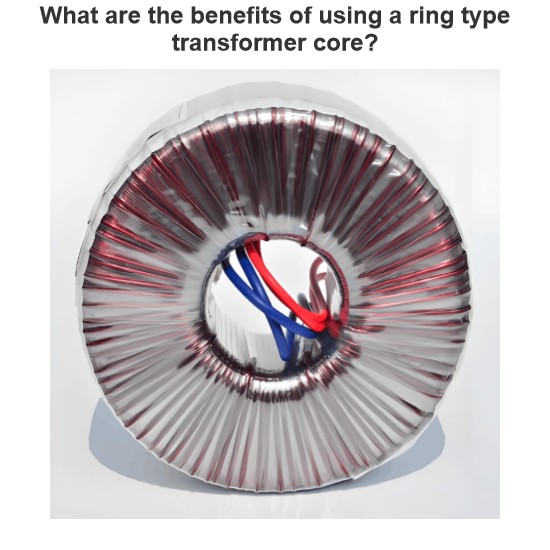
What are the benefits of using a ring type transformer core?
Using a toroidal transformer core offers several advantages:Reduced Magnetic Losses: The structure of the toroidal core provides a more uniform and efficient path for magnetic flux, which helps reduce hysteresis and eddy current losses. Its circular cross-section allows the magnetic field generated by the winding currents to distribute more evenly throughout the core, improving efficiency.Lower Noise: Toroidal transformers generate less mechanical noise during operation. This is because the toro
02/07/2025
Consult
Tip
Consult
Tip
Send inquiry
+86
Click to upload file
Download
Get the IEE Business Application
Use the IEE-Business app to find equipment, obtain solutions, connect with experts, and participate in industry collaboration anytime, anywhere—fully supporting the development of your power projects and business.