• Product
  • Suppliers
  • Manufacturers
  • Solutions
  • Free tools
  • Knowledges
  • Experts
  • Communities
Search


Free Expert Guides on Power Systems, Circuit Design & Electrical Troubleshooting

Access free engineering resources from IEE Business—covering power design, circuit layout, equipment selection, and troubleshooting. Expert-developed guides help engineers, procurement, and project teams make better decisions. Stay ahead on smart grids, renewables, efficiency, and AI tools. Improve reliability, reduce downtime, and enhance outcomes with real-world solutions. Explore our knowledge hub today.
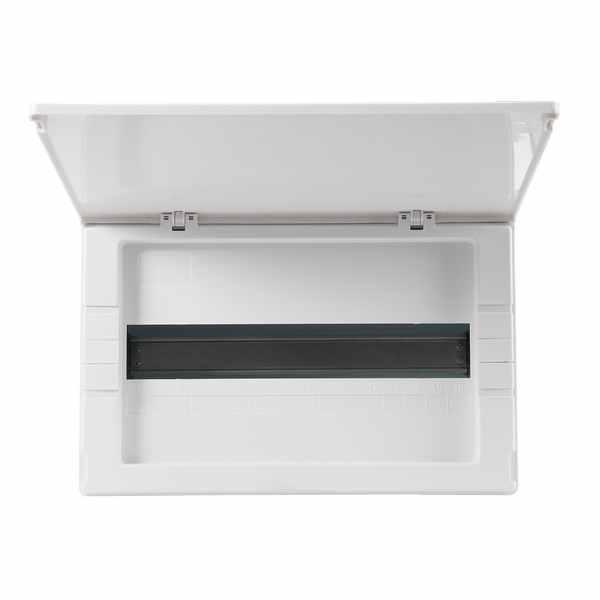
Analysis on the Installation of Assembled Distribution Cabinets and Distribution Boxes in Electrical Engineering
1 Personnel TrainingFirst, improve the operational management system for distribution transformers. Institutionalization is a crucial means for transformer safety management. As errors and faults are inevitable in distribution management, it is necessary to establish a strict reward and punishment mechanism to regulate employee discipline and work behavior. Only with standardized systems can staff motivation be fully mobilized, preventing situations like passive work evasion and serious negative
10/17/2025
Consult
Tip
Consult
Tip
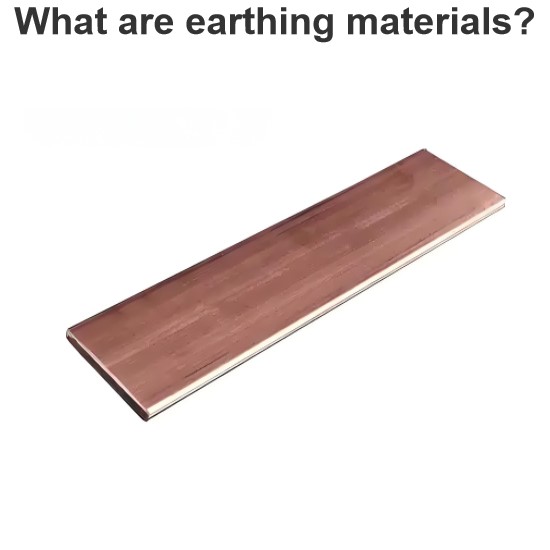
What are earthing materials?
Grounding MaterialsGrounding materials are conductive materials used for the grounding of electrical equipment and systems. Their primary function is to provide a low-impedance path to safely direct current into the earth, ensuring personnel safety, protecting equipment from overvoltage damage, and maintaining system stability. Below are some common types of grounding materials:1.Copper Characteristics: Copper is one of the most commonly used grounding materials due to its excellent conductivity
12/21/2024
Consult
Tip
Consult
Tip
What are the reasons for the excellent high - and - low temperature resistance of silicone rubber?
Reasons for the Excellent High and Low-Temperature Resistance of Silicone RubberSilicone rubber (Silicone Rubber) is a polymer material primarily composed of siloxane (Si-O-Si) bonds. It exhibits outstanding resistance to both high and low temperatures, maintaining flexibility at extremely low temperatures and enduring prolonged exposure to high temperatures without significant aging or performance degradation. Below are the main reasons for the excellent high and low-temperature resistance of s
12/20/2024
Consult
Tip
Consult
Tip
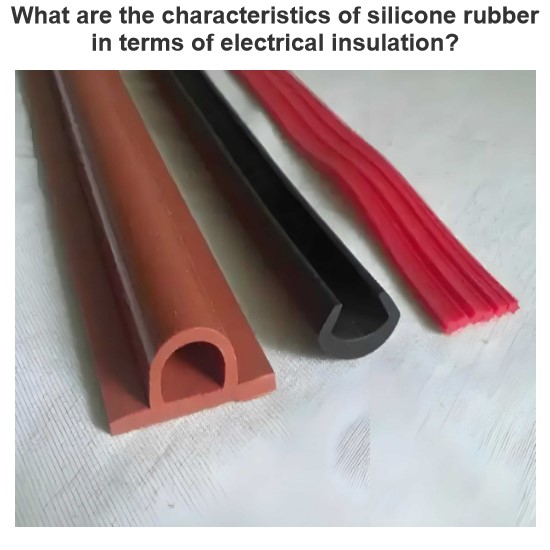
What are the characteristics of silicone rubber in terms of electrical insulation?
Characteristics of Silicone Rubber in Electrical InsulationSilicone rubber (Silicone Rubber, SI) possesses several unique advantages that make it an essential material in electrical insulation applications, such as composite insulators, cable accessories, and seals. Below are the key features of silicone rubber in electrical insulation:1. Excellent Hydrophobicity Characteristics: Silicone rubber has inherent hydrophobic properties, which prevent water from adhering to its surface. Even in humid
12/19/2024
Consult
Tip
Consult
Tip
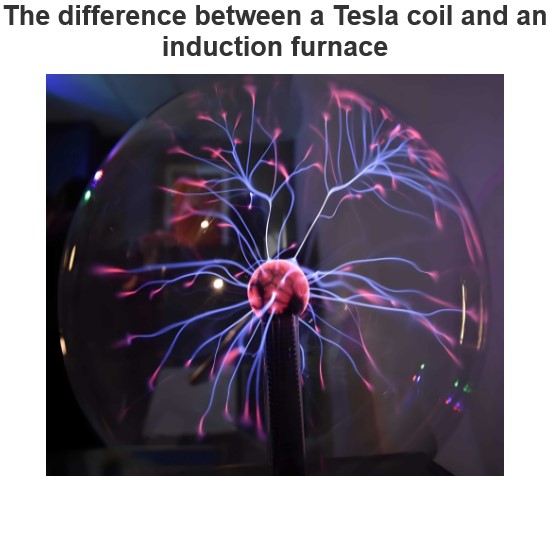
The difference between a Tesla coil and an induction furnace
Differences Between a Tesla Coil and an Induction FurnaceAlthough both the Tesla coil and the induction furnace utilize electromagnetic principles, they differ significantly in design, working principles, and applications. Below is a detailed comparison of the two:1. Design and StructureTesla Coil:Basic Structure: A Tesla coil consists of a primary coil (Primary Coil) and a secondary coil (Secondary Coil), typically including a resonant capacitor, spark gap, and step-up transformer. The secondar
12/12/2024
Consult
Tip
Consult
Tip
What is Pmmc (permanent magnet moving coil)?
Permanent Magnet Moving Coil (PMMC)1. Basic StructureThe primary components of a Permanent Magnet Moving Coil (PMMC) include: • Permanent Magnet: Provides a stable magnetic field, typically using high-coercivity rare-earth magnets such as neodymium-iron-boron. • Moving Coil (Coil): Consists of fine wire wound into a coil, suspended within the air gap of the permanent magnet. When current flows through the coil, it experiences a force in the magnetic field, causing it to deflect. • Shaft and Bear
12/11/2024
Consult
Tip
Consult
Tip
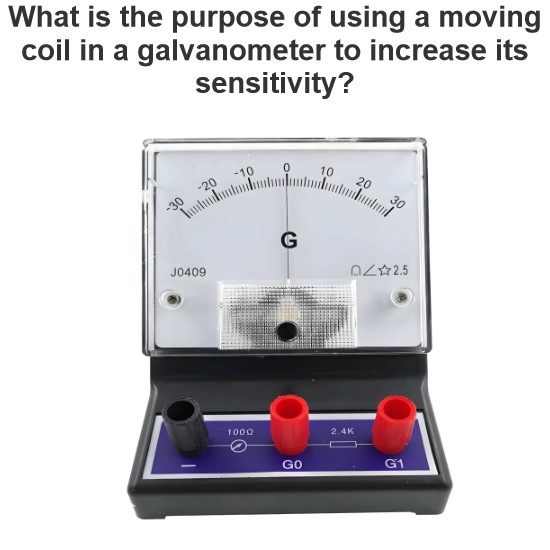
What is the purpose of using a moving coil in a galvanometer to increase its sensitivity?
The purpose of using a moving coil in a galvanometer to increase its sensitivity is to enhance the galvanometer's ability to detect very small changes in current. A moving coil galvanometer is a highly sensitive instrument commonly used to detect and measure very small currents. Here are the specific purposes and principles behind using a moving coil to increase sensitivity:PurposesIncrease Sensitivity:A moving coil galvanometer can detect extremely small current changes, typically in the microa
11/12/2024
Consult
Tip
Consult
Tip
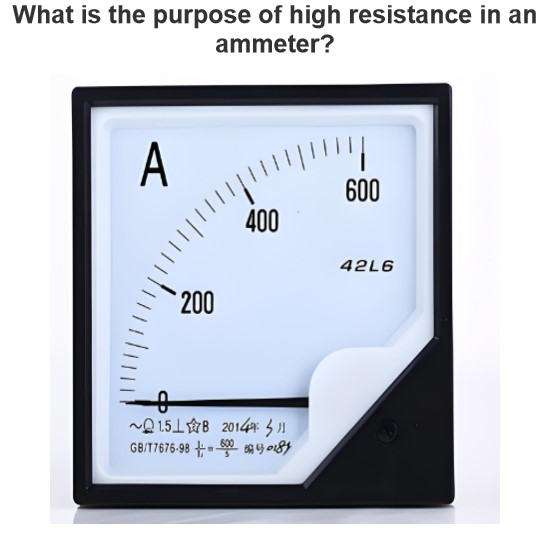
What is the purpose of high resistance in an ammeter?
In an ammeter, high resistance serves several important purposes, especially when the ammeter needs to measure large currents or is used in specific circuit configurations. Here are the main purposes of high resistance in an ammeter:1. Shunt ResistorWhen measuring large currents, an ammeter typically cannot handle the entire current directly, as this could damage the ammeter. Therefore, a low-resistance shunt resistor is added to the circuit. The shunt resistor diverts most of the current, allow
11/12/2024
Consult
Tip
Consult
Tip
What are the benefits of motion sensing lights?
Smart Sensing and ConvenienceMotion-sensing lights utilize sensing technology to automatically detect the surrounding environment and human activity, turning on when someone passes by and turning off when no one is present. This intelligent sensing feature offers great convenience for users, eliminating the need to manually switch on lights, especially in the dark or dimly lit environments. It quickly illuminates the space, facilitating users' walking or engaging in other activities .Energy Savi
10/30/2024
Consult
Tip
Consult
Tip
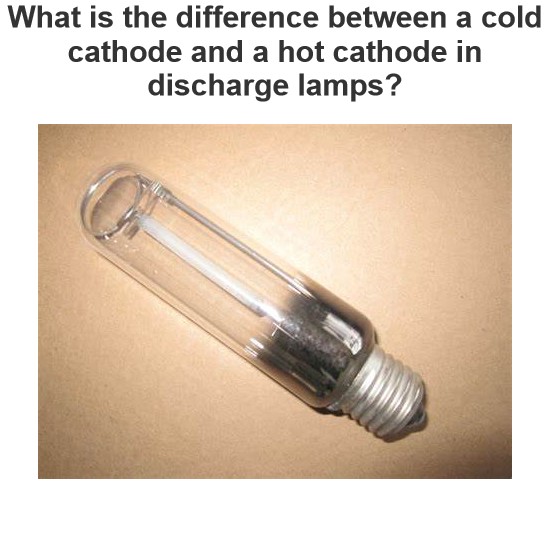
What is the difference between a cold cathode and a hot cathode in discharge lamps?
The main differences between the cold cathode and hot cathode in discharge lamps are as follows:Luminescence principle Cold Cathode: Cold cathode lamps generate electrons through glow discharge, which bombard the cathode to produce secondary electrons, thus sustaining the discharge process. The cathode current is mainly contributed by positive ions, resulting in a small current, so the cathode remains at a low temperature. Hot Cathode: A hot cathode lamp generates light by heating the cathode (u
10/30/2024
Consult
Tip
Consult
Tip
Send inquiry
+86
Click to upload file
Download
Get the IEE Business Application
Use the IEE-Business app to find equipment, obtain solutions, connect with experts, and participate in industry collaboration anytime, anywhere—fully supporting the development of your power projects and business.