• Product
  • Suppliers
  • Manufacturers
  • Solutions
  • Free tools
  • Knowledges
  • Experts
  • Communities
Search


Free Expert Guides on Power Systems, Circuit Design & Electrical Troubleshooting

Access free engineering resources from IEE Business—covering power design, circuit layout, equipment selection, and troubleshooting. Expert-developed guides help engineers, procurement, and project teams make better decisions. Stay ahead on smart grids, renewables, efficiency, and AI tools. Improve reliability, reduce downtime, and enhance outcomes with real-world solutions. Explore our knowledge hub today.
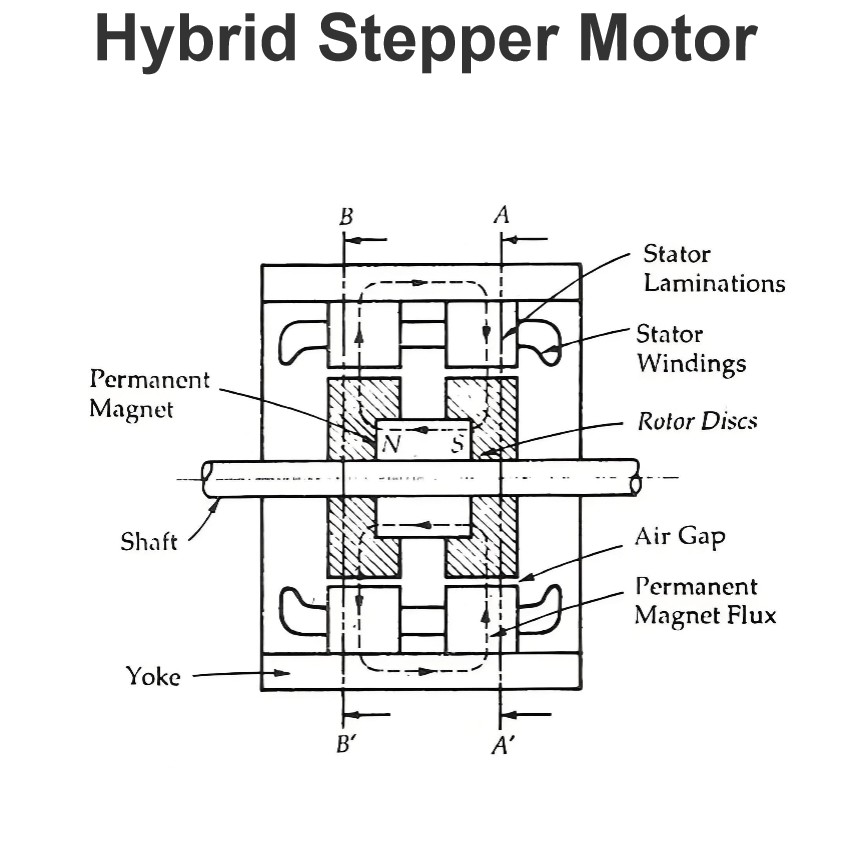
Hybrid Stepper Motor
Meaning and Working of Hybrid Stepper MotorThe term “Hybrid” denotes a combination or mixture. A Hybrid Stepper Motor integrates the characteristics of both the Variable Reluctance Stepper Motor and the Permanent Magnet Stepper Motor. At the core of the rotor, an axial permanent magnet is incorporated. This magnet is magnetized to generate a pair of poles, namely the North (N) and South (S) poles, as illustrated in the figure below:End caps are installed at both ends of the axial magnet. These e
04/18/2025
Consult
Tip
Consult
Tip
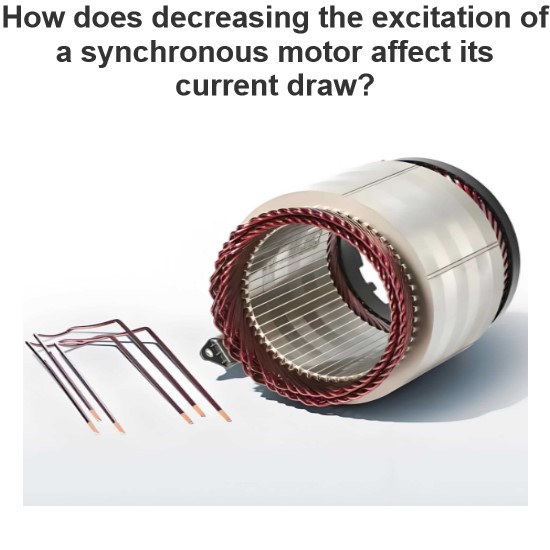
How does decreasing the excitation of a synchronous motor affect its current draw?
Effects of Reducing Excitation on Current Consumption in Synchronous MotorsReducing the excitation of a synchronous motor has significant effects on its current consumption, primarily impacting several key aspects:1. Changes in Armature CurrentThe armature current (i.e., stator current) of a synchronous motor consists of two components: active current and reactive current. Together, these determine the total armature current. Active Current: Related to the mechanical power output of the motor, t
01/11/2025
Consult
Tip
Consult
Tip
What is the difference between wound rotor induction machine and self-excited induction machine?
Differences Between Wound Rotor Induction Motors and Squirrel Cage Induction MotorsWound Rotor Induction Motors (WRIM) and Squirrel Cage Induction Motors (SCIM) are two common types of induction motors that differ in structure, performance, and application. Below are the key distinctions between them:1. Rotor ConstructionWound Rotor Induction Motor (WRIM): The rotor consists of three-phase windings connected to external circuits via slip rings and brushes. This allows the rotor windings to be co
12/26/2024
Consult
Tip
Consult
Tip
What impact does rotor-stator proximity have on heat generation?
Impact of the Distance Between Rotor and Stator on HeatingIn electric motors, the distance between the rotor and stator (known as the air gap) significantly affects the motor's heating performance. The size of the air gap directly influences the motor's electromagnetic, mechanical, and thermal properties. Below are the specific impacts of the air gap on heating:1. Impact on Electromagnetic Performance Flux Density Changes: The size of the air gap directly affects the magnetic flux density within
12/12/2024
Consult
Tip
Consult
Tip
The difference between salient pole generators and non-salient pole generators
Differences Between Salient-Pole Generators and Nonsalient-Pole GeneratorsSalient-pole generators and nonsalient-pole generators are two common types of synchronous generators, differing significantly in structure, performance, and application. Below is a detailed comparison of the two:1.Rotor Structure Salient-Pole Generator: Rotor Shape: In a salient-pole generator, the rotor has distinct magnetic poles that protrude from its surface, forming visible pole shoes. Each pole typically consists
12/09/2024
Consult
Tip
Consult
Tip
What is a complimentary flexible ultrasonic motor?
Complementary Flexible Ultrasonic Motor (CFUSM)1. Definition and OverviewA Complementary Flexible Ultrasonic Motor (CFUSM) is a novel type of ultrasonic motor that combines the advantages of traditional ultrasonic motors with flexible structures and complementary design to enhance performance. CFUSM primarily utilizes the converse piezoelectric effect of piezoelectric materials to generate mechanical motion at high frequencies, achieving either rotational or linear movement. Compared to conventi
12/05/2024
Consult
Tip
Consult
Tip
What are the dynamics of induction and synchronous motors?
Dynamic Characteristics of Induction Motors and Synchronous MotorsInduction motors (Induction Motor) and synchronous motors (Synchronous Motor) are two common types of AC motors. They differ significantly in structure, operating principles, and dynamic characteristics. Below is an analysis of the dynamic characteristics of these two types of motors:1. Starting CharacteristicsInduction Motor:Induction motors typically have a high starting current, often 5 to 7 times the rated current. This is bec
12/05/2024
Consult
Tip
Consult
Tip
What are the similarities and differences between the wye and delta configurations?
The star (Y) and delta (Δ) configurations are two common types of connections in three-phase circuits. They find extensive use in electrical engineering, particularly in power systems and motor windings. Here are some similarities and differences between them:Similarities Basic Purpose: Both are used to connect a three-phase power supply or load. Phase Relationship: Ideally, both can achieve a balanced connection for three-phase power or loads. Relationship between Current and Voltage: In a symm
11/29/2024
Consult
Tip
Consult
Tip
What are some types of stepper motor?
Types of Stepper MotorsStepper motors are electromechanical devices that convert electrical pulse signals into angular or linear displacements. They are widely used in various precision control applications. Depending on their structure and working principles, stepper motors can be classified into several main types. Here are the primary types of stepper motors and their characteristics:1. Variable Reluctance Stepper MotorStructure: A variable reluctance stepper motor consists of a rotor with mu
11/28/2024
Consult
Tip
Consult
Tip
Winding of rectangular armature coils
Winding Methods for Rectangular Armature CoilsThe winding method for rectangular armature coils depends on specific application and design requirements. There are typically two main methods:1. Layer Winding (Single-Layer Winding)In this method, the wire is wound layer by layer along the edges of the rectangular core, with each turn closely packed against the previous turn, forming one or multiple layers. This method is suitable for applications requiring high-density windings and limited space.F
11/25/2024
Consult
Tip
Consult
Tip
Send inquiry
+86
Click to upload file
Download
Get the IEE Business Application
Use the IEE-Business app to find equipment, obtain solutions, connect with experts, and participate in industry collaboration anytime, anywhere—fully supporting the development of your power projects and business.