• Product
  • Suppliers
  • Manufacturers
  • Solutions
  • Free tools
  • Knowledges
  • Experts
  • Communities
Search


Free Expert Guides on Power Systems, Circuit Design & Electrical Troubleshooting

Access free engineering resources from IEE Business—covering power design, circuit layout, equipment selection, and troubleshooting. Expert-developed guides help engineers, procurement, and project teams make better decisions. Stay ahead on smart grids, renewables, efficiency, and AI tools. Improve reliability, reduce downtime, and enhance outcomes with real-world solutions. Explore our knowledge hub today.

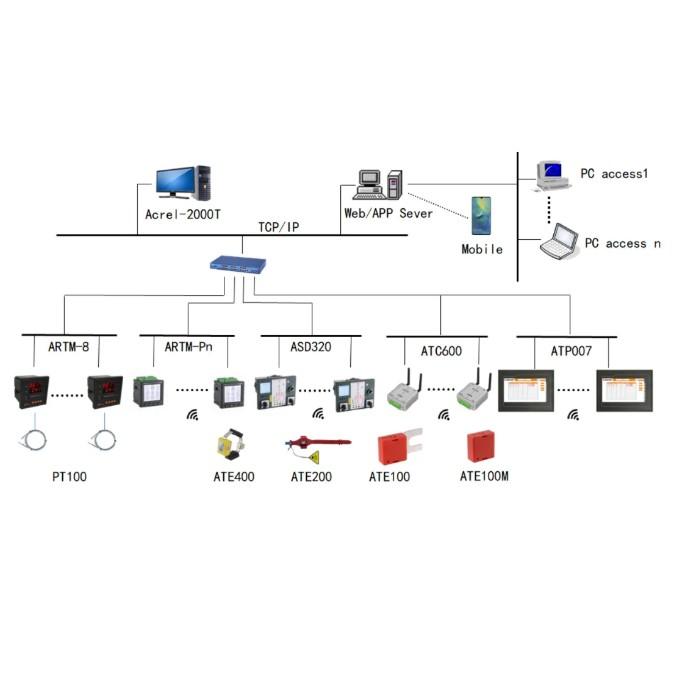
Smart Monitoring System for Wind Farms: Design & Implementation
1.BackgroundWind power generation converts the kinetic energy of wind into mechanical energy, and then transforms that mechanical energy into electrical energy—this is wind power generation.The principle of wind power generation involves using wind to rotate wind turbine blades, which then drive a gearbox to increase rotational speed, thereby driving the generator to produce electricity.Under China’s growing energy demands, wind power generation continues to expand, and wind farm construction is
09/25/2025
Consult
Tip
Consult
Tip
Optimized Design of Intelligent Power Monitoring Systems for Distributed Generation
Against the backdrop of global energy transition, distributed generation is increasingly becoming a vital component of power supply. With continuous advancements in renewable energy technologies, the widespread adoption of distributed energy sources such as solar and wind power has injected new momentum into the realization of a low-carbon economy. This model enhances energy utilization efficiency, reduces transmission losses, and improves the flexibility and reliability of power systems.Accordi
09/24/2025
Consult
Tip
Consult
Tip
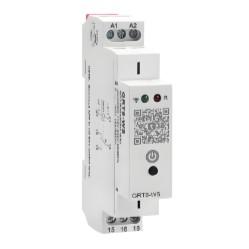
Automatic Closing Device for Low-Voltage Circuit Breakers Based on Time Relays
To ensure safe and stable grid operation and prevent load current surges from damaging electrical equipment during power restoration, all loads connected to distribution transformers must be disconnected before energizing.Therefore, low-voltage circuit breakers are equipped with an undervoltage release function: when a transformer is de-energized due to maintenance or line faults, the loss of voltage on the low-voltage bus causes the branch circuit breaker to trip automatically. After the transf
09/16/2025
Consult
Tip
Consult
Tip
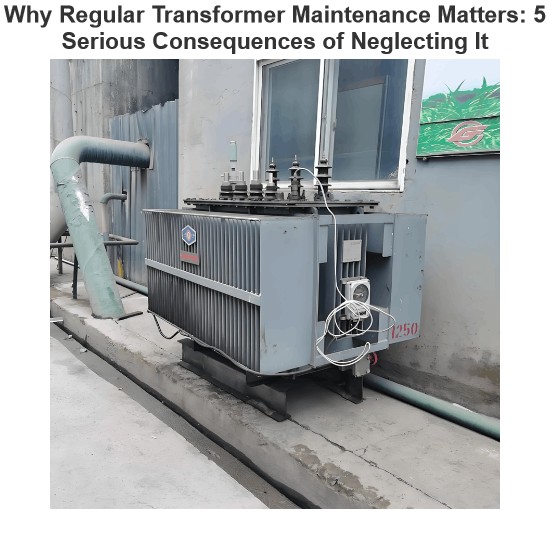
Why Regular Transformer Maintenance Matters: 5 Serious Consequences of Neglecting It
I. Allowable TemperatureWhen a transformer is in operation, its windings and iron core generate copper loss and iron loss. These losses are converted into heat energy, causing the temperature of the transformer's iron core and windings to rise. If the temperature exceeds the allowable value for a long time, the insulation will gradually lose its mechanical elasticity and age.The temperature of each part of the transformer during operation is different: the winding temperature is the highest, fol
09/12/2025
Consult
Tip
Consult
Tip
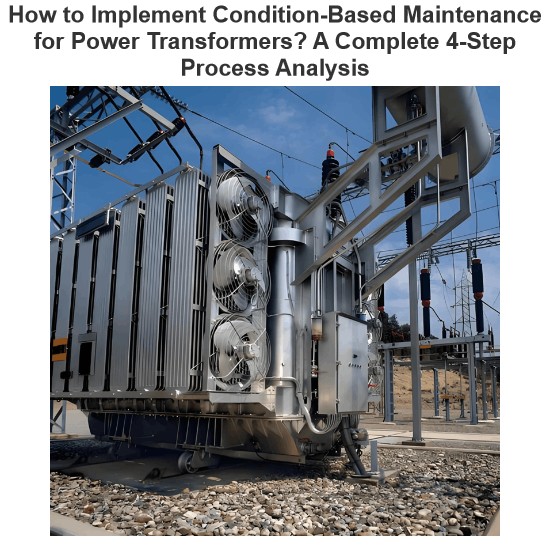
How to Implement Condition-Based Maintenance for Power Transformers? A Complete 4-Step Process Analysis
1. Definition of Condition-Based MaintenanceCondition-based maintenance refers to a maintenance method where decisions on whether and how to perform maintenance are determined based on the real-time operating status and health condition of equipment. It has no fixed maintenance methods or schedules. The prerequisite for condition-based maintenance is the establishment of equipment parameters and the comprehensive analysis of various operational information of the equipment, so as to make reasona
09/12/2025
Consult
Tip
Consult
Tip
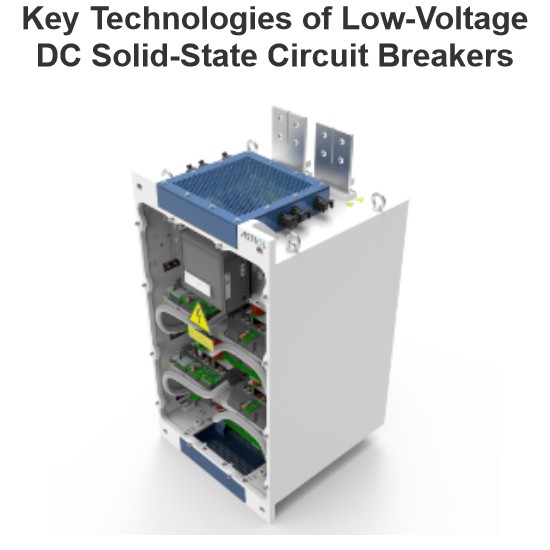
Key Technologies of Low-Voltage DC Solid-State Circuit Breakers
1 Technical Challenges1.1Stability of Device ParallelingIn practical applications, the current-carrying capacity of a single power electronic device is relatively limited. To meet high-current requirements, multiple devices are often connected in parallel. However, parameter variations between devices—such as slight differences in on-resistance and threshold voltage—can cause uneven current distribution during parallel operation. During switching transients, parasitic inductance and capacitance
09/02/2025
Consult
Tip
Consult
Tip
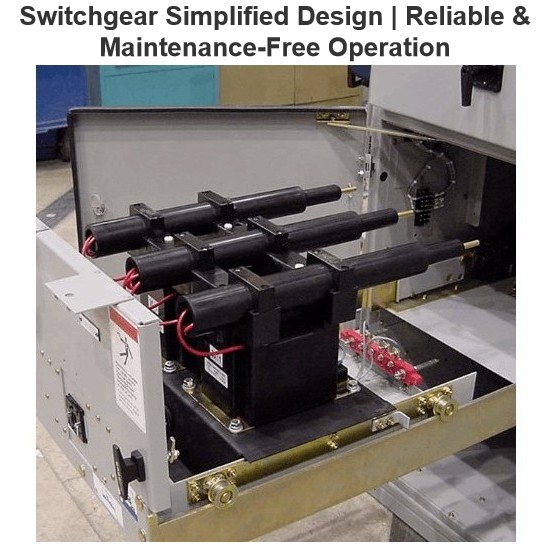
Switchgear Simplified Design | Reliable & Maintenance-Free Operation
Simplicity means fewer components. According to the principle that system reliability equals the product of individual component reliabilities, fewer parts lead to higher reliability.For PT trolleys in air-insulated switchgear, a simplified drawer-type design is adopted. On the cable compartment side, the PT trolley eliminates the need for a 200mm chassis to rack in and dispenses with blossom contacts. Instead, it uses the PT’s built-in fuse and striker mechanism, making direct contact
08/26/2025
Consult
Tip
Consult
Tip
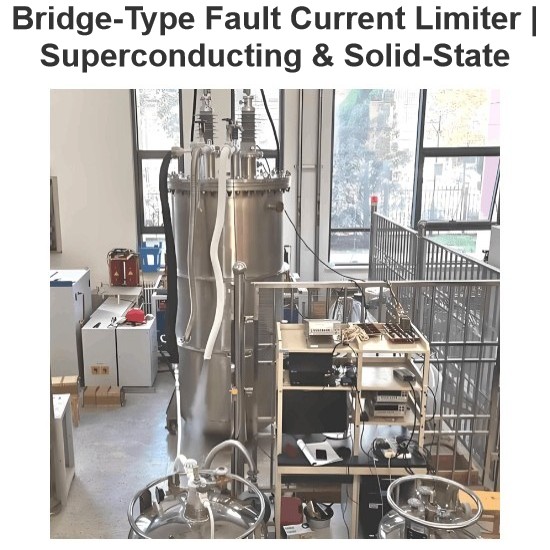
Bridge-Type Fault Current Limiter | Superconducting & Solid-State
1 Bridge-Type Superconducting Fault Current Limiter1.1 Structure and Operating Principle of the Bridge-Type SFCLFigure 1 shows the single-phase circuit diagram of the bridge-type SFCL, which consists of four diodes D₁ to D₄, a DC bias voltage source V_b, and a superconducting coil L. A circuit breaker CB is connected in series with the limiter to interrupt the fault current after it has been limited. The bias source V_b provides a bias current i_b to the superconducting coil L. The voltage of V_
08/25/2025
Consult
Tip
Consult
Tip
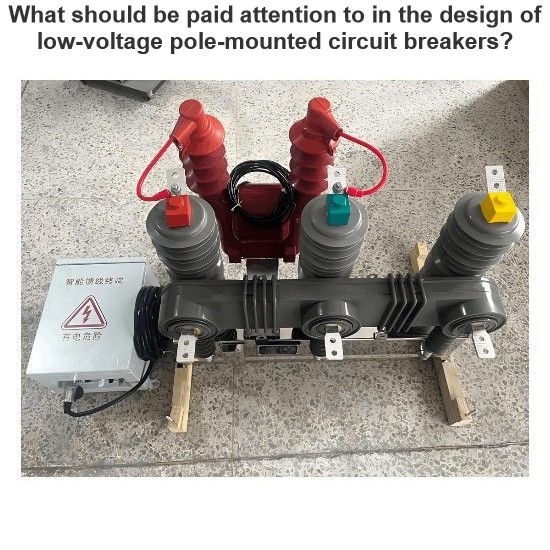
What should be paid attention to in the design of low-voltage pole-mounted circuit breakers?
Low-voltage pole-mounted circuit breakers are critical protective and control devices in power systems, whose design and operation directly affect system safety and reliability. Their design must comprehensively address environmental adaptability, electrical parameter coordination, and actuator selection to ensure stable operation under diverse conditions. During operation, strict adherence to safety protocols, regular maintenance, and proper handling of exceptional situations are essential to p
08/21/2025
Consult
Tip
Consult
Tip
Steep-Front Impulse Breakdown of HTV-Coated Composite Porcelain Insulators: Mechanisms, Testing, and Simulation
Porcelain and glass insulators exhibit excellent insulation performance and mechanical strength, but are prone to pollution flashover under severe contamination, threatening the stable operation of power grids. To enhance the pollution flashover resistance of external insulation, manufacturers commonly apply room-temperature vulcanized silicone rubber (RTV) coatings with superior hydrophobicity and hydrophobicity transfer properties onto insulator surfaces, thereby reducing flashover risks. Init
08/20/2025
Consult
Tip
Consult
Tip
Send inquiry
+86
Click to upload file
Download
Get the IEE Business Application
Use the IEE-Business app to find equipment, obtain solutions, connect with experts, and participate in industry collaboration anytime, anywhere—fully supporting the development of your power projects and business.