• Product
  • Suppliers
  • Manufacturers
  • Solutions
  • Free tools
  • Knowledges
  • Experts
  • Communities
Search


Free Expert Guides on Power Systems, Circuit Design & Electrical Troubleshooting

Access free engineering resources from IEE Business—covering power design, circuit layout, equipment selection, and troubleshooting. Expert-developed guides help engineers, procurement, and project teams make better decisions. Stay ahead on smart grids, renewables, efficiency, and AI tools. Improve reliability, reduce downtime, and enhance outcomes with real-world solutions. Explore our knowledge hub today.
Complete Guide to Plugging (Reverse Current) Braking for DC Motors
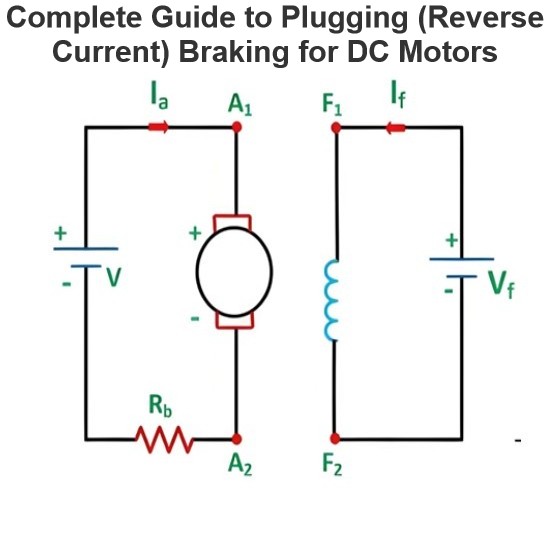
In plugging or reverse current braking, the armature terminals or the supply polarity of a separately excited or shunt DC motor is reversed while the motor is running. As a result, during plugging, the supply voltage V and the induced armature voltage Eb (also known as back EMF) act in the same direction. This causes the effective voltage across the armature circuit to become (V + Eb), nearly twice the supply voltage. The armature current reverses, producing a high braking torque. To limit the a
08/14/2025
Consult
Tip
Consult
Tip
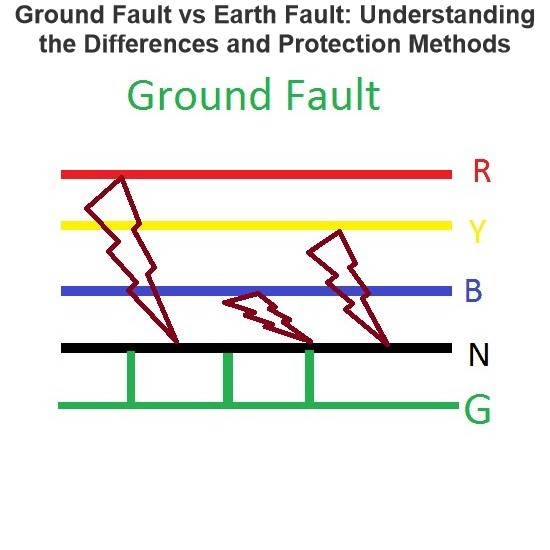
Ground Fault vs Earth Fault: Understanding the Differences and Protection Methods
What is a Ground Fault and an Earth Fault?Ground Fault:A ground fault occurs when an unintended connection (fault) develops between a live conductor and the ground or neutral point. In such a fault, the current flows directly to the ground. This can happen in various forms, such as a single line-to-ground fault (L-G), double line-to-ground fault (LL-G), or three line-to-ground fault (LLL-G).Ground faults are particularly severe because they can result in a large magnitude of fault current. If no
08/11/2025
Consult
Tip
Consult
Tip
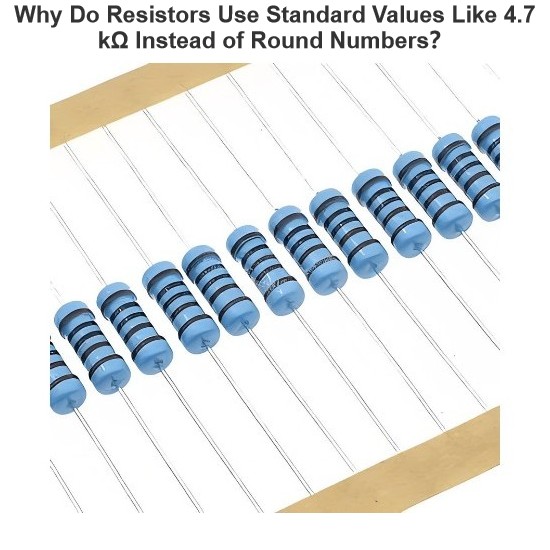
Why Do Resistors Use Standard Values Like 4.7 kΩ Instead of Round Numbers?
Many beginners in circuit design may find standard resistor values puzzling. Why are common values like 4.7 kΩ or 5.1 kΩ instead of round numbers such as 5 kΩ?The reason lies in the use of an exponential distribution system for resistor values, standardized by the International Electrotechnical Commission (IEC). This system defines a series of preferred values, including the E3, E6, E12, E24, E48, E96, and E192 series.For example: The E6 series uses a ratio of appro
08/07/2025
Consult
Tip
Consult
Tip
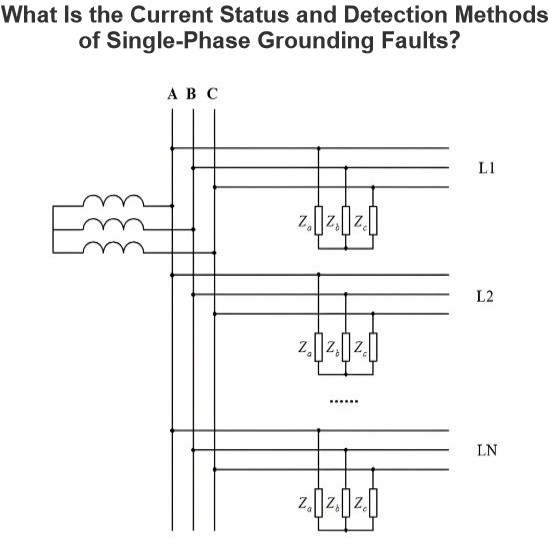
What Is the Current Status and Detection Methods of Single-Phase Grounding Faults?
Current Status of Single-Phase Grounding Fault DetectionThe low accuracy of single-phase grounding fault diagnosis in non-effectively grounded systems is attributed to several factors: the variable structure of distribution networks (such as looped and open-loop configurations), diverse system grounding modes (including ungrounded, arc-suppression coil grounded, and low-resistance grounded systems), the increasing annual ratio of cable-based or hybrid overhead-cable wiring, and complex fault typ
08/01/2025
Consult
Tip
Consult
Tip
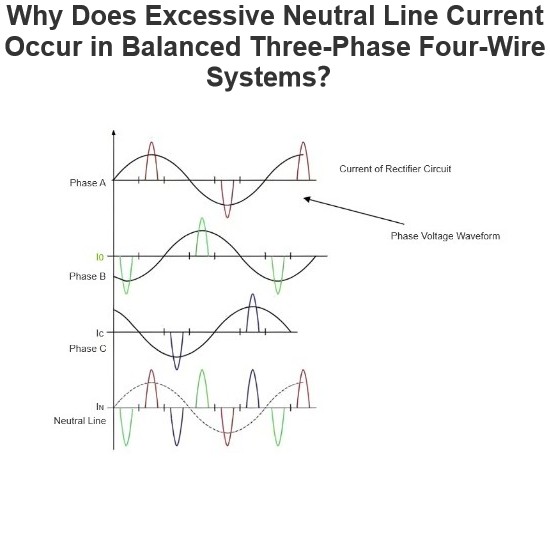
Why Does Excessive Neutral Line Current Occur in Balanced Three-Phase Four-Wire Systems?
In a three-phase four-wire power distribution system, it is a consensus among industry insiders that the neutral line current should be very small when the three-phase loads are balanced. However, more and more phenomena are subverting this concept.For example, the advertising light boxes around a building use fluorescent lighting with electronic ballasts. The loads on the three-phase lines are balanced, with each phase current being approximately 90A, but the neutral line current reaches 160A.I
08/01/2025
Consult
Tip
Consult
Tip
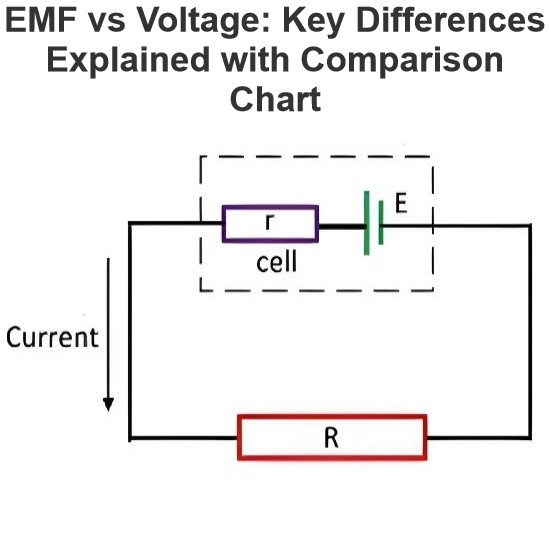
EMF vs Voltage: Key Differences Explained with Comparison Chart
One of the key differences between electromotive force (EMF) and voltage is that EMF refers to the energy supplied to charges, while voltage represents the energy required to move a unit charge from one point to another. Other distinctions between the two are detailed in the comparison chart below.Comparison ChartDefinition of VoltageVoltage is defined as the energy required to move a unit charge from one point to another. It is measured in volts (V) and denoted by the symbolV. Voltage is induce
08/01/2025
Consult
Tip
Consult
Tip
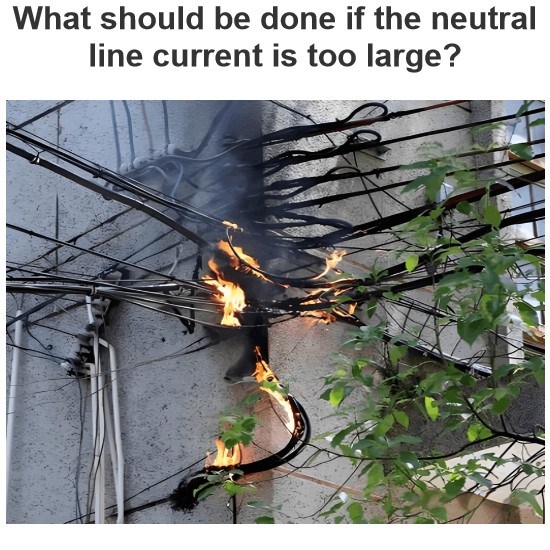
What should be done if the neutral line current is too large?
As we all know, if an electrical line exceeds its rated load, it will overheat severely, and may even cause a fire. For safety reasons, overcurrent protection devices are therefore installed on lines. Whenever the current in the line exceeds the rated value, the overcurrent protection device will automatically cut off the line to prevent fire. The "excessive neutral line current" mentioned here refers to the phenomenon where the neutral line current is excessively high (more than 1.5 times the p
08/01/2025
Consult
Tip
Consult
Tip
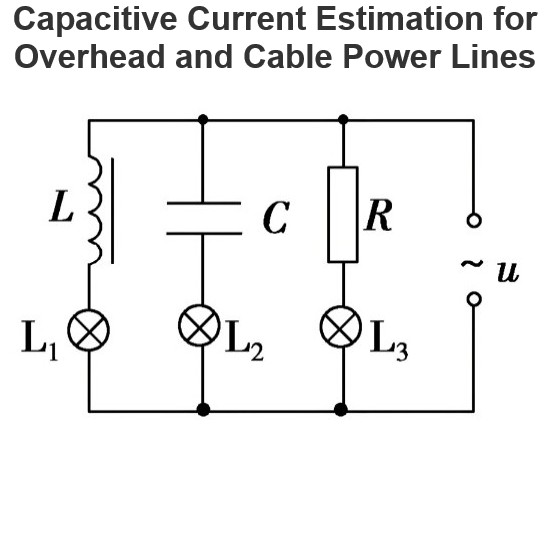
Capacitive Current Estimation for Overhead and Cable Power Lines
The capacitive current is mainly determined by the length of the feeder, the cross-sectional area of the conductor, the dielectric constant, the height above the ground, and the rated voltage. The specific estimation methods are as follows: Estimation of capacitive current of overhead lines: For overhead lines of 3 - 35 kV, the capacitance per phase to ground is usually 5000 - 6000 pF/km. Based on this, the value of the single-phase grounding capacitive current per kilometer for lines of differe
07/31/2025
Consult
Tip
Consult
Tip
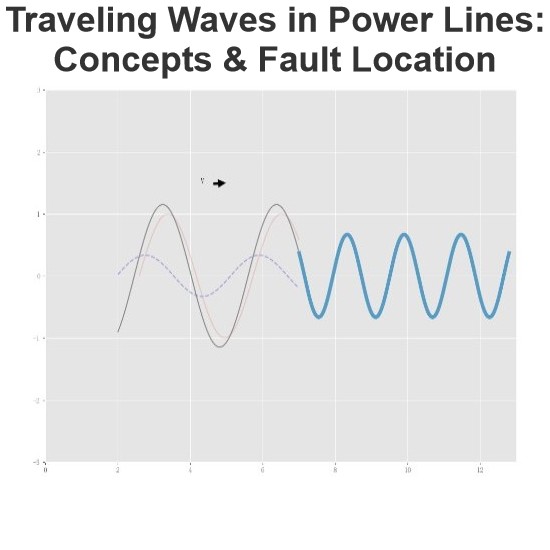
Traveling Waves in Power Lines: Concepts & Fault Location
Traveling Waves on LinesA traveling wave on a line refers to a voltage or current wave propagating along the line; it is also defined as a voltage or current signal traveling along a conductor. Steady-state traveling wave: A traveling wave propagating along the line during the normal operation of a system, generated by the system's power supply. Transient traveling wave: A suddenly occurring traveling wave during system operation, caused by ground faults, short-circuit faults, wire breakages, sw
07/28/2025
Consult
Tip
Consult
Tip
Working Voltage Explained: Definition, Importance, and Impact on Power Transmission
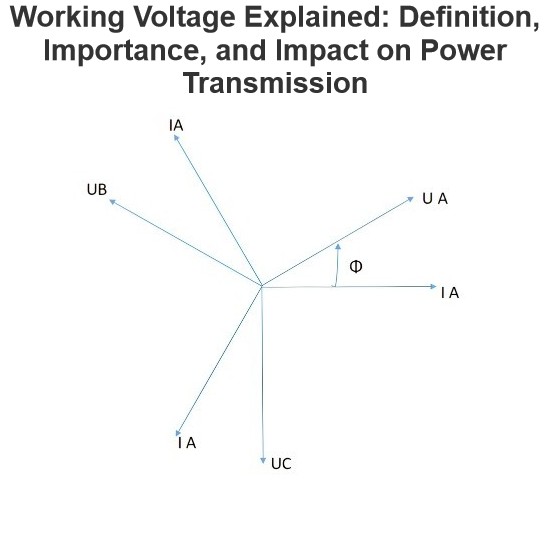
Working VoltageThe term "working voltage" refers to the maximum voltage that a device can withstand without sustaining damage or burning out, while ensuring the reliability, safety, and proper operation of both the device and associated circuits.For long-distance power transmission, the use of high voltage is advantageous. In AC systems, maintaining a load power factor as close to unity as possible is also economically necessary. Practically, heavy currents are more challenging to handle than hi
07/26/2025
Consult
Tip
Consult
Tip
Send inquiry
+86
Click to upload file
Download
Get the IEE Business Application
Use the IEE-Business app to find equipment, obtain solutions, connect with experts, and participate in industry collaboration anytime, anywhere—fully supporting the development of your power projects and business.