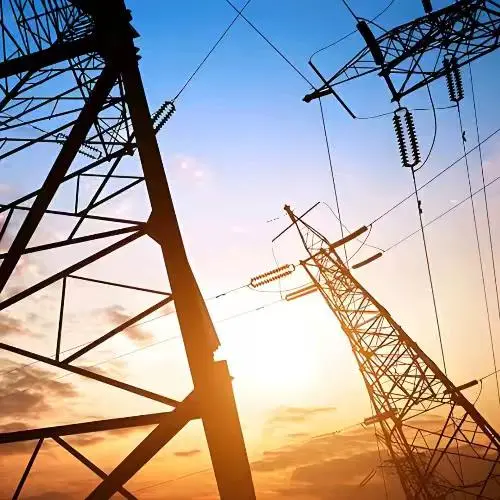
1. Application of Condition Monitoring Technology in UHV Transmission Lines
At present, the main characteristics of UHV (Ultra-High Voltage) transmission line condition monitoring technology in China are reflected in the following aspects:
Comprehensiveness: In general, during the implementation of monitoring technology, supporting facilities and integrated systems are required to ensure effective monitoring performance;
High value: UHV transmission line condition monitoring technology is a critical approach to ensuring the safe operation of power systems, significantly reducing equipment losses and safeguarding national property;
Prevention-oriented: The primary purpose of applying monitoring technology is to predict disasters in advance, thus exhibiting a prevention-focused feature;
Targeted application: Different monitoring technologies are specifically designed to predict and protect against particular types of hazards.
In summary, UHV transmission line condition monitoring technology is characterized by comprehensiveness, high value, prevention orientation, and targeted functionality.
2. Analysis of UHV Transmission Line Condition Monitoring Technology
In UHV transmission line condition monitoring, personnel utilize supporting equipment and integrated systems to monitor surrounding environments and weather conditions, thereby effectively ensuring stable operation of the power system. Therefore, the operation of UHV transmission line condition monitoring technology mainly covers the following aspects:
Environmental monitoring: To prevent damage caused by biological activities and other natural forces, personnel must monitor the environment around transmission lines to reduce potential safety risks and implement effective condition monitoring;
Lightning monitoring: Through lightning monitoring, personnel can mitigate the impact of extreme weather on UHV transmission lines and ensure normal power system operation;
nsulator monitoring: Insufficient insulation capability of insulators can easily cause tripping faults and affect power supply reliability. Hence, personnel use condition monitoring technology to assess insulator status—particularly contamination levels—and perform timely maintenance or replacement to guarantee stable power delivery.
Thus, through environmental monitoring, lightning monitoring, and insulator monitoring, personnel can ensure the safe and stable operation of the power supply system.
3. Application of Condition Monitoring Technology in UHV Ice Accumulation, Tower Maintenance, and Other Aspects
3.1 Application in Ice Accumulation Maintenance
Due to the extensive coverage of UHV transmission lines, lines in cold regions are prone to ice accumulation. Condition monitoring technology can effectively predict potential faults, enabling targeted maintenance. In ice-related maintenance, personnel use sensors installed on UHV transmission equipment to obtain real-time data on ice weight and thickness, achieving continuous monitoring of iced conductors.
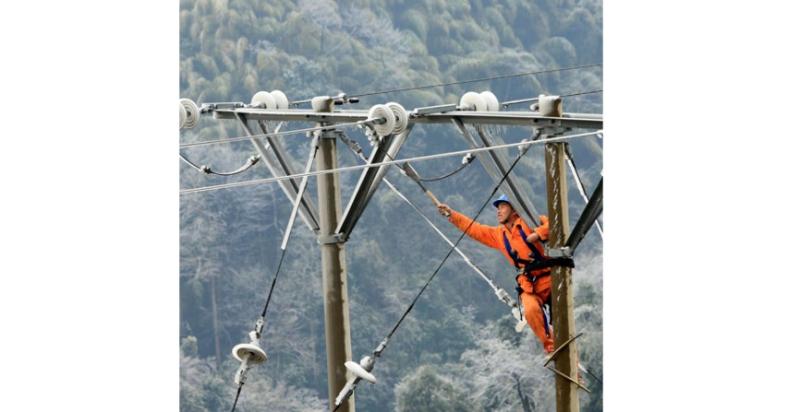
Simultaneously, environmental monitoring systems collect ambient parameters to provide a comprehensive understanding of line conditions. Relevant data is transmitted to a backend diagnostic system for analysis, which directly generates fault alerts. After receiving these alerts, management personnel can formulate effective maintenance plans based on actual conditions. Therefore, applying UHV condition monitoring technology in ice accumulation maintenance ensures stable operation of transmission lines in cold regions and promotes safe power system operation.
3.2 Application in Insulator Maintenance
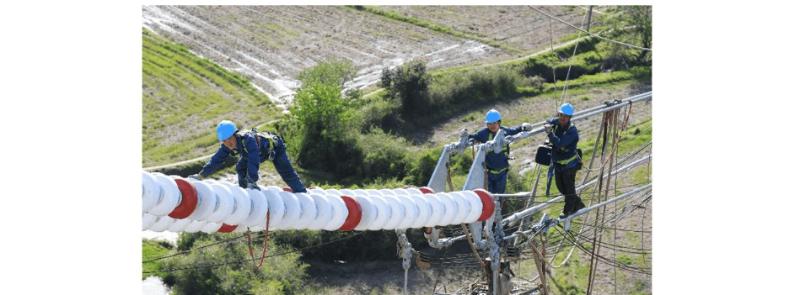
Insulators play a crucial role in UHV transmission lines; any failure can directly impact the entire line’s operation and service life. To ensure proper insulator function, personnel apply UHV condition monitoring technology for maintenance. During insulator maintenance, personnel may first de-energize the line and then use methods such as ash density method or equivalent salt deposit density (ESDD) to evaluate insulator condition.
Alternatively, sensors can continuously monitor surface leakage current parameters, transmitting data to a central station where specialists analyze contamination levels and implement appropriate maintenance measures. This application overcomes the limitations of traditional experience-based maintenance, making the process more scientific and standardized, thereby enhancing maintenance quality. Thus, using UHV condition monitoring technology in insulator maintenance effectively ensures normal insulator operation and improves power supply stability.
3.3 Application in Maintenance of UHV Lines in Special Geographic Regions
Due to unique geographic conditions, UHV lines in certain areas are vulnerable to strong winds, leading to equipment damage, national property loss, and reduced power supply stability. Personnel can leverage UHV condition monitoring technology to ensure safe operation in these regions. By continuously monitoring local meteorological data—such as temperature, wind speed, and wind direction—and combining it with sensor data from overhead lines to calculate conductor wind-induced swing, personnel can receive precise early warnings from backend systems and develop reliable maintenance strategies.
Additionally, optimization can be achieved using specific parameters like non-uniform wind pressure coefficients and instantaneous wind speeds, enhancing maintenance effectiveness. Therefore, applying UHV condition monitoring technology in special regions ensures safe power system operation during extreme wind events, reduces national losses, and supports sustainable development of the power industry.
3.4 Application in Tower Maintenance
During UHV transmission line operation, various external forces can cause tower tilting, threatening power system safety. Personnel can apply UHV condition monitoring technology to tower maintenance to further reduce operational risks. By integrating communication and monitoring systems, a new tower monitoring framework can be established to prevent tower collapse. This system accurately identifies issues such as tower deformation and foundation displacement, enabling timely maintenance planning. Moreover, in remote areas with poor signal conditions, technical teams have already begun developing GSM-based systems to support tower monitoring, providing strong technical backing. Thus, applying UHV condition monitoring technology in tower maintenance effectively prevents tower tilting and collapse incidents.
3.5 Application in Monitoring Platform Construction
To further ensure safe and stable power system operation, personnel can apply UHV condition monitoring technology to the construction of online monitoring and management platforms, thereby improving data utilization and enhancing maintenance capabilities. During platform development, personnel can establish open Web-standard data interfaces to unify data reception, promote standardized database construction, and facilitate data retrieval, storage, and management.
Additionally, integrating GPS and GIS technologies into UHV condition monitoring enables more accurate and efficient transmission line inspection. This optimizes monitoring workflows and improves operational efficiency. For example, according to a Sohu report on November 22, 2017, Yixinhai launched a holographic panoramic 3D GIS platform, making transmission line inspections more intuitive and efficient. Therefore, applying UHV condition monitoring technology in monitoring platform construction enhances maintenance standards and accelerates the advancement of the power industry.
4. Conclusion
In summary, UHV transmission line condition monitoring technology is a vital approach to ensuring stable and safe power supply. By applying this technology, personnel can ensure stable operation of transmission lines in cold regions, maintain normal insulator function, guarantee line safety during high-wind conditions, and improve work efficiency—thereby promoting further development of the power industry.