
The adoption of plant-based insulating oil as a replacement for conventional mineral oil in transformers represents a significant advancement in the low-carbonization and enhanced safety of power equipment. The advantages of plant insulating oil are primarily manifested in the following core dimensions:
Ultra-high flash point: The flash point of vegetable oil typically exceeds 300°C (classified as K-class insulating liquid), whereas conventional mineral oil has a flash point of approximately 160°C.
Application value: This fundamentally eliminates the risk of transformer explosion and fire. In substation design, it allows for a substantial reduction in fire safety clearances between equipment, and may even eliminate the need for fire-fighting water systems and oil collection pits. This makes it particularly suitable for densely populated areas, underground substations, and indoor applications.

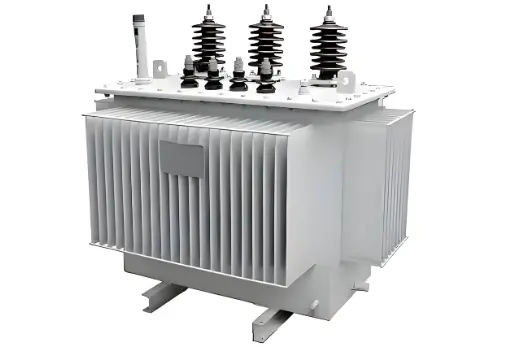
Vziman SM Series Three-Phase Oil-Immersed Distribution Transformer
High moisture saturation capacity: Vegetable oil has a vastly higher moisture saturation level than mineral oil (approximately tenfold higher). It continuously "absorbs" moisture from the insulating paper (kraft paper) into the oil, keeping the solid insulation consistently dry.
Application value: The aging of insulating paper is primarily a hydrolysis process driven by moisture and heat. Maintaining dryness significantly slows the decline of the paper's degree of polymerization (DP). Tests have shown that under the same elevated temperatures, the service life of insulating paper in vegetable-oil-filled transformers can be extended by 5 to 8 times compared to that in mineral oil.
Rapid biodegradability and non-toxicity: Vegetable oil is derived from renewable agricultural crops such as soybeans and rapeseed. It achieves a 28-day biodegradation rate of over 97% in natural environments and is non-toxic. Even in the event of leakage, it does not cause irreversible contamination to soil or groundwater.
Application value: In life-cycle assessment (LCA), the carbon footprint of vegetable oil is far lower than that of petroleum-derived mineral oil, perfectly aligning with the current trend toward low-carbonization in switchgear and power grids.

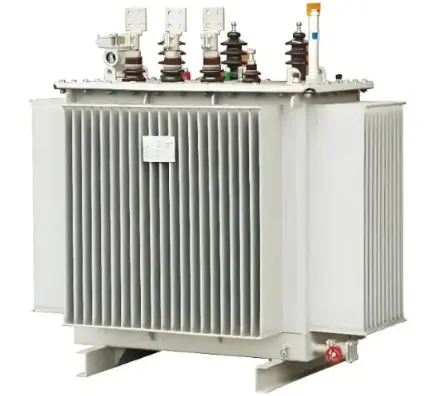
Vziman SM Series Fully sealed oil-immersed distribution transformer
Elevated hot-spot temperature allowance: Due to its protective effect on insulating paper and its extremely high flash point, vegetable-oil-filled transformers can be designed to allow higher maximum hot-spot temperatures (approximately 10–15°C higher than mineral-oil systems).
Application value: This means that for the same transformer footprint, greater peak overload capacity can be accommodated; alternatively, for the same rated capacity, the transformer can be designed more compactly.
While vegetable oil offers significant benefits, its oxidation susceptibility and high viscosity demand tailored design solutions. The Vziman SM Series inherently addresses these engineering challenges through its unique structural features:
Edited From:Echo