The core objective of distribution network fault handling is to isolate faults and restore power supply in the shortest possible time. As the core intelligent unit of distribution automation, the recloser controller works in coordination with sectionalizers, other reclosers, or the master station system to achieve a fully automated closed loop from "fault detection → nature determination → precise isolation → service restoration." This article provides a systematic analysis of its core role and implementation logic.
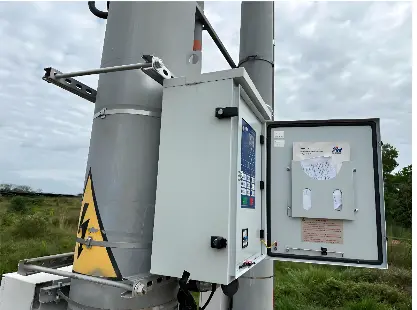
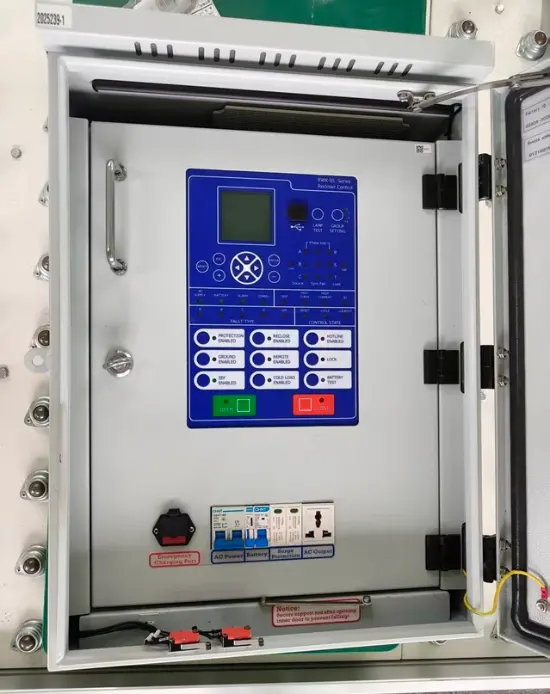
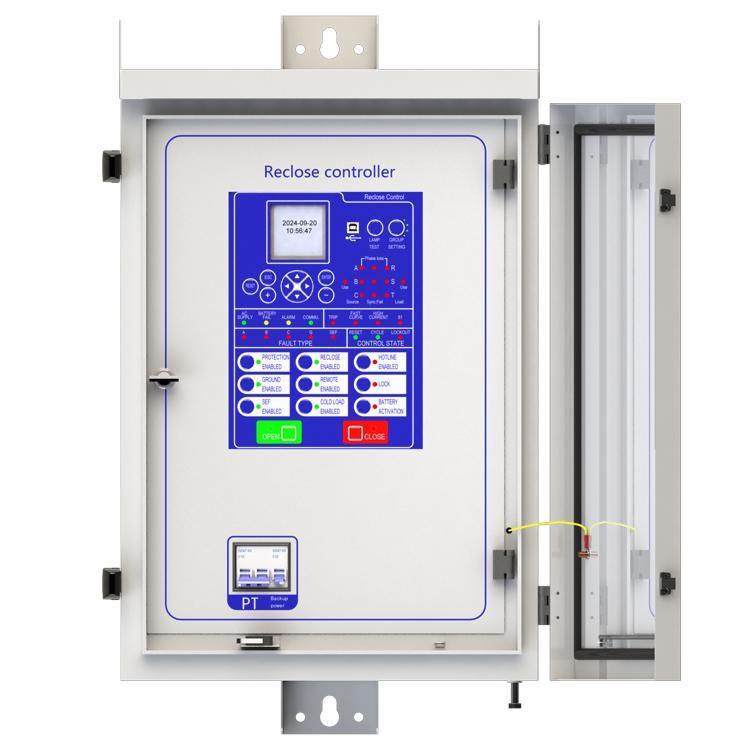
Advanced Recloser Controller
I. Core Foundation: The "Self-Contained" Capability of the Recloser Controller
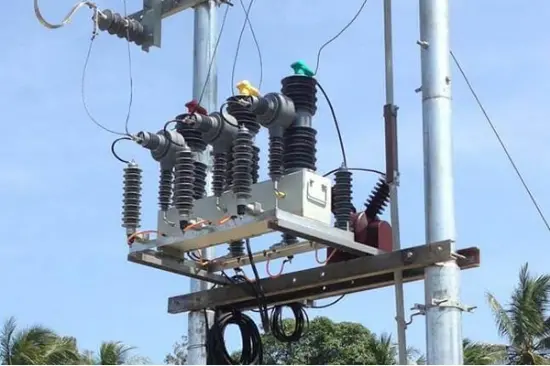
A recloser is a high-voltage switching device with self-contained control and protection functions. Its controller can independently complete fault detection, tripping, and multiple reclose operations without the need for an external independent relay protection device.
It should be clarified that "self-contained" does not mean completely independent of external support: modern recloser controllers typically require an external voltage transformer (TV/PT) to provide voltage signals and operating power. Some models use PT power extraction, batteries, supercapacitors, or TA power extraction as operating power sources, and only do not require an additional independent relay protection device.
Its core capabilities include:
-
Fault detection and tripping: Automatically detects line current and, upon confirming a fault, interrupts the fault current according to inverse-time protection characteristics;
-
Multiple reclosing: Performs multiple reclosing operations according to a preset sequence (such as "one fast, two slow," "two fast, two slow," "one fast, three slow," etc.) to distinguish transient faults (such as lightning strikes or tree branches touching lines) from permanent faults (such as broken conductors or insulation breakdown);
-
Automatic lockout and reset: Automatically resets after a successful reclose for a transient fault; after completing the predetermined number of reclosing operations for a permanent fault, locks out in the open state to isolate the faulted section.
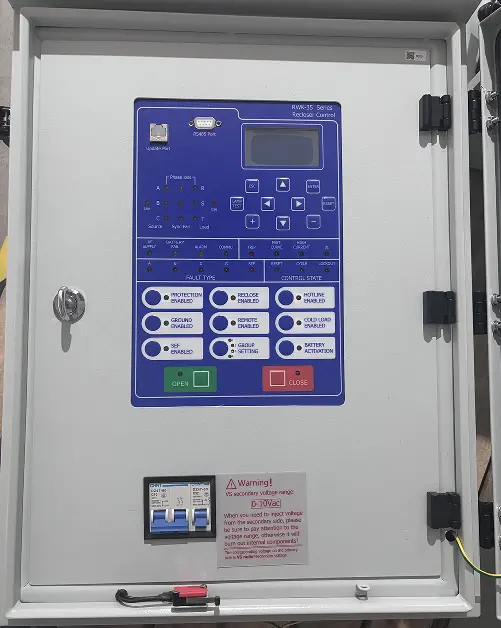
Recloser Controller | ANSI C37.60 Protection & DNP3.0
II. Key Prerequisite: The Capability Boundary Between Reclosers and Sectionalizers
The coordination between reclosers and sectionalizers (also known as sectionalizing switches) is the foundation of local-mode feeder automation (FA). The capability boundary between the two must be strictly distinguished:
-
Recloser: Has the ability to interrupt short-circuit current and can independently complete fault clearing and reclosing operations;
-
Sectionalizer: Can only interrupt load current, not short-circuit current. It relies on the upstream recloser/breaker to clear the fault, and is only responsible for isolating the faulted section.
Understanding this boundary is the prerequisite for mastering the subsequent fault location and isolation logic.
III. Core Coordination Modes for Fault Location and Isolation
1.Voltage-Time Type (Relies on Time-Sequence Coordination, No Communication Required)
This mode utilizes the sectionalizer's characteristics of "opening on loss of voltage and delayed closing on restored voltage," coordinated with the second reclosing operation of the substation outgoing breaker.
Key parameters:
-
X-time (closing delay): Must be greater than the tripping time of the source-side breaker, and must be less than the second reclosing delay. The X-times of sectionalizers must increase in steps to avoid simultaneous closing. Typical settings are 7 s, 14 s, 21 s, etc. (sectionalizing switches: 5–7 s; tie switches: 12–18 s), with a step difference of generally 7 s between adjacent sectionalizing switches;
-
Y-time (fault detection lockout time): Must be less than the second reclosing delay of the source-side recloser to ensure fault determination is completed before the second reclosing. Typical settings are 5 s or 10 s.
Operating process:
-
The fault causes a trip, the entire line loses voltage, and sectionalizers automatically open;
-
The recloser performs its first reclose (the first reclosing delay of the substation outgoing breaker is typically 15–20 seconds, which must be greater than the reclosing charging time), and sectionalizers close sequentially with delay according to their X-times;
-
After a sectionalizer closes, if voltage loss is detected again within the Y-time (i.e., closing onto the fault point causes the upstream breaker to trip), the section in which it is located is determined to be the faulted section, and it automatically locks out and no longer responds to restored voltage for closing; if voltage is maintained beyond the Y-time, the section is determined to be a normal section and remains closed;
-
The recloser performs its second reclose. The non-faulted sections on the source side have power restored, while the faulted section remains open due to lockout. The non-faulted sections on the load side are restored through transfer supply from the tie switch.
Fault isolation time: Depends on the X/Y time settings, typically 20–60 seconds. Multiple reclosing operations are required, causing multiple short-circuit current impacts on the system.
2.Overcurrent Pulse Counting Type (Relies on Current Counting, No Communication Required)
The sectionalizer records the number of times the upstream recloser interrupts fault current, and automatically opens and locks out after reaching a preset value.
Operating process (taking a preset count of 2 as an example):
-
A fault occurs, the recloser trips, and the sectionalizer records overcurrent pulse 1 (preset value not reached, remains closed);
-
The recloser performs its first reclose, closes onto the fault point again and trips, and the sectionalizer count reaches 2. During the no-current interval (with the line de-energized and current below 300 mA), the sectionalizer automatically opens and locks out, typically completing the opening operation within 180 ms;
-
The recloser performs its second reclose, the sectionalizer remains open, the faulted section is isolated, and the healthy sections have power restored.
Counting setting principle: The preset count value of the sectionalizer should be one less than the number of reclosing operations before the recloser locks out, ensuring that the sectionalizer completes opening and isolation before the recloser finally locks out.
Counting reset logic: If reclosing is successful, the sectionalizer count must be cleared to prepare for the next fault.
3.Intelligent Distributed Type (Relies on Terminal Communication, High-Speed Response)
Through high-speed optical fiber communication (or low-latency communication such as 5G) between distribution terminals, fault information is exchanged and autonomous logic judgment is performed to isolate the faulted area before the substation outgoing breaker operates.
Core advantages: One-time precise location and isolation. Fault isolation time: For the high-speed distributed FA type, upstream switch isolation time ≤ 200 ms, and non-faulted area restoration time ≤ 5 s; for the slow-speed type, isolation time ≤ 5 s, and restoration time ≤ 45 s (according to DL/T 1910-2018 "Technical Specification for Distributed Feeder Automation of Distribution Networks"). It does not rely on substation reclosing and avoids multiple short-circuit current impacts;
Limitations: Depends on optical fiber or low-latency 5G communication, resulting in higher cost. Reliability is affected by communication quality. Suitable for areas such as central urban districts with high power quality requirements.
4.Recloser + Recloser Coordination Mode (Open-Loop Ring Network Operation Scenario)
In a distribution network operating as an open-loop ring network, fault isolation is achieved through stepped settings of voltage-loss opening delay and closing delay.
Operating logic: The outgoing recloser, intermediate reclosers, and tie recloser coordinate through delay settings. During a fault, the recloser nearest the fault trips quickly, while reclosers farther from the fault trip after a delay. The tie recloser, upon detecting voltage loss on one side, closes after a delay to restore transfer supply to non-faulted sections.
Core advantage: Compared with the "recloser + sectionalizer" mode, it can reduce the scope of outage affecting non-faulted sections, making it suitable for complex scenarios with ring network supply.
IV. Implementation Logic of Service Restoration
Service restoration is divided into two categories: automatic restoration for transient faults and transfer restoration for permanent faults.
Transient faults: After the recloser successfully recloses, the line directly restores power supply without additional operations.
Permanent faults: After the faulted section is isolated, non-faulted areas are restored in the following ways:
-
Non-faulted area on the source side: Power is directly restored after the recloser's second reclose;
-
Non-faulted area on the load side: The tie switch detects voltage loss on one side and closes after a delay (the delay must be greater than the fault isolation time to avoid closing onto the fault point), restoring supply through transfer from the adjacent line.
V. Comparison of Technical Characteristics and Applicable Scenarios
As the core intelligent unit for distribution network fault handling, the recloser controller works in coordination with sectionalizers, other reclosers, or the master station system to achieve a fully automated closed loop from "fault detection → nature determination → precise isolation → service restoration." With the development of smart distribution networks, recloser controllers are becoming deeply integrated with FTUs and master station systems, compressing fault handling time from the "hour level" to the "minute level" or even the "second level," greatly improving power supply reliability.
In the future, with the large-scale integration of distributed energy resources, recloser controllers will need to adapt to adaptive reclosing strategies coordinated with distributed generation to avoid risks of non-synchronous closing. At the same time, by combining 5G communication, digital twin, and other technologies, the fault self-healing capability of distribution networks will be further enhanced. In addition, adaptive integrated FA can achieve ground fault section selection and isolation through zero-sequence voltage/current criteria, compensating for the shortcoming that traditional voltage-time FA does not have ground fault handling capability.
Edited From: Garca

 Login
Login