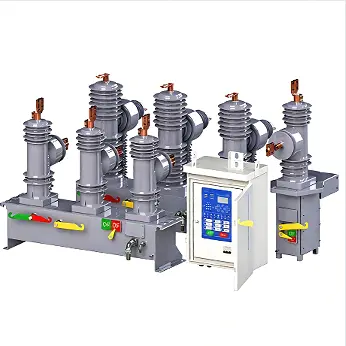
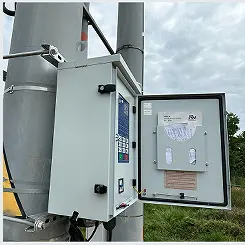
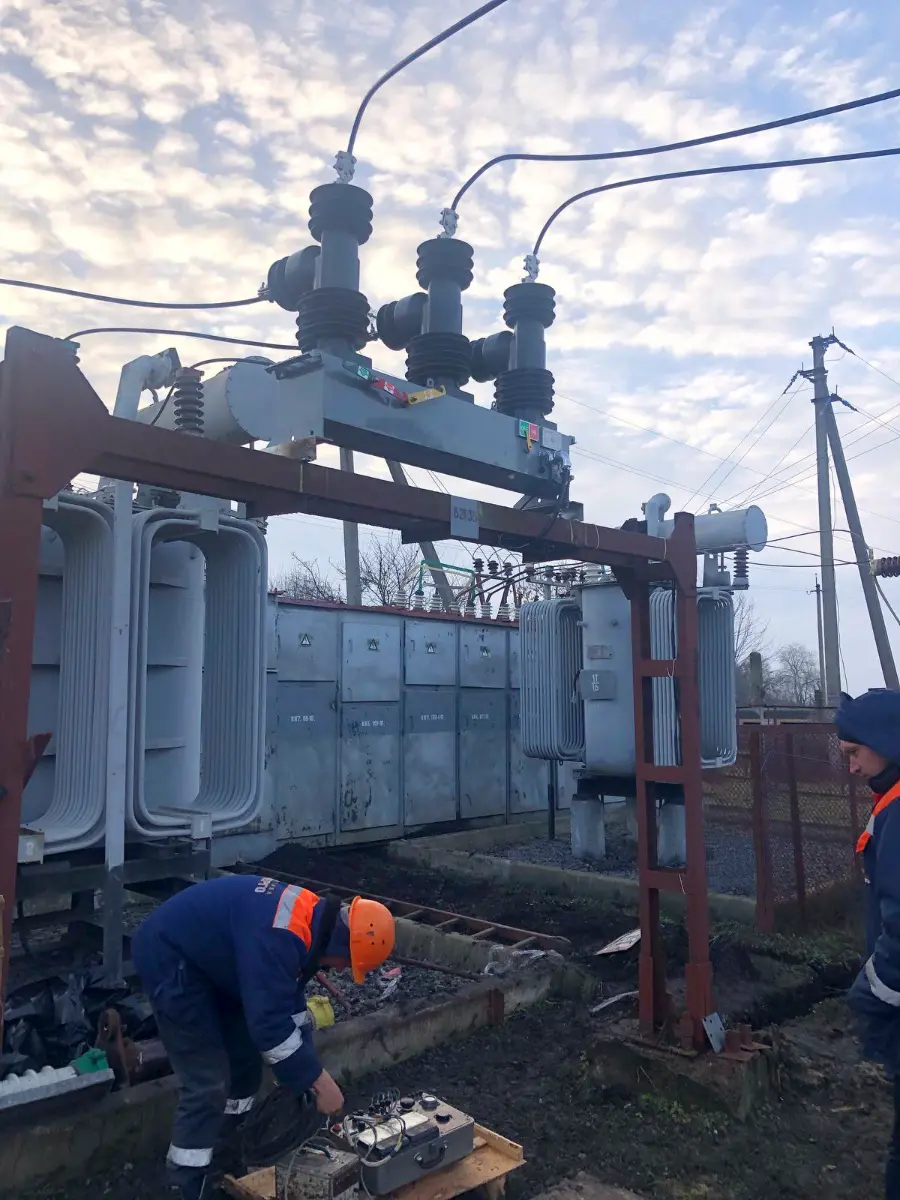
As an expert in high-voltage engineering, I will deconstruct the design philosophy of the ACR from four critical dimensions, aligned with international standards (IEC/ANSI):
1. The Philosophy of "Fault Tolerance" and "Self-Healing"
Approximately 70% to 90% of faults on overhead distribution lines—such as tree branch contact, bird interference, or lightning-induced flashovers—are transient. The fundamental mission of a recloser is to "give the system a chance to recover."
- Design Logic: Upon detecting an overcurrent, the ACR trips immediately to extinguish the arc. After a pre-set "dead time" (allowing ionized gases to dissipate or debris to fall), it automatically recloses.
- Engineering Impact: If the fault is cleared, power is restored seamlessly, significantly improving reliability metrics like SAIDI (System Average Interruption Duration Index).
2. Scientific Selectivity: TCC Coordination Strategy
Reclosers rarely work alone; they are coordinated with downstream fuses or sectionalizers. The design emphasizes "Hierarchical Protection Selectivity."
- "Fast-Slow" Sequence: Modern ACRs are programmed with a sequence of operations. The first one or two trips follow a Fast Curve to clear transient faults before a downstream fuse can melt. If the fault persists, the ACR switches to a Delayed (Slow) Curve, allowing the downstream fuse to blow and isolate the specific faulty branch, thereby keeping the rest of the feeder energized.
3. Maintenance-Free and Environmental Resilience
Reflecting the LCC (Life Cycle Cost) reduction philosophy, physical design has shifted toward solid insulation and simplified mechanics.
- Vacuum Interruption: Utilizes vacuum interrupters for high-speed arc quenching and extended electrical life.
- Solid Dielectric Insulation: Moving away from oil and SF6SF6 gas, modern units like the ROCKWILL RCW series utilize APG (Automatic Pressure Gelation) technology for solid epoxy insulation. This eliminates gas leakage risks and ensures stability in extreme environments, from arctic cold to tropical humidity.
- Magnetic Actuator: Replacing complex spring mechanisms with Permanent Magnetic Actuators reduces moving parts by over 70%, achieving a mechanical life of up to 100,000 operations.
4. Distributed Intelligence and Grid Autonomy
With the rise of Smart Grids and DERs (Distributed Energy Resources), the philosophy has evolved from "Local Protection" to "Distributed Collaborative Control."
- Digital Sensing: Integrated high-precision voltage and current sensors enable comprehensive power quality monitoring and High-impedance fault detection.
- Peer-to-Peer Self-Healing: Utilizing protocols like IEC 61850, multiple reclosers can communicate directly. In a loop feed system, they can autonomously locate, isolate, and restore power to non-faulty sections (FDIR - Fault Detection, Isolation, and Restoration) within milliseconds, without needing intervention from a central SCADA master station.
To visualize the operational logic, please refer to the standard sequence diagram below:
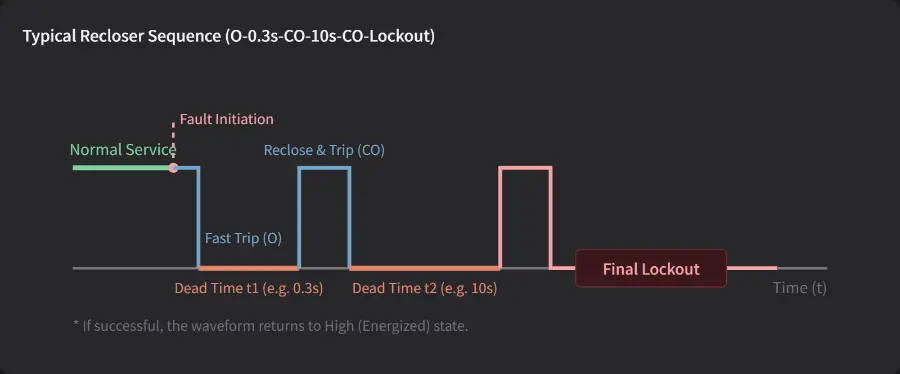
Expert Summary: When evaluating an ACR, the focus should not merely be on the breaking capacity, but on the flexibility of its controller algorithms and the long-term reliability of its insulation. The ROCKWILL approach—integrating solid insulation with intelligent magnetic actuation—represents the current technological zenith in recloser design.
BY:Noah

 Login