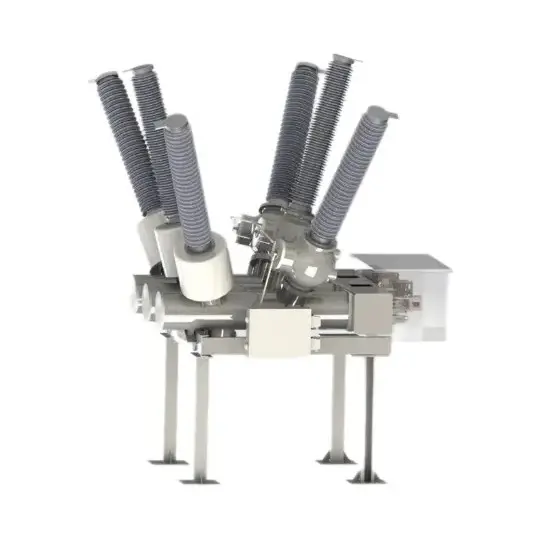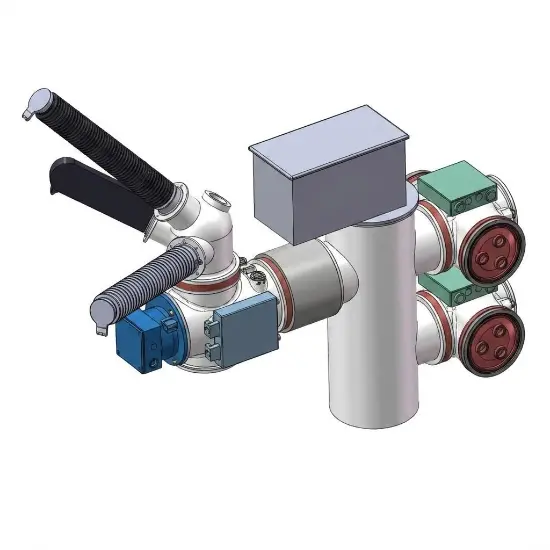
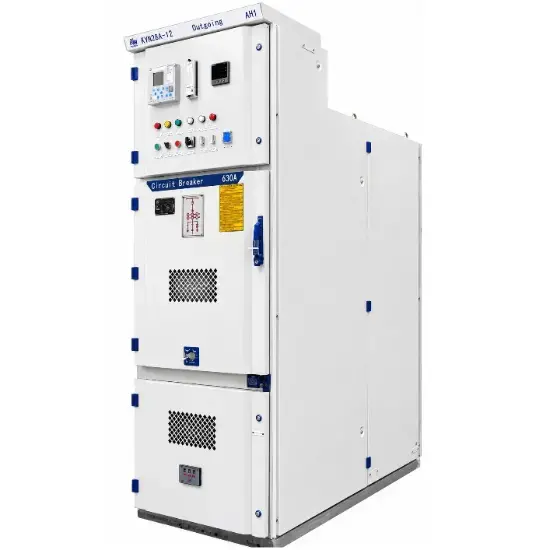
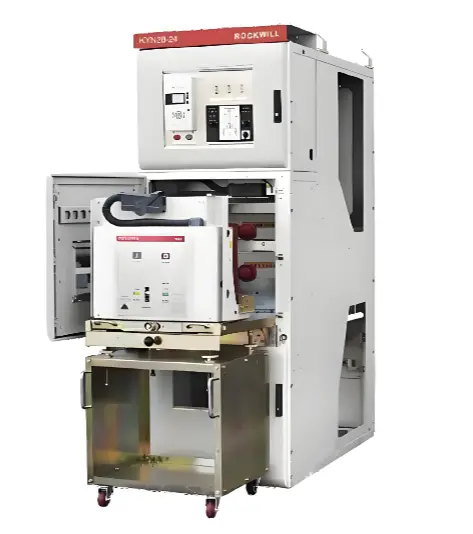
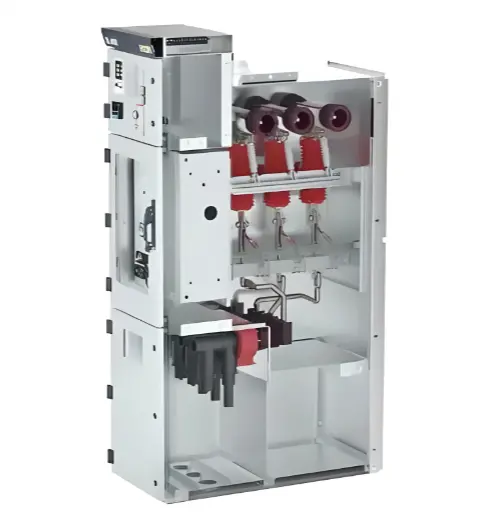
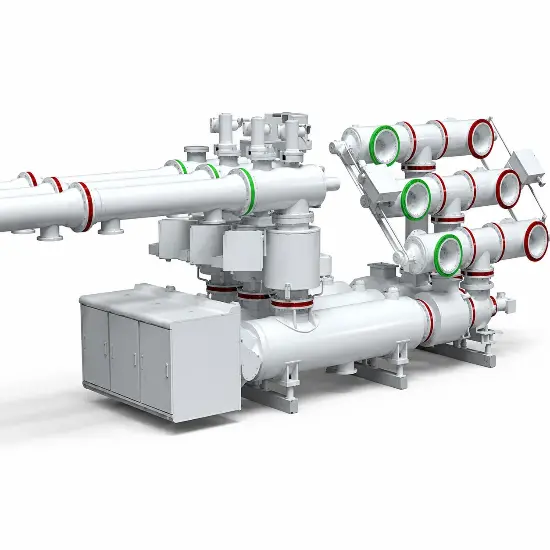
Rockwill switchgear technology: key distinctions between C-GIS, GIS, metal-clad, and AIS – design, performance, and application differences clarified.
When discussing switchgear, it is easy to confuse classification criteria from different dimensions. The four types mentioned here are not parallel classifications at the same level — they mix two classification standards: insulation medium and enclosure structure.
Conceptual relationship: Under national standards (GB/T 3906) and in engineering practice, the vast majority of traditional air-insulated switchgear on the market adopts a metal-clad structure. The two terms are essentially equivalent in the medium-voltage domain. C-GIS, on the other hand, is an extension of GIS technology into the medium-voltage range. All Rockwill C-GIS products belong to the C-GIS category.
The key to distinguishing switchgear is the insulation medium (gas or air), not simply applying a particular national standard. Different standard systems have different names and detailed requirements for the same product category.
IEC / German Standard (DIN/VDE): This is the core design basis for Rockwill C-GIS. C-GIS complies with the gas-insulated switchgear definition in IEC 62271-200 — the gas compartment is sealed with a protection rating of IP65 or higher. Traditional AIS complies with the air-insulated switchgear definition, mostly as metal-clad switchgear with enclosure protection around IP4X.
IEEE (North America): Classification is based on voltage class and structure type. Under IEEE standards, "metal-clad switchgear" refers specifically to air-insulated equipment, requiring a drawout circuit breaker and independent compartments. Therefore, "Metal-Clad" implicitly means AIS. Rockwill C-GIS does not fall under the typical IEEE "Metal-Clad" definition, but it can comply with IEEE C37.20.9 (gas-insulated switchgear standard). In practice, we meet all IEEE type test requirements for gas-insulated equipment.
British Standard (BS): Shares the same origin as IEC but retains its own experience. Requirements for mechanical interlocks and earthing switch breaking capacity may be more stringent. A UKCA certificate is often additionally required.
Rockwill's positioning: In European (IEC/German) projects, Rockwill C-GIS is positioned against Siemens NXPlus, Schneider Premset/GMA, and similar gas-insulated switchgear. Traditional AIS (metal-clad) is positioned against Siemens NXAIR, ABB UniGear, and similar air-insulated products.


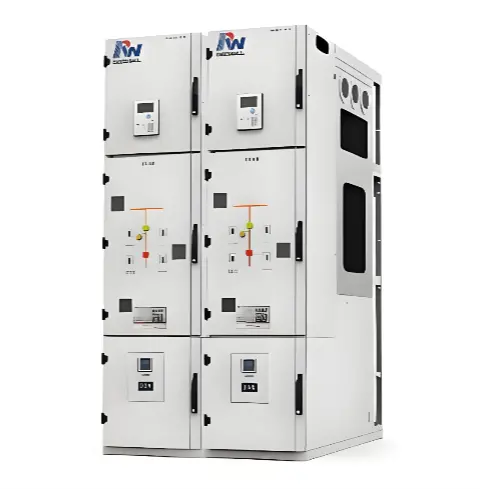
3.6kV 7.2kV 12kV 24kV indoor metal-clad withdrawable switchgear

IEE Business is Rockwill's digital O&M platform for intelligent power distribution. Through real-time equipment status monitoring and big data analysis, it enables full digital control and management from installation, operation, and maintenance to retrofit — tightly integrating hardware equipment with O&M management.
Rockwill C-GIS comes with matching sensors and intelligent terminals pre-integrated at the factory — natively compatible with the IEE Business system. For traditional AIS (metal-clad), retrofitting is mostly required after installation to access the platform, with data easily becoming fragmented and the system lacking integration.
The system can monitor in real time: gas density, moisture content, and temperature inside the gas compartment, as well as circuit breaker mechanical characteristics and primary loop contact temperature — transmitted directly to the platform via built-in sensors. The core value is achieving a "transparent gas compartment": the previously sealed and invisible internal state becomes transparent and visible through the platform. The system continuously analyzes pressure trends and issues early warnings at the onset of gas leakage, preventing development into an insulation fault.
This transforms the O&M model from traditional "periodic maintenance" to "condition-based maintenance" — scheduling outages based on platform diagnostic recommendations rather than blindly following a fixed period. Meanwhile, from factory test data and installation/commissioning records to every online monitoring history curve, the system automatically consolidates them into a digital twin archive, generating one-click equipment health reports and achieving closed-loop lifecycle management.
The monitoring scope for traditional AIS is relatively limited. Typically, only temperature sensors can be added to monitor cable compartment contacts and busbar compartment local temperatures, or partial discharge sensors can capture partial discharge signals in air insulation. The core insulation medium (air) cannot be monitored online — condensation, moisture ingress, and tracking still rely on manual inspection. Even after connecting to a management system, planned preventive maintenance tests cannot be fully replaced. Data is fragmented, making it difficult to form assessment models directly linked to equipment life.
High-voltage GIS has its own advanced condition monitoring systems, but these focus more on complex techniques such as UHF partial discharge and SF₆ gas composition analysis. They operate at higher voltage levels and greater monitoring depth than the IEE Business medium-voltage scope — independent systems with higher cost.
Based on the above analysis, the selection logic can be summarized across three dimensions: Insulation Medium — International Standard — Lifecycle Management.
Insulation medium: If maintenance-free operation, harsh-environment resistance, and small footprint are required, choose C-GIS. If cost is sensitive and the environment is controllable, choose traditional AIS.
International standard: IEC/German/British standard projects can directly apply the corresponding products. North American projects must distinguish between "Metal-Clad" and "IEEE gas-insulated switchgear".
Lifecycle management: If digital O&M, condition-based maintenance, and unattended operation are required, choose Rockwill C-GIS with built-in IEE Business.
High reliability, low maintenance, digital distribution room: When the project demands high reliability, small footprint, IEC/German/British standards, and a full lifecycle management system — select Rockwill eco-friendly gas C-GIS + IEE Business platform for a transparent, maintenance-free distribution room.
Cost-priority, conventional distribution: When the project is cost-sensitive, the site has ample space, a well-established periodic inspection regimen, and deep online monitoring is not required — select traditional AIS (metal-clad) compliant with the applicable standard (IEEE Metal-Clad or IEC metal-clad).
EHV hub substation: Enter the GIS domain directly. The monitoring system is built independently to high-voltage standards. IEE Business is not directly applicable.
Edited From:Garca