Hydraulic Transformer: The Missing Link in Modern Fluid Power Systems
For decades, hydraulic systems have lacked a true functional counterpart to the electrical transformer—until now. The hydraulic transformer bridges this critical gap, enabling constant-pressure fluid networks, multi-pressure actuation, energy recovery, and even integration of hydraulics with pneumatics. This breakthrough is not just theoretical—it’s a patented, prototype-validated technology poised to redefine industrial fluid power.
Why Has Fluid Power Needed a“Transformer”?
In electrical systems, transformers allow efficient voltage conversion, isolation, and flexible power distribution. Hydraulic systems exhibit strong analogies:
Pressure ↔ Voltage
Flow rate ↔ Current
Power = Pressure × Flow ↔ Voltage × Current
Yet conventional hydraulics rely on throttling valves and fixed-displacement pumps, leading to:
High throttling losses (up to 30–40% energy waste),
Pressure coupling between actuators,
Poor pump–load matching,
Complex, maintenance-heavy architectures.
The hydraulic transformer solves these issues by acting as a continuous, bidirectional pressure-flow converter—the cornerstone of next-generation intelligent fluid power networks.
How the Patented Hydraulic Transformer Works
Unlike experimental prototypes that only offer narrow pressure regulation, this novel hydraulic transformer uses a high-speed rotating rotor to deliver:
Wide-range pressure transformation (step-up or step-down, ratio ≥ 3:1)
Continuous flow control (0 to 100% of rated flow)
Full media isolation between primary and secondary circuits
Near-zero static losses and high dynamic efficiency (>90% in tested prototypes)
Compact, lightweight design with low rotational inertia and fast response
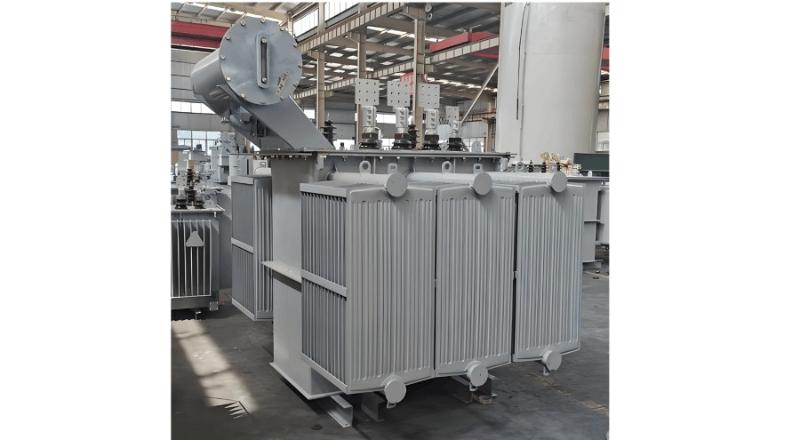
These features give engineering meaning to key parameters like rated pressure, displacement, torque, and power, enabling systematic design—not just trial-and-error tuning.
Validated Technical Advantages
| Feature | Benefit |
| High transformation ratio (≥3:1) | Supports diverse actuator pressures from one source |
| Media isolation | Enables use of seawater, bio-fluids, or water-glycol alongside oil |
| Energy recovery capability | Recaptures potential energy (e.g., elevator descent, crane lowering) |
| Maintenance-free operation | Sealed rotary design, no sliding spools or throttling orifices |
| Fast dynamic response | Ideal for robotics, mobile machinery, and precision control |
Key Application Areas
1. Green & Sustainable Hydraulics
Marine systems: Use seawater directly as working fluid—no oil leakage risk.
Food/pharma: Operate with food-grade or sterile fluids while maintaining high power density.
Wastewater plants: Recover energy from fluid flow or elevation changes.
Replace load-sensing systems with constant-pressure networks, cutting energy use by 20–35%.
Enable multi-pressure outputs from a single pump (e.g., 21 MPa for clamping + 7 MPa for positioning).
The hydraulic transformer can be generalized as a “fluid pressure transformer”, allowing:
Integration of hydraulics (high force) and pneumatics (compliance, speed) in one system.
Plug-and-play modular power units for robotics, exoskeletons, or automated factories.
Hybrid liquid-gas energy buffering (e.g., smoothing wind turbine output fluctuations).
Industry Outlook: From Prototype to Standard Component
While current research (both domestic and international) remains largely experimental, this patented solution has moved beyond lab validation:
Multiple industrial-scale prototypes tested under real load cycles,
Compatibility with existing ISO hydraulic interfaces,
Pathway to IEC/ISO standardization for fluid transformers.
As global demand grows for energy-efficient, smart, and sustainable power transmission, the hydraulic transformer is positioned to become as fundamental to fluid power as the electrical transformer is to the grid.