An On-Line Testing Method for Surge Arresters at 110kV and Below
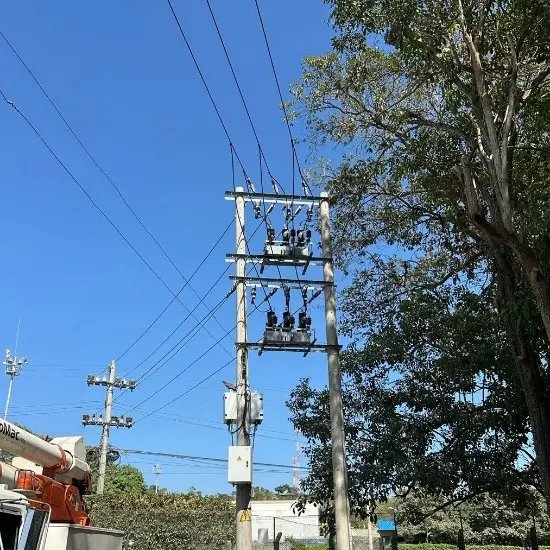
In power systems, surge arresters are critical components that protect equipment from lightning overvoltage. For installations at 110kV and below—such as 35kV or 10kV substations—an on-line testing method effectively avoids the economic losses associated with power outages. The core of this method lies in using online monitoring technology to evaluate arrester performance without interrupting system operation.
The test principle is based on leakage current measurement, analyzing the resistive current component to assess aging or defects within the arrester. International standard IEC 60099-4 specifies testing requirements for surge arresters, clearly stating that regular leakage current monitoring is essential for ensuring reliability. China’s national standard GB 11032 also emphasizes the feasibility of non-intrusive testing in systems rated at 110kV and below.
Test equipment includes high-precision current transformers (CTs), a data acquisition unit, and dedicated analysis software. The CT must have wideband frequency response, covering 50 Hz to 1 MHz, to accommodate various overvoltage scenarios. The data acquisition unit should feature isolation design to prevent interference from high-voltage circuits, ensuring signal accuracy. The software incorporates algorithm models—such as Fourier transform analysis—to calculate resistive current values in real time. Equipment calibration follows metrological standards, performed at least annually, with errors verified against a standard source to remain within ±1%. Operators must hold high-voltage electrical certification and be familiar with equipment manuals to avoid operational errors.
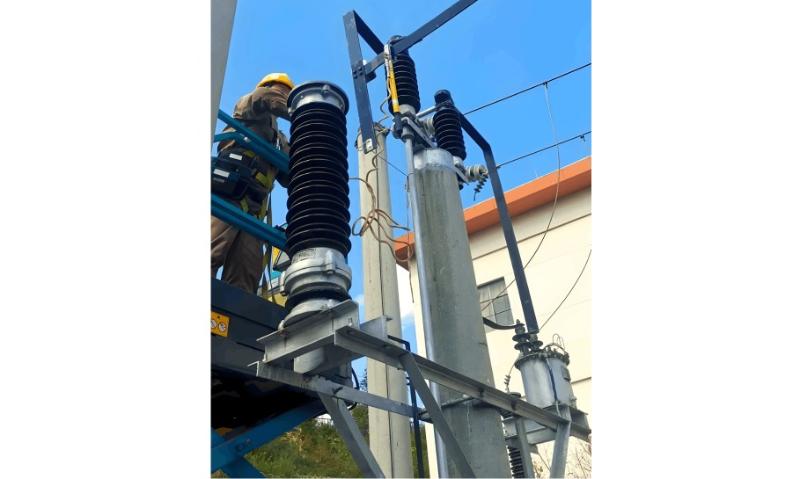
Implementation begins with site preparation. Select the arrester installation point, ensuring a dry environment free from strong electromagnetic interference. Before connecting equipment, verify grounding system integrity, with ground resistance below 4 ohms. Clamp the current transformer onto the arrester’s grounding lead, applying even pressure to prevent loosening. Connect the data acquisition unit to the CT output, launch the software, and set parameters such as a 1 kHz sampling rate and 5-minute measurement duration. Once recording starts, the system automatically captures the leakage current waveform. During the test, operators monitor real-time curves to identify abnormal fluctuations. After data collection, export raw files; the software automatically generates a report including peak resistive current, fundamental component, and harmonic analysis. Each step must be documented in the test log, including timestamp, ambient temperature, and humidity.
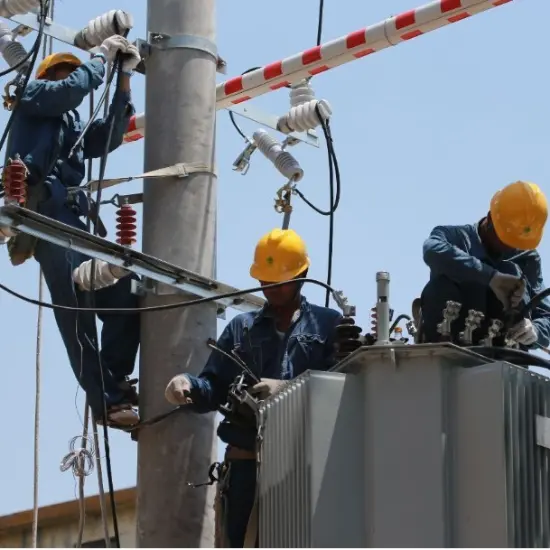
Safety measures are paramount. Conduct a risk assessment before work begins, identifying hazards such as electric shock and arc flash. Wear full protective gear, including insulating gloves, goggles, and flame-resistant clothing. Establish a safety perimeter with warning tape and “High Voltage Test” signs; unauthorized personnel must stay clear. Maintain safe distances during testing—minimum 1.5 meters for 110kV systems. Emergency preparedness includes fire extinguishers and first aid kits; if anomalies occur, immediately cut power and report. According to Article 40 of China’s Occupational Safety Law, enterprises must provide employees with no less than eight hours of annual safety training. Quality control requires test errors within ±2%, and repeated measurements must not deviate by more than 1%.
Results are analyzed using the software-generated report. A resistive current exceeding the baseline by 10% indicates aging and necessitates replacement; abnormal harmonic content suggests internal moisture or contamination. Report interpretation combines historical data to assess trends. For example, in a 35kV substation case, initial resistive current was 50μA, rising to 60μA after one year—prompt replacement prevented failure. Non-conforming results trigger maintenance workflows: complete a defect record form and notify operations teams for resolution within 48 hours. Data must be archived for at least five years for audit purposes.
This on-line method significantly improves efficiency, saving up to 90% time compared to traditional disassembly-based testing and reducing outage-related losses. Enterprises should establish annual plans, conducting tests quarterly to ensure system reliability. Continuous improvement includes adopting wireless transmission for remote monitoring. Successful implementation requires staff training to enhance technical proficiency. In summary, this method provides an efficient and safe solution for evaluating surge arresters in power systems at 110kV and below.