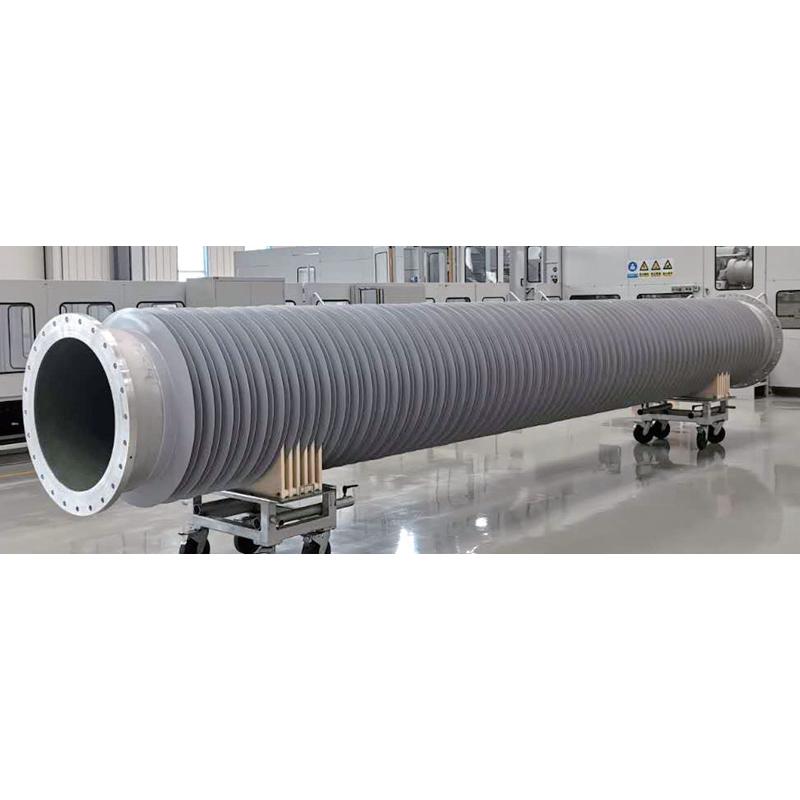
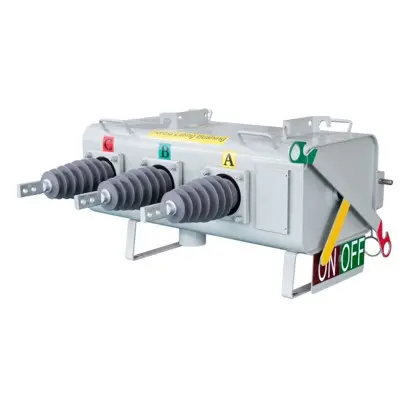
Based on the comparison dimensions above, here is an analysis of the performance differences between epoxy resin and silicone rubber pole column reclosers, along with Rockwill's corresponding engineering philosophy, presented from the Rockwill brand perspective:
1. Insulation Reliability and Thermal Management
Epoxy resin pole columns feature high dielectric strength. They allow for the monolithic encapsulation of the vacuum interrupter and the conductive circuit, forming an excellent thermal path that rapidly conducts internal heat to the surface. This results in better temperature rise control and ensures the high precision of built-in sensors. Silicone rubber pole columns rely primarily on the material's inherent insulation; however, the elastic body has higher thermal resistance, making it difficult for internal heat to dissipate.
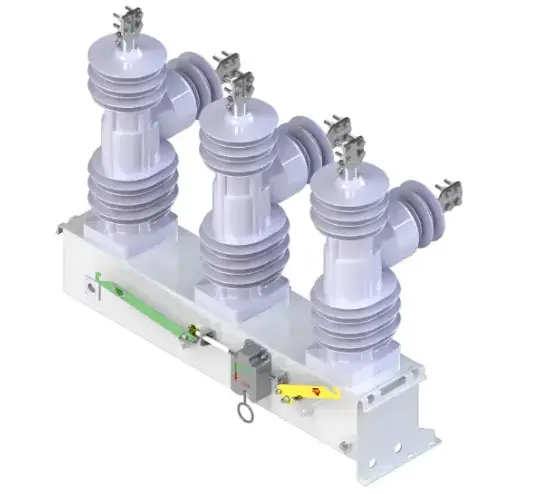
RCW Series Epoxy Resin Recloser Physical Picture
Rockwill Solution: For our epoxy encapsulated pole columns, we employ a high-thermal-conductivity epoxy formula and optimized cooling fin designs to fully leverage the advantages of "thermally conductive insulation." For our silicone rubber pole column products, we use more precise temperature rise simulations and a decentralized conductive circuit layout to ensure thermal stability under severe load conditions.
2. Hydrophobicity and Anti-Pollution Flashover Performance
Silicone rubber pole columns possess inherent, long-lasting hydrophobicity and unique hydrophobic transfer properties. Even when the surface becomes polluted, they suppress the formation of a continuous water film, exhibiting extremely strong anti-pollution flashover capability in heavily polluted, high-salinity, and high-humidity environments. Standard epoxy resin lacks hydrophobicity. Even though modified cycloaliphatic epoxy (HCEP) may have some initial hydrophobicity, its long-term recovery and transfer capabilities are far inferior to silicone rubber, leading to a higher risk of pollution flashover in severely contaminated conditions.
Rockwill Solution: For severe pollution areas, we explicitly recommend reclosers with silicone rubber pole columns. For applications where epoxy pole columns are used, Rockwill can provide matching creepage extenders and RTV anti-pollution flashover coating solutions to enhance surface contamination resistance.
3. Mechanical Robustness and Weight
Silicone rubber sheds are flexible, resistant to impact and external shocks, and not prone to cracking. Due to their high insulation strength, the shed design can be thinner and lighter, making the overall product lighter and easier to install and handle during overhead work. Epoxy resin pole columns have high rigidity, providing stable protection for the internal vacuum interrupter. However, the material is relatively brittle and may develop chips or internal cracks under strong impact. Furthermore, the equipment is relatively heavier.
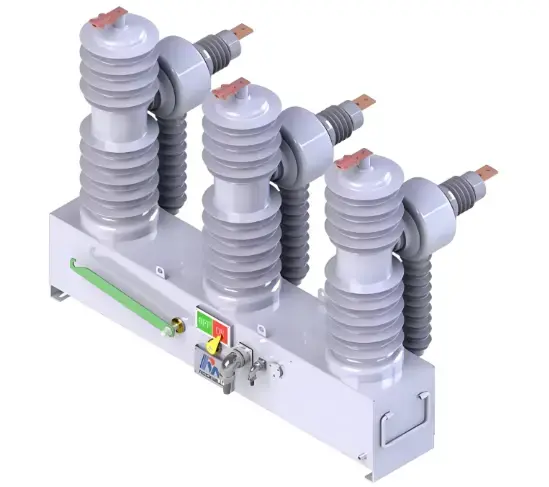
RCW Series Silicone Rubber Recloser Physical Picture
Rockwill Solution: Rockwill epoxy pole columns feature structural optimization and reinforced rib layouts to reduce stress concentration during transportation and installation. We have also launched a series of lightweight silicone rubber pole column reclosers that significantly reduce installation labor intensity while maintaining insulation levels.
4. Resistance to High-Low Temperature Cycling and Thermal Stress Cracking
The high elasticity of silicone rubber readily accommodates thermal expansion and contraction, effectively absorbing thermal stress between metal and insulating materials, making the risk of pole column cracking extremely low. Cured epoxy resin is hard and brittle. Under extremely cold conditions or rapid temperature changes, the difference in the coefficient of thermal expansion between metal and resin can easily lead to internal micro-cracks, which can subsequently cause water ingress and insulation failure.
Rockwill Solution: For epoxy pole columns, Rockwill applies a flexible buffer layer technology and an anti-cracking epoxy formula, validated through rigorous and repeated high-low temperature cycle tests. For our silicone rubber pole column products, we focus on rubber vulcanization and the bonding interface to ensure sealing and insulation reliability under long-term thermal shock conditions.
Rockwill Selection Recommendations
In summary, epoxy pole columns offer outstanding advantages in temperature rise control, internal insulation reliability, and sensor precision. Silicone rubber pole columns hold significant advantages in anti-pollution flashover, mechanical impact resistance, and resistance to thermal stress cracking. Rockwill has deep expertise in both pole column technologies and can recommend the optimal solution based on your specific operating environment (pollution level, temperature variation, installation conditions, etc.). We also provide proven engineering reinforcement measures to address any critical performance trade-offs, ensuring the safe operation of the recloser throughout its entire lifecycle.
Edited From:James

 Login