Common Misconceptions: Live Tank vs. Dead Tank in Power Systems
In the electrical industry, there is a widespread misunderstanding regarding the terms "Live Tank" and "Dead Tank" when applied to switchgear, circuit breakers, transformers, and reclosers. Many incorrectly assume that these terms refer to the electrical potential of the equipment's external enclosure based on the literal dictionary definitions of "Live" (energized/high voltage) and "Dead" (de-energized/grounded).
Particularly in switchgear system, as example of high voltage circuit breakers, The correct explanation is:
1. Live Tank Structure
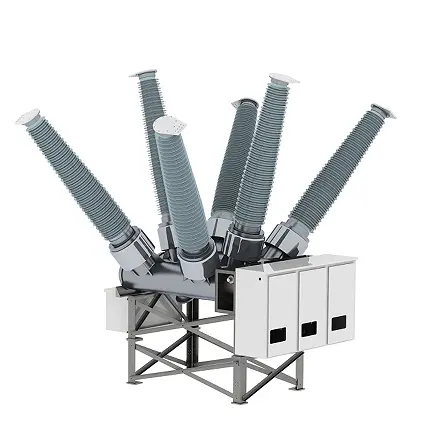
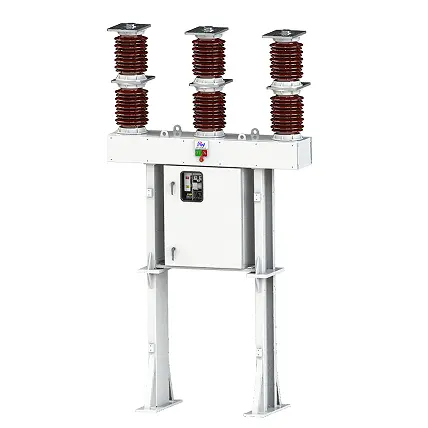
Technical Reality: In a "Live Tank" design, the interrupter chamber (which contains the high-voltage breaking elements) is housed in an enclosure that is indeed at system potential (Live). However, this "Live" part is mounted atop high-grade insulators.
Safety Clarification: The lower support structure and the base tank are solidly grounded and remain at near-zero potential. Because the high-voltage components are physically isolated and elevated far above the ground by insulators, the probability of accidental contact with the energized parts is lower. Therefore, while the top is live, the accessible support parts are "safer" relative to the high-voltage circuit.
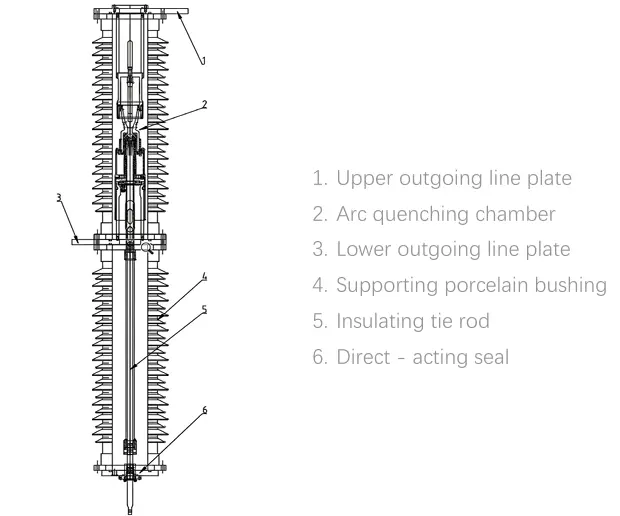
Schematic Diagram of Pole Column for Live-Tank SF6 Gas Circuit Breaker
2. Dead Tank Structure
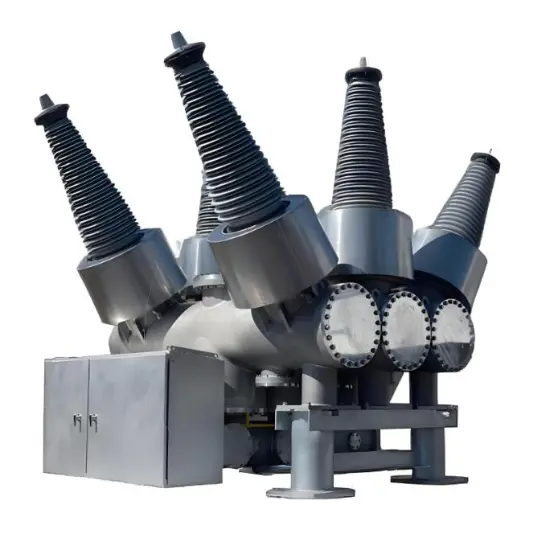
Technical Reality: A "Dead Tank" refers to a design where the interrupter chamber is housed inside a metal tank that is maintained at ground potential (Dead). The high-voltage conductors are led into the tank via bushings and are isolated from the grounded tank shell by insulating media (such as SF6SF6 gas or oil).
Safety Warning: The term "Dead" often creates a dangerous "false sense of security." Because the high-voltage circuit and the grounded metal enclosure are in extremely close proximity (separated only by internal insulation), any internal insulation failure or capacitive discharge can make the enclosure extremely dangerous. Statistically, the risk of a lethal shock from improper contact or proximity is significantly higher with Dead Tank equipment if safety protocols are ignored, as the "dead" label may lead personnel to underestimate the internal hazards.
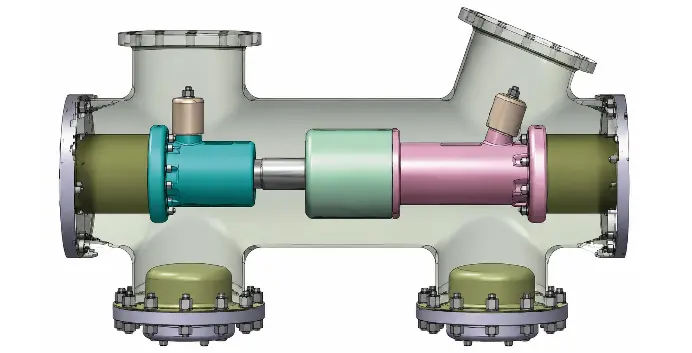
Closing Position of Dead-Tank SF₆ Gas Circuit Breaker
3. Critical Safety Conclusion
There is a serious cognitive bias online regarding these terms. It must be recognized that all metal enclosures of electrical equipment must be firmly and directly grounded to the earth. However, grounding does not equate to "safe to touch."
Regardless of whether you are working near a Live Tank or Dead Tank breaker, switchgear, or recloser: Never attempt to touch the equipment while it is in service. Machinery is unforgiving, and life is priceless. Always maintain a safe clearance and strictly follow high-voltage safety regulations!
Edited from:Cheng Ming Chen

 Login
Login