

• Product
  • Suppliers
  • Manufacturers
  • Solutions
  • Free tools
  • Knowledges
  • Experts
  • Communities
Search


HGIS Hybrid Gas-Insulated Switchgear:What Are the Core Definition Differences Between HGIS, GIS, and AIS?

Rockwill
Field: Manufacturing
10Year<
China
 
High-voltage switchgear serves as the critical hub for control, protection, and isolation in power systems. As power grids evolve toward compactness, high reliability, and intelligence, three mainstream configurations have emerged to meet demanding requirements such as urban center space constraints, high-altitude installations, and heavy-pollution areas: conventional Air-Insulated Switchgear (AIS), highly integrated Gas-Insulated Switchgear (GIS), and Hybrid Gas-Insulated Switchgear (HGIS) that combines the advantages of both. Their fundamental differences in insulation medium and structural integration directly determine their footprint, environmental adaptability, and maintenance regimes. 

I. Core Definitions and Structural Characteristics

1. AIS (Air-Insulated Switchgear)

AIS is the most traditional open-type distribution configuration. Its core characteristic is "fully outdoor" — all high-voltage live components such as circuit breakers, disconnectors, and busbars are directly exposed to air, relying entirely on air as the insulation medium and maintaining safe operating distances.

2. GIS (Gas-Insulated Switchgear)

GIS is a highly integrated fully enclosed configuration. All high-voltage primary components except the transformer — including circuit breakers, disconnectors, earthing switches, instrument transformers, surge arresters, and busbars — are sealed in a grounded metal enclosure filled with sulfur hexafluoride (SF6) gas, which provides excellent insulation and arc-quenching performance.

iee-business

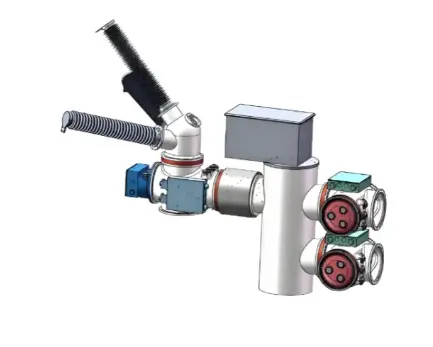
Gas-Insulated Metal-Enclosed Switchgear GIS

3. HGIS (Hybrid Gas-Insulated Switchgear)

HGIS is a compromise between AIS and GIS. It uses a modular design where only the core components most susceptible to environmental conditions — such as circuit breakers, disconnectors, and current transformers — are integrated into sealed SF6-filled metal enclosures. The remaining components such as busbars, voltage transformers, and surge arresters are kept as conventional open-air (AIS) arrangements, connected on-site via insulated bushings and flexible conductors.

II. Multi-Dimensional Performance Comparison

1. Footprint and Space Utilization

Type Characteristic
AIS Requires large air insulation clearances; the largest footprint
GIS SF6 gas provides extremely high insulation strength, dramatically reducing equipment volume; footprint is only 1/10 to 1/5 of AIS; highest space utilization
HGIS Retains open-air busbars but core components are highly integrated; overall footprint is 40%–60% less than AIS; space performance between AIS and GIS

 2. Operational Reliability and Environmental Adaptability

Type Characteristic
AIS Exposed live parts are highly susceptible to contamination, moisture, salt fog, small animals, and other harsh environmental factors; corona discharge and noise are concerns
GIS Fully enclosed structure is completely immune to external environmental interference; excellent moisture and contamination resistance; highest operational reliability
HGIS Core components share the same fully enclosed high reliability, effectively avoiding common AIS issues such as porcelain insulator fracture and overheating in conductive circuits; overall reliability significantly better than AIS
 

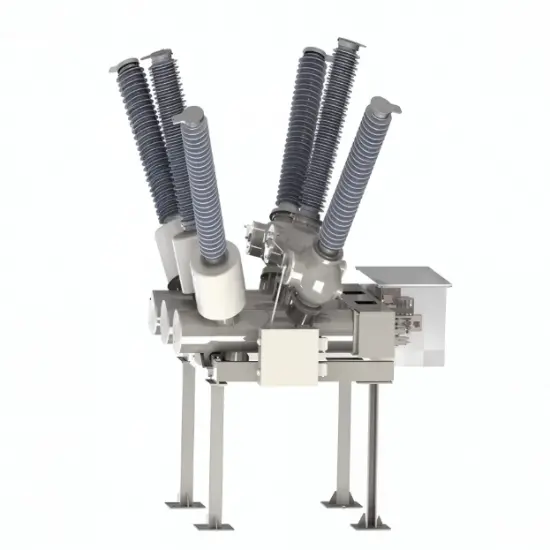
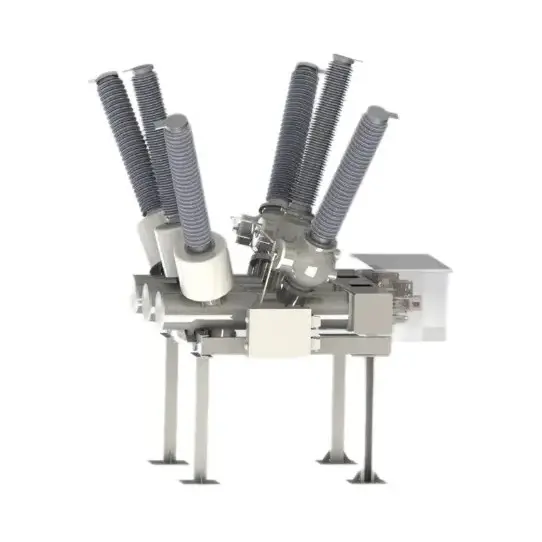
Hybrid Gas Insulated Switchgear 40.5kV up to 245kV

Hybrid Gas Insulated Switchgear HGIS

3. Installation, Maintenance, and Expansion Flexibility

Type Characteristic
AIS Intuitive structure, easy installation, very flexible expansion and maintenance; however, routine inspection and maintenance workload is substantial
GIS Minimal or maintenance-free; very low routine maintenance workload. However, due to the fully enclosed structure, fault location and repair are extremely difficult when internal failures occur, and expansion is challenging
HGIS Balances convenience and reliability. Core modules are factory prefabricated and tested, enabling fast on-site installation. In the event of a fault, individual bays can be rapidly replaced like AIS (typically within hours), avoiding the widespread outage risk associated with GIS, and expansion is more flexible

 4. Economic Cost

Type Characteristic
AIS Lowest initial equipment cost, but higher civil engineering costs and long-term labor maintenance expenses
GIS Most expensive equipment cost, but significantly reduces land and civil engineering investment
HGIS Eliminates costly enclosed busbars and associated components, typically 30%–50% lower cost than GIS, while saving considerable footprint compared to AIS; offers the highest overall cost-effectiveness

 III. Summary and Selection Recommendations

Type Recommended For
AIS Conventional scenarios where land is abundant, budget is limited, and maintenance resources are adequate
GIS Urban core areas, underground substations, high-altitude or heavy-pollution regions where space and reliability are paramount and budget is sufficient
HGIS The optimal solution balancing high cost-effectiveness with high reliability; particularly suited for aging substation refurbishment, mountainous sites with complex terrain, and industrial parks where space is constrained but GIS cost is prohibitive

Edited From:Garca

 
Give a tip and encourage the author!

Comments

Share your question or perspective
WhatsApp
Send inquiry
+86
Click to upload file
Download
Get the IEE Business Application
Use the IEE-Business app to find equipment, obtain solutions, connect with experts, and participate in industry collaboration anytime, anywhere—fully supporting the development of your power projects and business.
Login
or continue with
New here?
Register