Search


Rockwill HGIS: Performance Advantages of Self-Blast over Traditional Puffer Circuit Breakers

Rockwill HGIS self‑blast vs puffer breakers: leveraging arc energy for higher efficiency, reliability, and reduced operating mechanism stress.

Rockwill
Field: Manufacturing
10Year<
China
Add us on Google
 

Built on Rockwill's RHP HGIS technical platform and the self-blast interruption principle, the self-blast interrupter fundamentally changes the force and work profile of the arc chamber by using arc energy to establish the extinguishing pressure. The following analysis covers five core dimensions of performance improvement over conventional pure puffer-type interruption. 

iee-business

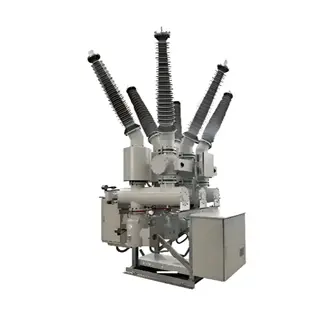
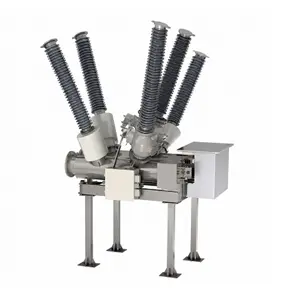
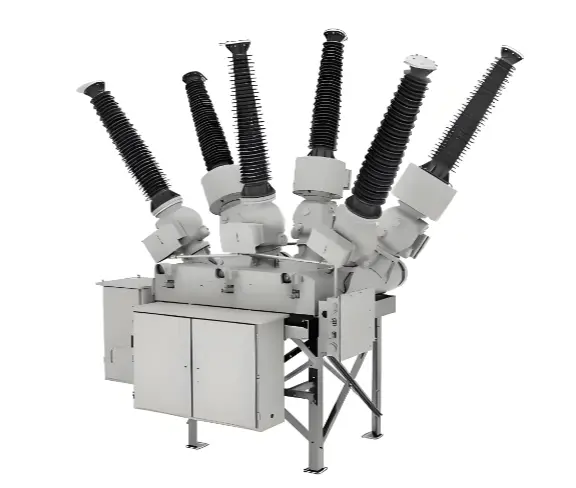
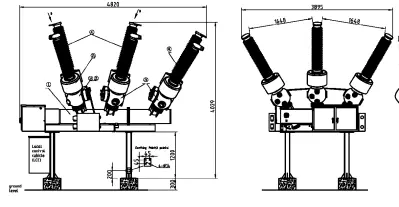
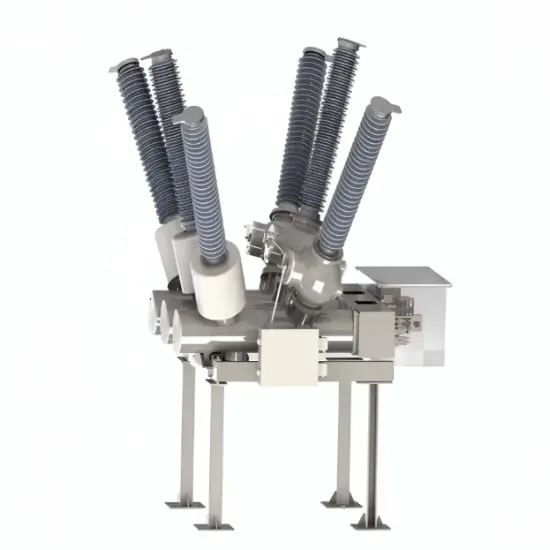
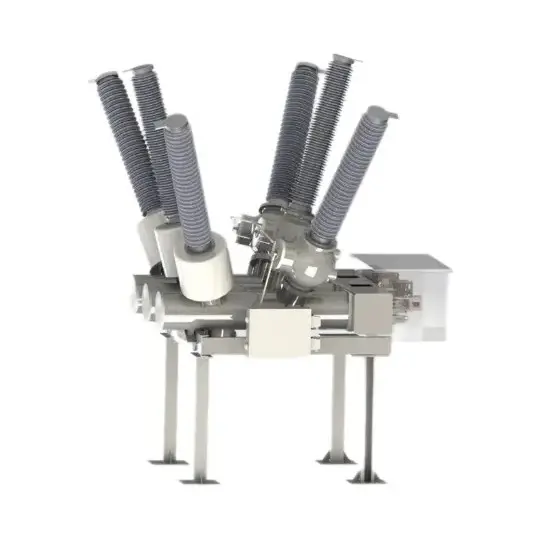
Hybrid Gas Insulated Switchgear HGIS 

1. Operating Mechanism and Overall Structure: Drastically Reduced Operating Energy for Extreme Lightweight Design

1.1 Core Principle Difference

Conventional puffer type: During opening, the moving contact drives a piston to forcibly compress SF6 gas to generate the extinguishing flow. All pressure required for arc extinction is provided by the operating mechanism, requiring a high-power spring or hydraulic mechanism.

Self-blast type: Arc energy heats the SF6 gas in an expansion volume, establishing high-pressure extinguishing gas flow autonomously with minimal auxiliary compression. Operating energy demand is reduced by approximately 50% compared with conventional designs.

1.2 Performance Gain for HGIS

  • Mechanism miniaturisation: Operating mechanism output force, size, and weight are significantly reduced, lowering vibration and impact noise of the complete assembly.
  • Civil works optimisation: Simplified breaker tank and linkage structure aligns with the HGIS lightweight aluminium tank design philosophy. Reduced foundation loading makes the unit well suited for rooftop substations, mobile substations, and lightweight foundation scenarios in mountainous areas, substantially reducing civil engineering costs.

iee-business

2. Interruption Performance and Condition Adaptability: Full Current Range Self-Adaptation for Enhanced System Stability

2.1 High Short-Circuit Current Interruption

The self-blast design offers a natural adaptive characteristic: the higher the fault current, the stronger the interruption. As short-circuit current increases, arc energy raises the expansion volume pressure and intensifies the extinguishing gas flow.

Performance: The RHP HGIS circuit-breaker achieves 20 full-capacity (40 kA) fault current operations. Under severe conditions such as short-line faults and out-of-phase switching, its withstand capability is significantly superior to conventional puffer designs.

2.2 Low Current, Capacitive, and Inductive Load Switching

Under light-load or no-load switching, the auxiliary compression volume provides stable low-energy gas flow. For inductive loads, this weak-flow characteristic effectively suppresses current chopping and the associated overvoltage that can occur when a puffer design's strong blast extinguishes the arc prematurely. For capacitive bank switching, the self-blast weak-flow characteristic helps suppress arc re-strike, achieving no re-strike performance.

Fast fault clearance: RHP-72.5/145 kV opening time is 32±7 ms, substantially reducing the total interruption cycle and limiting network fault impact and equipment thermal stress.

3. Mechanical Life and Reliability: Reduced Wear for Long-Life Maintenance-Free Design

3.1 Doubled Mechanical Life

The self-blast design eliminates the large compression piston, significantly reducing forces on drive components. Measured data shows the self-blast HGIS circuit-breaker achieves 6,000 mechanical operations, whereas conventional puffer designs under equivalent conditions typically reach only 3,000–4,000 operations.

Low-vibration characteristics reduce fatigue stress on HGIS tank flanges, welded seams, and cone-type insulators, lowering SF6 leakage risk and supporting the HGIS annual leakage rate target of ≤0.5%.

3.2 Improved Insulation and Sealing Reliability

The reduced number of internal parts in the arc chamber, combined with the HGIS design featuring fewer cone-type insulators and phase-separated gas compartments, simplifies internal fault location and substantially reduces the probability of insulation failure.

Optimised gas flow channels provide more uniform heating of the PTFE nozzle, avoiding the rapid erosion caused by sustained high-velocity gas flow in conventional puffer designs, further extending core component life.

Hybrid Gas Insulated Switchgear 40.5kV up to 245kV

Hybrid Gas Insulated Switchgear

4. Engineering Application and Maintenance: Modular Pre-Assembly and Minimal Maintenance for Shortened Outage Periods

4.1 Modular Design and Factory Pre-Assembly

Reduced breaker unit volume and weight enable complete factory pre-assembly and commissioning for each bay, supporting the HGIS modular delivery model.

Compared with conventional GIS, the self-blast HGIS eliminates enclosed busbars and the breaker unit is more compact, reducing single-bay footprint by 40%–60%. Easier alignment during lifting shortens outage and installation time for substation retrofit and expansion projects.

4.2 Sharply Reduced Maintenance Workload

The drive mechanism does not require frequent lubrication or stroke adjustment. Contacts and the nozzle remain serviceable after 20 full-capacity fault current interruptions, eliminating the need for medium-term arc chamber replacement.

Reduced vibration lowers the risk of loose connections in secondary control circuits and digital fibre-optic electronic instrument transformers, improving overall operational stability of the intelligent HGIS.

5. Environmental Adaptability and Lifecycle Cost: Wide Temperature Range Operation and Low Carbon Footprint

5.1 Extreme Environment Adaptability

Low-temperature operation: At -40°C, the self-blast design relies on arc energy for autonomous pressure build-up, maintaining effective extinguishing even with partial SF6 liquefaction. Conventional puffer designs suffer from reduced gas density and significantly degraded compression efficiency at low temperatures.

Complex climates: Superior sealing stability and fatigue resistance in high-altitude, Class IV pollution, and coastal high-humidity environments make the design widely suitable for outdoor and mountainous substation applications.

5.2 Environmental and Economic Benefits

The simplified arc chamber reduces SF6 fill volume per breaker. Combined with the HGIS design, which uses approximately only 20% of the SF6 required by equivalent GIS equipment, the greenhouse gas emission footprint is substantially lowered.

Extended spare part replacement intervals and reduced aluminium and metal processing consumption mean the total lifecycle cost (including manufacturing and maintenance) is significantly lower than equivalent-parameter conventional puffer HGIS breakers.


Summary

The Rockwill RHP HGIS equipped with a self-blast circuit-breaker achieves core technical breakthroughs — halved operating energy, adaptive interruption, doubled mechanical and electrical life, and compact lightweight design — fully leveraging the HGIS product positioning between GIS and AIS as a high-reliability, low-cost, small-footprint solution. It is an ideal choice for digital compact substation retrofits and new construction projects.

Edited From:Garca

Give a tip and encourage the author!
Topics:

Comments

Share your question or perspective
WhatsApp
Send inquiry
+86
Click to upload file
Download
Get the IEE Business Application
Use the IEE-Business app to find equipment, obtain solutions, connect with experts, and participate in industry collaboration anytime, anywhere—fully supporting the development of your power projects and business.
Login
or continue with
New here?
Register