Search


Analysis of Three-Level SF6 Gas Pressure Threshold Settings in HGIS Equipment

Three-level SF6 gas pressure threshold settings in HGIS: alarm, block, and lock levels for safe equipment operation and maintenance.

Rockwill
Field: Manufacturing
10Year<
China
Add us on Google
 
In hybrid gas-insulated switchgear (HGIS), SF6 gas serves not only as an insulating medium but also performs the critical function of arc extinction. To ensure safe equipment operation, HGIS gas compartment pressure management follows a strict three-level logic: rated → alarm → block. The core of this logic is to take corresponding warning and protection measures at different stages of performance degradation through pressure monitoring, preventing safety incidents caused by insufficient insulation strength or reduced arc-quenching capability.
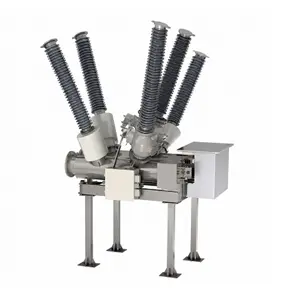
Hybrid Gas-Insulated Switchgear HGIS 145kV

1. Definition and Logical Relationship of the Three Pressure Thresholds

HGIS pressure management follows a decreasing logic: rated pressure > alarm pressure > block pressure.

The first level is the rated filling pressure. This is the standard pressure value at 20 °C ambient temperature at which the equipment maintains optimal insulation and arc-extinguishing performance. At this pressure, the equipment can operate stably over the long term, meeting all electrical parameter requirements.

The second level is the alarm pressure. When the gas pressure drops to this threshold due to leakage or other causes, the density relay triggers an alarm signal. This is a warning indication that a gas leak exists and the insulation margin is decreasing, prompting the operator to arrange leak detection and replenishment as soon as possible. At this stage, the equipment may continue to operate without requiring immediate de-energisation. This value is typically approximately 0.05 MPa below the rated pressure.

The third level is the block pressure. This is the minimum limiting pressure that guarantees the safe interruption capability of the circuit breaker. When the pressure drops to this level, the gas no longer has sufficient arc-quenching ability to safely interrupt short-circuit current. The control system issues a block command, disconnecting the close and open control circuits of the circuit breaker and prohibiting any operation, thereby preventing serious incidents such as breaker explosion. This value is typically approximately 0.05 MPa below the alarm pressure.

2. Technical Principles Behind the Three-Level Logic

The three-level logic is dictated by the physical properties of SF6 gas. First, the dielectric strength of SF6 gas is proportional to gas density (pressure). When the pressure drops to the alarm point, the equipment can still carry normal load current, but its ability to withstand lightning impulses or switching overvoltages is weakened, necessitating an alarm to prompt replenishment. Second, when a circuit breaker interrupts short-circuit current, a high-pressure gas flow is required to blow the arc. If the pressure falls below the block point, the gas flow lacks sufficient force to extinguish the arc, leading to internal ablation or even explosion of the breaker. Therefore, operation must be blocked before the pressure reaches this critical point.

In addition, HGIS in service is equipped with SF6 density relays featuring temperature compensation, rather than simple pressure gauges. The density relay automatically compensates for pressure fluctuations caused by temperature changes, ensuring that the alarm or block is triggered only when the gas mass (density) actually decreases (i.e., a genuine leak), thereby avoiding false operations due to diurnal temperature variation.

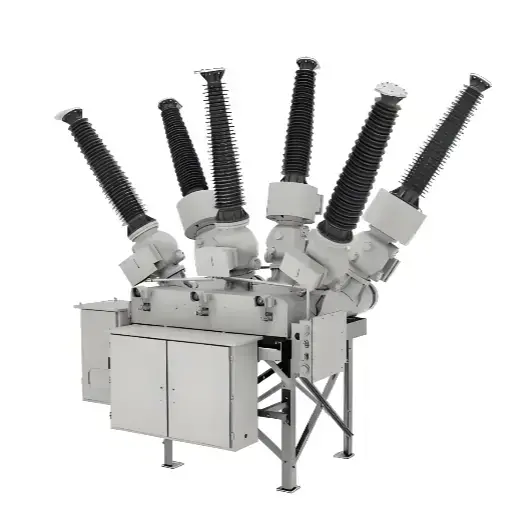
Hybrid Gas Insulated Switchgear (HGIS) 145kV 170kV

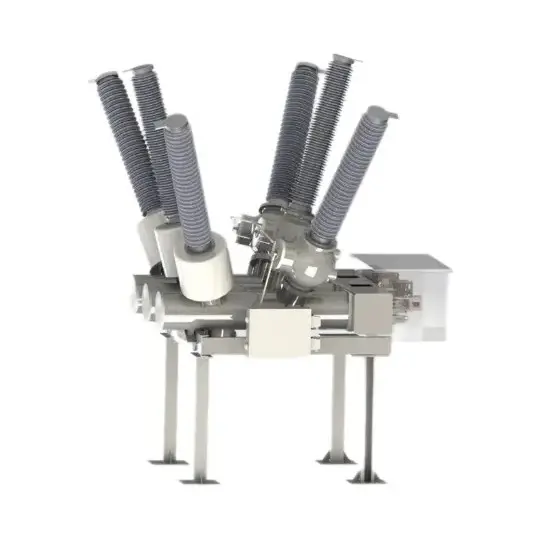
Hybrid Gas Insulated Switchgear (HGIS)

3. Operation and Maintenance Recommendations

During routine inspection, observe whether the density relay pointer is in the green zone (near rated pressure). Upon receiving an "SF6 pressure low alarm", immediately use an SF6 leak detector to locate the leak and contact the manufacturer for replenishment. If an "SF6 pressure low block" occurs, do not forcibly override the block to operate the breaker. Instead, immediately apply to the dispatcher for de-energisation, transfer the bay to maintenance status, and carry out emergency replenishment or repair.

4. Summary

The "rated–alarm–block" three-level pressure threshold configuration in HGIS equipment forms the core defence for safe power grid operation. This stepped, descending logic precisely matches the insulation and arc-extinguishing characteristics of SF6 gas at different pressure states, achieving seamless transition from early warning to ultimate protection. It not only provides operators with an adequate window for fault diagnosis and gas replenishment, but also, under extreme conditions, uses both physical and electrical blocking to completely eliminate the risk of operating defective equipment. A thorough understanding and strict implementation of this pressure management logic is therefore essential for ensuring the long-term stable and safe operation of high-voltage switchgear.

Edited From:Garca

Give a tip and encourage the author!
Topics:

Comments

Share your question or perspective
WhatsApp
Send inquiry
+86
Click to upload file
Download
Get the IEE Business Application
Use the IEE-Business app to find equipment, obtain solutions, connect with experts, and participate in industry collaboration anytime, anywhere—fully supporting the development of your power projects and business.
Login
or continue with
New here?
Register