Mga Konfigurasyon sa Winding sa Grounding Transformer
Ang mga grounding transformers gi-classify batas sa koneksyon sa winding ngadto sa duha ka klase: ZNyn (zigzag) o YNd. Ang ilang neutral points mahimo nga iconnect sa usa ka arc suppression coil o grounding resistor. Sa kasagaran, ang zigzag (Z-type) grounding transformer nga giconnect pinaagi sa usa ka arc suppression coil o low-value resistor adunay gamit kasagaran.
1. Z-Type Grounding Transformer
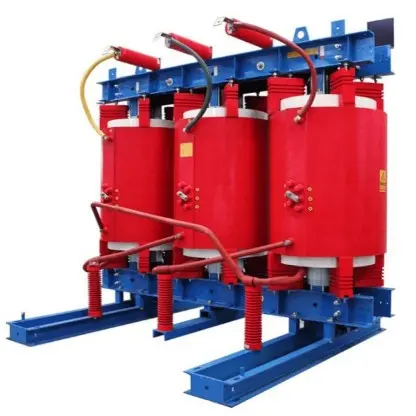
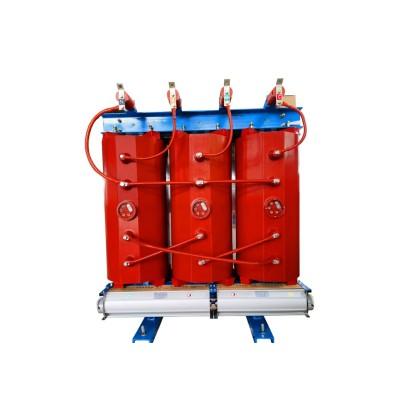
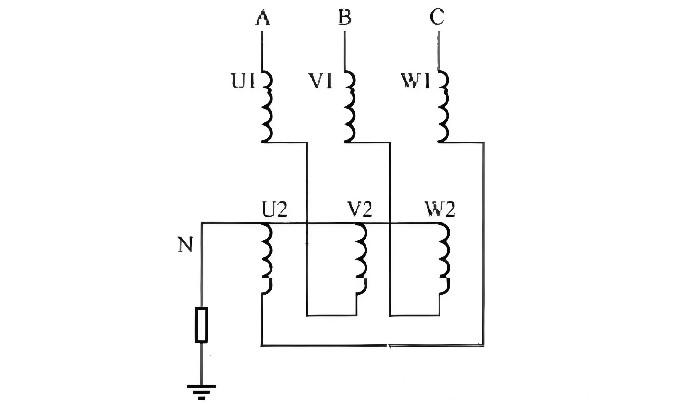
Ang mga Z-type grounding transformers adunay oil-immersed ug dry-type insulation versions. Sa dihang niana, ang resin-cast mao ang usa ka tipo sa dry insulation. Sa struktura, sama ra kini sa standard three-phase core-type power transformer, bisan unsa, sa bawat phase leg, ang winding gibahin sa duha ka equal-turn sections—upper ug lower. Ang end sa usa ka section ig-connection sa reverse polarity series sa end sa usa ka uban pang phase’s winding.
Ang duha ka winding sections adunay opposite polarities, nagbuhat og bag-ong phase sa zigzag configuration. Ang start terminals sa upper windings—U1, V1, W1—gibring out ug iconnect sa three-phase AC supply lines A, B, ug C, respectively. Ang start terminals sa lower windings—U2, V2, W2—gitie together aron makabuo og neutral point, nga pagduol iconnect sa grounding resistor o arc suppression coil, as shown in the figure. Dependente sa specific connection method, ang Z-type grounding transformers gigroup-an pa sa ZNvn1 ug ZNyn11 configurations.
Mahimo usab nga magamit ang mga Z-type grounding transformers og low-voltage winding, typical nga giconnect sa star nga may grounded neutral (yn), nga padayon mogamit isip station service transformers.
2. Z-Type Grounding Transformer
Ang mga advantage sa zigzag connection sa Z-type transformers:
Sa panahon sa single-phase short circuit, ang grounding fault current mahimong evenly distributed sa tulo ka phase windings. Ang magnetomotive forces (MMFs) sa duha ka windings sa bawat core limb adunay opposite directions, wala na damping effect, allowing current to flow freely from the neutral point to the faulted line.
Wala gyud third-harmonic component sa phase voltage tungod kay, sa zigzag-connected three-single-phase transformer bank, ang third harmonics adunay identical magnitude ug direction as vectors. Tungod sa arrangement sa winding, ang third-harmonic electromotive forces sa bawat phase magcancel each other out, resulta sa almost sinusoidal phase voltage.
Sa Z-type grounding transformer, ang zero-sequence currents sa duha ka half-windings sa same core limb molihok sa opposite directions; therefore, ang zero-sequence reactance labi ka low, ug wala na choke sa zero-sequence current. Ang principle sa iyang low zero-sequence impedance mao kini: sa bawat tulo ka core limbs sa grounding transformer, adunay duha ka windings nga equal turns, bawgon connected sa different phase voltages.
Kung balanced positive- o negative-sequence three-phase voltages ma-apply sa line terminals sa grounding transformer, ang MMF sa bawat core limb mao ang vector sum sa MMFs gikan sa duha ka windings nga connected sa different phases. Ang resultant MMFs sa individual core limbs displaced by 120°, forming a balanced three-phase set. Ang single-phase MMF can establish a magnetic circuit across all three core limbs, resulting in low magnetic reluctance, large magnetic flux, high induced EMF, and thus very high magnetizing impedance.
Pero kung zero-sequence voltage ma-apply sa three-phase line terminals, ang MMFs produced by the two windings sa bawat core limb equal in magnitude pero opposite in direction, resulta sa zero net MMF per limb—therefore, wala na zero-sequence MMF sa tulo ka core limbs. Ang zero-sequence MMF can only complete its path through the tank ug surrounding medium, presenting very high magnetic reluctance; consequently, ang zero-sequence MMF labi ka small, leading to very low zero-sequence impedance.
3.Grounding Transformer Parameters
Arigos sa requirements sa distribution networks nga gigamit ang arc suppression coil grounding compensation, samtang satisfying the needs sa station service loads para sa power ug lighting sa substations, selected ang Z-connected transformers, ug ang key parameters sa grounding transformer kinahanglan reasonable set.
3.1 Rated Capacity
Ang primary-side capacity sa grounding transformer kinahanglan match sa capacity sa arc suppression coil. Based on standard arc suppression coil capacity ratings, recommended ang grounding transformer capacity set to 1.05–1.15 times sa arc suppression coil capacity. Example, ang 200 kVA arc suppression coil paired sa 215 kVA grounding transformer.
3.2 Neutral Point Compensation Current
Ang total current flowing through the transformer neutral point during a single-phase fault

Sa above formula:
U mao ang line voltage sa distribution network (V);
Zx mao ang impedance sa arc suppression coil (Ω);
Zd mao ang primary zero-sequence impedance sa grounding transformer (Ω/phase);
Zs mao ang system impedance (Ω).
Ang duration sa neutral point compensation current kinahanglan sama sa continuous operating time sa arc suppression coil, specified as 2 hours.
3.3 Impedansa sa Zero-Sequence
Ang impedansa sa zero-sequence mao ang importante nga parametro sa grounding transformer ug makadaghan kaayo ang epekto niini sa mga setting sa relay protection alang sa pag-limitar sa single-phase ground fault currents ug pag-suppress sa overvoltages. Para sa zigzag (Z-type) grounding transformers nga walay secondary winding, sama usab sa mga star/open-delta connections, adunay usa ra nga impedansa—namely, ang zero-sequence impedansa—nga naghatag sa mga manufacturer og oportunidad aron mapasabot ang mga requirement sa utility.
3.4 Mga Pagkawala
Mga pagkawala mao ang importante nga parametro sa performance sa grounding transformers. Para sa grounding transformers nga gipahimulosan og secondary winding, ang no-load loss mahimo molambo sa parehas sa two-winding transformer sa parehas nga rating. Kon ang load losses, kon ang secondary side operasyon sa full load, ang primary side naggamit og hapsay lang nga load; bisan unsa, ang iyang load loss mas baba kaysa sa two-winding transformer sa parehas nga secondary-side capacity.
3.5 Temperature Rise
Sumala sa national standards, ang temperature rise sa grounding transformers regulado kasagaran asa:
Ang temperature rise sumala sa rated continuous current kinahanglan mosunod sa provisions sa national standard para sa general power transformers o dry-type transformers. Kini pangutana sa grounding transformers diin ang secondary side madalas naa sa load.
Kon ang short-time load current dili mogulo og 10 seconds (isip usa ka scenario nga kasagaran magbuntog kon ang neutral point giconnect sa resistor), ang temperature rise kinahanglan mosunod sa limits sa national standard para sa power transformers sa short-circuit conditions.
Kon ang grounding transformer operasyon sama sa arc suppression coil, ang iyang temperature rise kinahanglan mosunod sa temperature rise requirements para sa arc suppression coil:
Para sa windings nga nagdala sa rated current sa sunod-sunod, ang temperature rise limitado sa 80 K. Kini pangutana sa star/open-delta connected grounding transformers.
Para sa windings nga adunay maximum current duration sa 2 hours (isip ispesipikado sa rated current), ang pinahimulangan nga temperature rise 100 K. Kini ang kondisyon nga match sa operating mode sa daghang grounding transformers.
Para sa windings nga adunay maximum current duration sa 30 minutes, ang pinahimulangan nga temperature rise 120 K.
Kini nga mga provisions basehan sa pag-ensure nga, sa pinakamahigayong operating conditions, ang hotspot temperature sa windings dili mogulo sa 140 °C hangtod 160 °C, aron mapasuportahan ang safe insulation operation ug pag-iwas sa severe reduction sa insulation life.