Search


Fault Risks & Protection Measures for Dry-Type Transformers in High-Humidity & Condensation Environments

Learn the fault risks of dry-type transformers in high-humidity, condensation environments – and discover protection measures to keep your equipment safe.

Vziman
Field: Manufacturing
10Year<
China
Add us on Google
 
Dry-type transformers lack the sealed oil barrier of oil-immersed units; their solid insulation surfaces are directly exposed to the operating environment. In the high-humidity, condensation-prone conditions of underground spaces, they demand far more meticulous protection than their oil-immersed counterparts.

A dry-type transformer's end of life often does not begin at the moment of short-circuit — it begins the moment the first droplet of condensation settles on the winding surface.

iee-business

Common Problems

  • Insulation Performance Degradation (Core Issue):Condensation forms a conductive water film on winding surfaces, causing insulation resistance to plummet. This is especially severe during the southern plum-rain season, where insulation resistance can drop from normal levels to far below qualification standards.
  • Winding Surface Tracking & Partial Discharge:Once insulation degrades, the water film increases surface leakage current, producing abnormal discharge sounds. Sustained discharge carbonises the insulation layer, ultimately leading to inter-turn or phase-to-phase short-circuits; in severe cases, the transformer burns out completely.
  • Metal Component Corrosion:Condensation accelerates oxidation and rusting of busbars, terminal connections, and fasteners. Increased contact resistance triggers local overheating, creating a vicious cycle of "corrosion → overheating → accelerated corrosion"; in severe cases, bolts rust solid and become impossible to service.
  • Synergistic Deterioration by Dust & Moisture:In underground environments, dust (especially metallic dust) adheres to windings and combines with moisture to form conductive paths, drastically increasing tracking risk.
  • Core Rusting:Dry-type transformer cores are exposed to air and rust easily in high humidity, increasing no-load losses, reducing efficiency, and shortening service life.
 

Systematic Protection Measures

iee-business

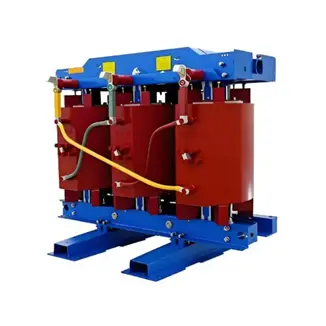
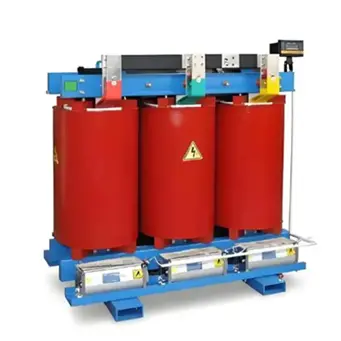
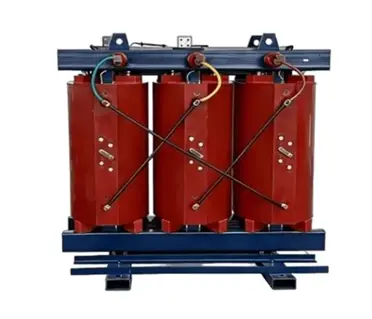
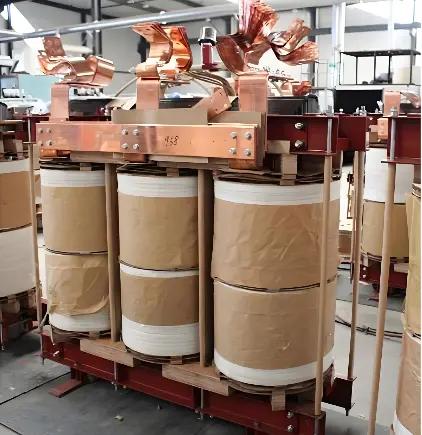
Dry-Type distribution transformer

1. Environmental Humidity Control (Fundamental Measure)

  • Continuous Dehumidification: During the plum-rain season and high-humidity periods, industrial dehumidifiers should operate continuously to maintain relative humidity within a safe, condensation-free range. Dehumidifier sizing must be calculated based on substation volume, sealing condition, and local climate.
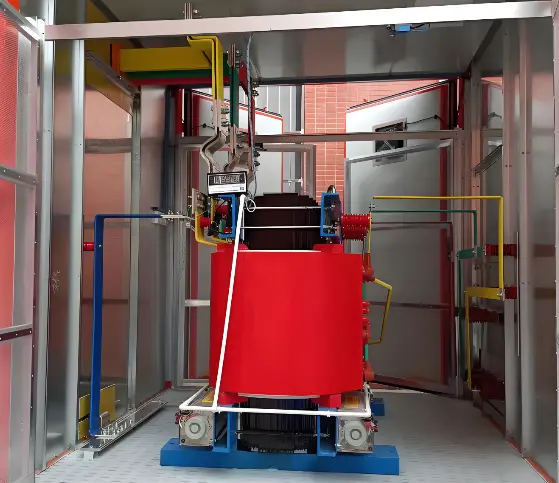
  • Cabinet-Mounted Constant-Temperature Dehumidification Heaters: Install heaters inside the transformer cabinet to automatically maintain internal temperature above the dew point, suppressing condensation at the source.
  • Online Temperature-Humidity Monitoring: Deploy sensors interlocked with dehumidification equipment; set humidity thresholds for automatic start/stop, eliminating human response lag.

2. Equipment-Body Protection

  • Pre-Commissioning Drying & Insulation Testing: Newly installed or long-idle dry-type transformers must undergo drying treatment before energisation, with megohmmeter insulation resistance testing; only pass-fail units may be energised.
  • Periodic Moisture-Drive for Standby Units: Standby transformers should be periodically energised no-load, using self-generated heat to drive off moisture.
  • High-IP-Rated Enclosures : For tunnels, underground utility corridors, and similar environments, select enclosures with high protection ratings; ensure both enclosure sealing and terminal protection meet requirements.
  • Stainless-Steel Fasteners: In humid environments, replace terminal bolts, base fasteners, and similar hardware with stainless steel to eliminate rust at the source.
  • Moisture-Resistant Transformer Selection: Some manufacturers offer specialised models with moisture-resistant winding coatings or high-IP enclosures, suitable for underground environments; prioritise these during selection.

3. Substation Civil Works & Ventilation

  • Seal Moisture Ingress Paths: Seal cable wall-penetrations with fire-rated sealant to block underground moisture entering along cable routes; fit cabinet doors with sealing gaskets.
  • Reasoned Ventilation: Maintain normal ventilation system operation; however, when outdoor humidity is extremely high, blindly introducing outside air worsens condensation — prioritise dehumidification equipment instead.
  • Drainage System Maintenance: Regularly inspect cable-trench drainage pumps and floor drains to prevent water backflow.

4. Routine O&M & Testing

  • Increased Inspection Frequency: During humid seasons, focus on checking winding surfaces for condensation and discharge traces, listening for abnormal discharge sounds, and using infrared thermometers to check joint temperatures.
  • Regular Cleaning: Periodically blow dust off winding surfaces with dry compressed air; washing with water is strictly prohibited.
  • Insulation Resistance Trending: Maintain a "temperature-humidity vs. insulation resistance" correlation log; increase testing frequency during humid seasons, monitor trends, and issue early warnings.
  • Preventive Testing: Conduct comprehensive insulation testing at least annually; record absorption ratio (R60/R15 ≥ 1.3 qualifies) to assess moisture ingress severity.
  • Grounding System Inspection: Humid environments increase grounding system corrosion risk; regularly check grounding resistance (recommended ≤ 4 Ω) to ensure reliable earthing.

5. Graded Treatment After Moisture Ingress

  • Light Moisture: Use lamp-baking method: evenly arrange incandescent lamps around windings, using radiant heat to slowly drive off moisture.
  • Moderate Moisture: Use the no-load method: apply rated voltage to the transformer no-load, utilising core and winding losses to generate heat for drying.
  • Severe Moisture: Use the short-circuit method: short the LV side, apply reduced voltage to the HV side to pass rated current through windings, using copper losses for heating. This method requires qualified personnel and strict temperature control.

iee-business

Additional Protection Measures

  • Small-Animal Protection: Fit doors, windows, and ventilation openings of transformer rooms with bird/snake/small-animal screens to prevent intrusion-induced short-circuits.
  • Lightning Protection: Install surge arresters on the primary side to prevent lightning surge damage to insulation.

Absolute Prohibitions

  • Never energise a dry-type transformer in a condensation or damp state.
  • Never wash windings or cabinets directly with high-pressure water.
  • Never disable or bypass the temperature-controller overtemperature protection.
 

Summary

The core threat of high-humidity, condensation environments to dry-type transformers is insulation moisture ingress. The hazard chain is: moisture ingress → insulation degradation → tracking discharge → short-circuit burn-out. Protection must be systematically implemented across four dimensions:

Dimension Measures
Control Humidity Continuous dehumidification + cabinet heaters above dew point — the fundamental solution
Prevent Condensation Seal moisture ingress paths + reasoned ventilation — cut off the moisture source
Strengthen Monitoring Online temperature-humidity monitoring + periodic insulation resistance trending — early warning
Rigorous Maintenance Increased inspection frequency + regular cleaning/drying + preventive testing — ensure equipment stays healthy
 

Core Principle: Better to spend extra on dehumidification electricity than to risk energising a damp transformer. With humidity properly controlled and O&M testing kept up, dry-type transformers can operate safely for the long term even in underground environments.

Edited From:Echo

Give a tip and encourage the author!

Comments

Share your question or perspective
WhatsApp
Send inquiry
+86
Click to upload file
Download
Get the IEE Business Application
Use the IEE-Business app to find equipment, obtain solutions, connect with experts, and participate in industry collaboration anytime, anywhere—fully supporting the development of your power projects and business.
Login
or continue with
New here?
Register