Search


Dry-Type Transformer Insulation Degradation: Root-Cause Analysis & Solutions

Vziman
Field: Manufacturing
10Year<
China


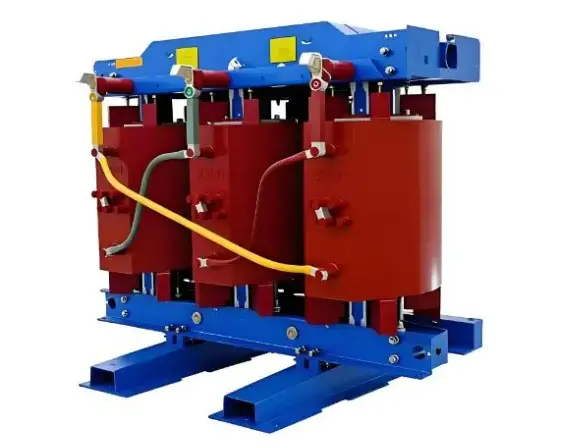
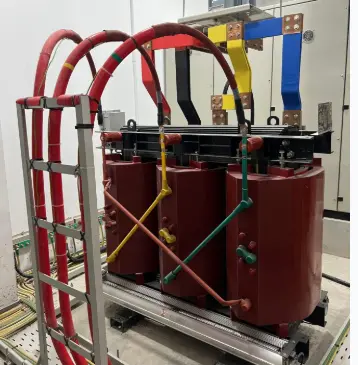
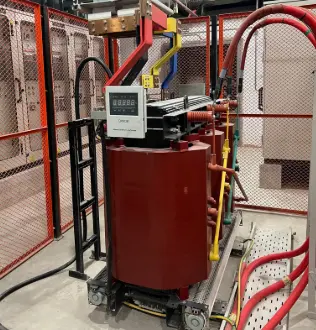
Dry-type transformers are widely used in various distribution facilities due to their oil-free, maintenance-free, and flame-retardant advantages.
However, insulation performance degradation is a prominent issue affecting their safe operation. If not addressed promptly, it may cause tripping and power outages at best, and equipment burn-out or even fire accidents at worst.
Therefore, accurately identifying the causes of insulation degradation and adopting targeted measures is key to ensuring long-term reliable operation of transformers.
iee-business

Principal Causes of Insulation Degradation

  • Moisture Ingress & Condensation:The most common cause. The winding body is exposed to air; when humidity is high, water vapour condenses on winding surfaces, significantly reducing insulation performance. This is particularly prominent in southern coastal areas and during rainy seasons.
  • Dust & Contamination Accumulation:Dry-type transformers rely on air cooling with multiple ventilation ducts. After long-term operation, dust and metal particles adhere to winding surfaces. When combined with moisture, they form conductive paths, drastically reducing insulation resistance.
  • Thermal Ageing:Prolonged high temperature causes epoxy resin and other insulation materials to crack, embrittle, and carbonise. According to the thermal ageing law of insulation: for Class F insulation, every 6 °C rise in temperature halves the insulation life; for Class A, every 8 °C rise halves the life.
  • Electrical Ageing & Partial Discharge:Micro-voids in resin castings are prone to partial discharge, which continuously erodes the insulation structure, eventually leading to breakdown.
  • Terminal Loosening or Oxidation:Loose bolts cause local overheating, charring surrounding insulation; copper busbar oxidation increases contact resistance, generating high temperatures that damage insulation.
  • Manufacturing Quality Defects:Insufficient purity of insulation materials, voids or bubbles in resin casting — these create hidden risks for future insulation degradation.
  • Mechanical Damage:Collisions and scratches during transport and installation, or long-term electromagnetic forces causing insulation abrasion.
  • Core Insulation Issues:Core multi-point grounding, degraded core coating, damp core insulation boards — all reduce overall insulation resistance.
 

iee-business

Solutions & Treatment Measures

1. Cleaning & Drying Treatment

  • Surface Cleaning — Remove dust and contamination with dry cloth or vacuum cleaner; washing with water is strictly prohibited.
  • Light Moisture — Bake windings with incandescent or infrared lamps (approximately 0.5 m from windings), with fans running for ventilation, for several consecutive days.
  • Moderate Moisture (insulation resistance low but not completely failed) — Use the no-load drying method: high-voltage side open-circuited, low-voltage side fed with 380 V mains power; bake until insulation resistance recovers to qualified value before returning to service.
  • Severe Moisture — Use the short-circuit method: low-voltage side shorted, high-voltage side fed with three-phase power not exceeding impedance voltage; must be performed by qualified personnel.

2. Improve Operating Environment

  • Ensure good substation ventilation; ambient temperature not exceeding 40 °C, relative humidity not exceeding 85%.
  • In humid environments, install dehumidifiers or space heaters to prevent condensation.
  • In dusty environments, install filtration devices and perform regular cleaning.

3. Strengthen Temperature Control & Load Management

  • Ensure temperature controllers and fans operate normally: fans start at 100 °C, alarm at 130 °C, trip at 150 °C.
  • Avoid long-term overload; recommended load factor ≤ 85%.

iee-business

4. Tightening & Inspection

  • Regularly use a torque wrench to tighten terminal bolts; check for oxidation, discoloration, or burn marks.
  • Check core grounding reliability; eliminate multi-point grounding faults.

4. Periodic Testing & Prevention

  • Use a 2500 V megohmmeter to measure winding-to-ground insulation resistance; calculate absorption ratio (R60/R15 ≥ 1.3).
  • Disconnect three-phase connecting copper bars to test each phase separately and identify the phase with degraded insulation.
  • Where conditions permit, conduct partial discharge testing.
  • Perform regular comprehensive maintenance (dust removal, tightening, temperature controller verification, fan maintenance); regular DC resistance and turns-ratio tests.

6. Severe Winding Ageing or Damage

If insulation shows obvious carbonisation, cracking, or breakdown traces, the unit must be returned to the factory for repair or replaced entirely. Epoxy resin cast windings are generally not repairable on-site.

Summary

The root causes of dry-type transformer insulation degradation can be summarised into four core factors — Moisture, Dust, Heat, Electricity — supplemented by manufacturing defects, mechanical damage, and core insulation issues.

Core Factor Key Countermeasure
Moisture (damp/condensation) Install dehumidifiers/heaters; bake promptly after moisture ingress
Dust (contamination accumulation) Regular cleaning; install filters in dusty environments
Heat (thermal ageing) Strengthen temperature control & ventilation; avoid long-term overload
Electricity (electrical ageing/partial discharge) Regular insulation testing & PD testing; detect internal defects early
 

Daily O&M must focus on four key tasks: moisture prevention & dehumidification, regular cleaning, temperature monitoring, and load management. Adhere to periodic insulation testing to achieve early detection and early rectification, effectively extending equipment life and ensuring power supply safety.

Edited From:Echo

Give a tip and encourage the author!

Comments

Share your question or perspective
WhatsApp
Send inquiry
+86
Click to upload file
Download
Get the IEE Business Application
Use the IEE-Business app to find equipment, obtain solutions, connect with experts, and participate in industry collaboration anytime, anywhere—fully supporting the development of your power projects and business.
Login
or continue with
New here?
Register