• Product
  • Suppliers
  • Manufacturers
  • Solutions
  • Free tools
  • Knowledges
  • Experts
  • Communities
Search


Typical Problems & Systematic Protection Strategies for Dry-Type Transformers in Coastal Salt-Fog Environments

Vziman
Field: Manufacturing
10Year<
China
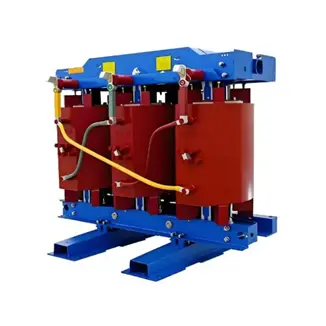
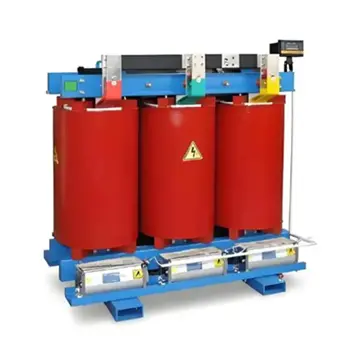
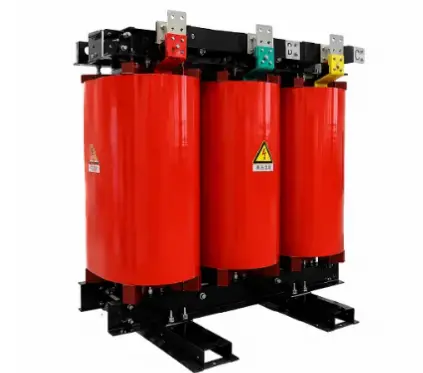
The harsh environment of coastal regions — high salt-fog concentration and high humidity — poses a continuous threat to the insulation performance and metal structures of dry-type transformers, with failure rates significantly higher than in inland areas.
This article covers the damage mechanisms, common faults, and systematic protection strategies across three dimensions, providing a reference for engineering practice in the selection and O&M of coastal dry-type transformers.

1. Principal Hazards of Salt-Fog Environments on Dry-Type Transformers

  • Coastal atmospheres contain large quantities of salt particles and moisture. Chloride ions in salt-fog have extremely strong penetrating ability; they can penetrate ordinary anti-corrosion coatings and reach the metal substrate directly, causing multi-faceted damage to dry-type transformers:
  • Insulation Performance Degradation & Pollution Flashover — Salt-fog particles adhere to winding and insulator surfaces. When damp, they form a highly conductive salt film, drastically reducing insulation withstand voltage along the surface. This easily forms continuous leakage paths, triggering surface discharge (i.e., "pollution flashover"). This is one of the most common faults in coastal dry-type transformers; in severe cases it can directly lead to equipment burn-out or even fire.
  • Corrosion of Metal Structural Components — Terminal connections, core fasteners, cooler fins, and other metal parts readily rust in salt-fog environments, causing increased contact resistance, aggravated heating, and potential perforation of cooler fins and piping due to pitting corrosion.
  • Enclosure Corrosion & Seal Failure — Ordinary carbon steel or standard aluminium-zinc coated enclosures easily suffer paint peeling and perforation in seaside environments. Water ingress through door gaps and internal condensation further accelerate equipment ageing and scrapping.
  • Winding Dampness & Insulation Ageing — High humidity combined with condensation generated by diurnal temperature cycles penetrates winding surfaces, causing epoxy resin insulation layers to crack and carbonise, ultimately triggering short-circuits.

iee-business

2. Common Fault Types

Fault Type Manifestation Root Cause
Pollution flashover tripping Frequent tripping in rainy weather; carbonised tracking traces on insulation surface Salt-fog deposits form conductive film; insufficient creepage distance
Winding overheating Abnormal temperature rise; fans start frequently Salt-fog blocks ventilation ducts, reducing heat dissipation efficiency
Terminal burn-out Discoloration, overheating, or melting of terminals Salt-fog corrosion increases contact resistance
Enclosure perforation Enclosure rust-through, water ingress Insufficient anti-corrosion grade; continuous chloride ion attack
Insulation breakdown Cracking and discharge on winding surface Combined action of condensation ingress + salt-fog corrosion
 

iee-business

3. Systematic Protection Strategies

(1) Equipment Selection Phase

  • Enclosure Material Upgrade — For general coastal areas, use 304 stainless steel enclosures. For heavy salt-fog zones such as ports, tidal flats, and offshore platforms, use 316L stainless steel (molybdenum added, drastically improved resistance to chloride-ion pitting). Ordinary carbon steel enclosures are strictly prohibited in coastal salt-fog areas.
  • Anti-Corrosion Coating Standard — Enclosure coatings shall meet ISO 12944 corrosivity category C4 or above. For heavy salt-fog areas, a C5M-grade protective system is recommended (epoxy zinc-rich primer + micaceous iron oxide intermediate coat + weather-resistant fluorocarbon topcoat multi-layer system).
  • Protection Rating Requirement — Protection rating for salt-fog environments shall not be lower than IP54; IP56 fully sealed structure is recommended to effectively prevent dust, water splash, and salt-fog ingress.
  • Insulation Design Upgrade — For coastal areas, select according to heavy pollution class; appropriately increase creepage distance. Windings should preferably use epoxy resin vacuum casting process, with surfaces possessing excellent hydrophobicity and salt-fog resistance.
  • Salt-Fog Test Requirement — During selection, require the manufacturer to provide test reports demonstrating compliance with GB/T 2423.17 salt-fog testing, as quantitative evidence of anti-corrosion performance.

(2) Structural & Installation Protection

  • Isolated Cooling Solution — Adopt an internal circulation cooling system that exchanges heat with the outside, preventing high-salt-fog air from directly entering the transformer enclosure. This shifts the anti-corrosion focus to the enclosure, drastically reducing body corrosion risk.
  • Fully Sealed Design — Use high-temperature resistant silicone rubber gaskets between frame and removable panels; standardise double-layer door gaskets + structural drip edges to prevent salt-fog and moisture ingress into the cabinet.
  • Breathing System Protection — Select breather valves with desiccant and salt-fog filtration to block salt-fog entry via breathing passages.
  • Anti-Vibration Design — Coil casting forms a rigid body to enhance inherent vibration resistance; increase base pads and number of fixing bolts; all fasteners use anti-loosening measures to prevent component loosening or detachment due to vibration.
  • Fastener Corrosion Protection — All bolts and connecting parts use stainless steel or galvanised materials; regularly apply anti-corrosion grease to reduce electrochemical corrosion risk.
  • Internal Drying Measures — Install heaters or dehumidification devices inside the cabinet (e.g., automatic temperature-humidity controllers) to maintain a dry internal environment and prevent condensation accumulation on insulation materials.

(3) Operation & Maintenance Essentials

  • Regular Cleaning — Periodically blow salt-fog deposits off winding surfaces with dry compressed air; clean cooler fins of salt-fog and debris to restore heat dissipation efficiency. High-pressure water washing is strictly prohibited.
  • Coating Inspection — Periodically inspect enclosure coating for peeling; promptly repair any local damage following the "grind → primer → topcoat" process to prevent corrosion spreading from damaged points.
  • Insulation Monitoring — Conduct regular winding insulation resistance tests and partial discharge tests; monitor insulation surfaces for tracking traces or carbonisation.
  • Condensation Prevention — During humid seasons and the plum-rain period, keep dehumidification devices running continuously to ensure no condensation inside the cabinet. Long-idle dry-type transformers must be dried and pass insulation tests before re-energisation.
  • Infrared Thermography — Periodically conduct infrared temperature measurement on lead connections and busbar joints to promptly detect abnormal heating caused by salt-fog corrosion and poor contact.
  • Seal Inspection — Periodically check sealing gaskets for ageing; promptly replace failed seals to ensure protection rating is not degraded.

 4. Protection Grade Selection Quick Reference

Salt-Fog Grade Typical Scenario Recommended Enclosure Material Anti-Corrosion Grade (ISO 12944) Protection Rating
Light Near-sea suburbs Heavy anti-corrosion aluminium-zinc coated steel C3 ≥ IP44
Moderate General coastal areas 304 Stainless Steel C4 ≥ IP54
Heavy Ports, tidal flats, offshore platforms 316L Stainless Steel C5M ≥ IP56
 

iee-business

5. Summary

The core of salt-fog coastal dry-type transformer protection lies in countering the dual erosion of insulation and metal structures by the combined action of salt-fog corrosion and high-humidity condensation. In practice, three key control points must be grasped:

  • Selection :Match materials, coatings, and insulation standards to the actual salt-fog grade; specify higher rather than lower; strictly prohibit under-specification.
  • Installation : Implement fully sealed isolation, anti-vibration fixing, and internal drying; cut off salt-fog ingress paths.
  • O&M : Regular cleaning, insulation monitoring, infrared thermography — detect and rectify hidden dangers early.

Edited From:Echo

Give a tip and encourage the author!

Comments

Share your question or perspective
WhatsApp
Send inquiry
+86
Click to upload file
Download
Get the IEE Business Application
Use the IEE-Business app to find equipment, obtain solutions, connect with experts, and participate in industry collaboration anytime, anywhere—fully supporting the development of your power projects and business.
Login
or continue with
New here?
Register