• Product
  • Suppliers
  • Manufacturers
  • Solutions
  • Free tools
  • Knowledges
  • Experts
  • Communities
Search


Free Expert Guides on Power Systems, Circuit Design & Electrical Troubleshooting

Access free engineering resources from IEE Business—covering power design, circuit layout, equipment selection, and troubleshooting. Expert-developed guides help engineers, procurement, and project teams make better decisions. Stay ahead on smart grids, renewables, efficiency, and AI tools. Improve reliability, reduce downtime, and enhance outcomes with real-world solutions. Explore our knowledge hub today.
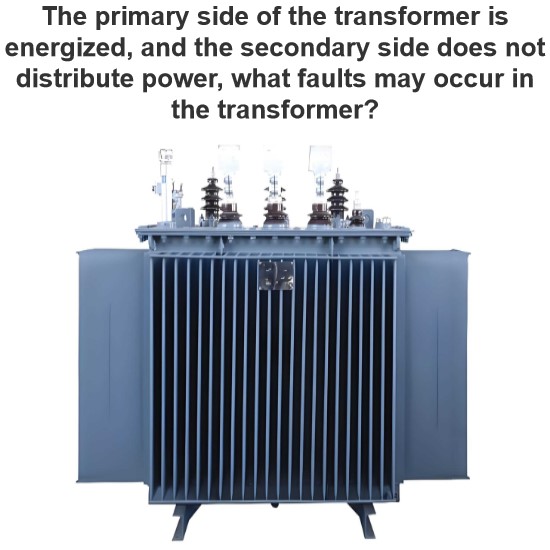
The primary side of the transformer is energized, and the secondary side does not distribute power, what faults may occur in the transformer?
If the primary side of the transformer is powered, and the secondary/distribution side does not distribute power, even if the fuse is in normal condition, then the following faults may occur in the installed transformer: Winding Failure: The secondary winding may be open, resulting in no voltage output on the secondary side. Wiring Errors: During installation, there may be incorrect connections between the primary and secondary windings. Internal Short Circuit: Although the fuse is normal, there
10/22/2024
Consult
Tip
Consult
Tip
How is the application of dimethyl silicone oil in transformers?
The application of dimethyl silicone oil in transformers is mainly reflected in the following aspects:Electrical Insulation MediumDimethyl silicone oil is widely used as an electrical insulating medium in transformers. Although its electrical properties are not superior to those of general insulating oils, it has the advantages of a wide range of viscosities, good thermal stability, oxidation resistance, low dielectric loss, low freezing point and vapor pressure, high flash and fire points. Thes
10/22/2024
Consult
Tip
Consult
Tip
What are the pros and cons of using a single-phase transformer compared to a three-phase transformer?
For a low-power transformer like 5kVA, compared with three-phase transformers, using single-phase transformers has the following advantages and disadvantages:I. Advantages of single-phase transformersLower costThe structure of single-phase transformers is relatively simple, and the manufacturing process and material costs are usually lower than those of three-phase transformers. For small power requirements such as a 5kVA transformer, the price of single-phase transformers may be more advantageo
10/21/2024
Consult
Tip
Consult
Tip
What is the purpose of using a 12 volt DC transformer in an AC circuit?
Using a 12-volt DC transformer (often called an adapter or power converter) in an AC circuit serves the purpose of converting alternating current (AC) to direct current (DC) and reducing the voltage to the desired level. Here are some common uses of a 12-volt DC transformer:1. Powering DC DevicesMany electronic devices and small appliances require DC power to function. A 12-volt DC transformer can provide a stable DC voltage for these devices. Examples include: Consumer Electronics: Such as phon
10/19/2024
Consult
Tip
Consult
Tip
What is a type of step-up transformer?
Step-up transformers (Step-up Transformers) are devices used to increase voltage levels and are widely applied in power transmission systems to reduce energy losses during transmission. Depending on various criteria, step-up transformers can be classified into different types. Here are the categories of step-up transformers according to different classification standards:1.By Number of Phases Single-phase Step-up Transformer: Suitable for residential or small commercial facilities. Three-phase S
10/16/2024
Consult
Tip
Consult
Tip
What are the effects of applying a negative DC input to the secondary of a transformer?
Applying a negative DC input to the secondary of a transformer can have the following effects:I. Effects on the transformer itselfCore saturationTransformers are usually designed to handle AC signals. When a DC input, especially a negative DC, is applied, it will generate a fixed magnetic field direction in the transformer core. This may lead to gradual saturation of the core.After the core is saturated, its permeability will drop sharply, and the inductance of the transformer will also be great
10/14/2024
Consult
Tip
Consult
Tip
What is the reason for using high voltages instead of low voltages in transformers, generators?
The reason why transformers and generators use high voltage.In power transmission and distribution systems, transformers and generators typically operate at high voltage rather than low voltage, primarily for several key reasons:1. Efficiency and Loss ReductionTransformer: High voltage transmission can reduce energy loss during long-distance transmission. According to the principle of electromagnetic induction, when the voltage is increased, the current decreases, and the thermal loss of the cur
10/14/2024
Consult
Tip
Consult
Tip
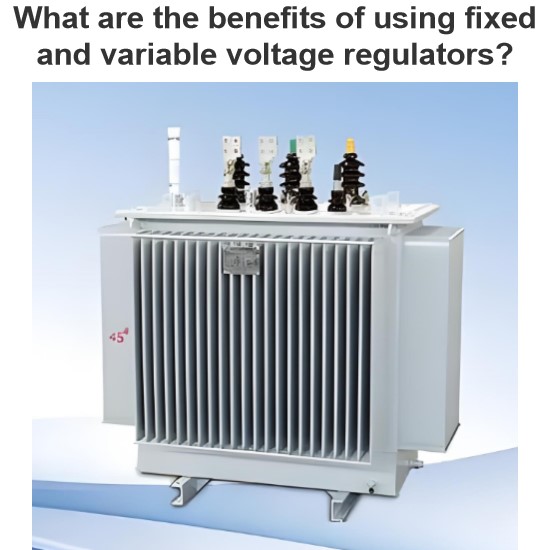
What are the benefits of using fixed and variable voltage regulators?
The benefits of using fixed and variable voltage regulators are as follows:I. Benefits of fixed voltage regulatorsStable output voltageFixed voltage regulators can provide a constant output voltage, unaffected by input voltage fluctuations and load changes. This is crucial for electronic devices that require a stable power supply. For example, microprocessors, digital circuits, and analog circuits have high requirements for power supply voltage stability. Fixed voltage regulators can ensure that
10/12/2024
Consult
Tip
Consult
Tip
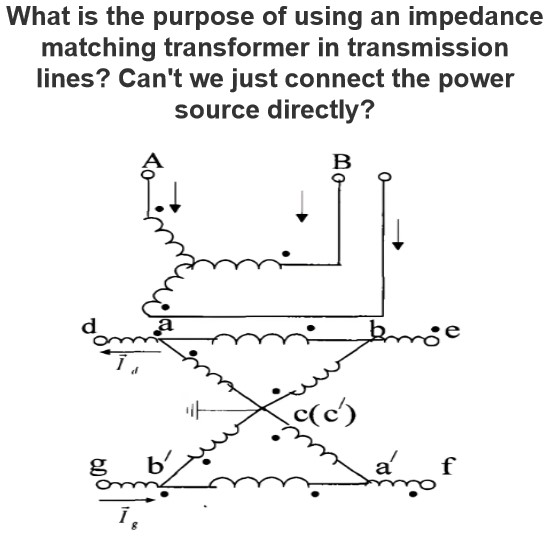
What is the purpose of using an impedance matching transformer in transmission lines? Can't we just connect the power source directly?
Using impedance matching transformers (Impedance Matching Transformers) in transmission lines (Transmission Lines) serves several purposes aimed at maximizing power transfer and reducing reflections, thus enhancing the overall efficiency and stability of the system. Although theoretically it might seem possible to connect the power source directly to the load, doing so in practice can lead to multiple issues. Below, I explain the purpose of using impedance matching transformers and why directly
10/12/2024
Consult
Tip
Consult
Tip
What are the different types of core transformers, and how do you compute the C core?
Core transformers vary based on the shape and construction of their magnetic cores. The shape of the core directly affects the transformer’s performance, including efficiency, size, and weight. Below is a list of common core types and a detailed explanation of how to calculate a C-coreDifferentTypes of Core Transformers1. EI-Type Core Features: This type of core consists of an "E"-shaped core and an "I"-shaped core combined together, making it one of the most common core types. Applications: Wid
10/11/2024
Consult
Tip
Consult
Tip
Send inquiry
+86
Click to upload file
Download
Get the IEE Business Application
Use the IEE-Business app to find equipment, obtain solutions, connect with experts, and participate in industry collaboration anytime, anywhere—fully supporting the development of your power projects and business.