• Product
  • Suppliers
  • Manufacturers
  • Solutions
  • Free tools
  • Knowledges
  • Experts
  • Communities
Search


Free Expert Guides on Power Systems, Circuit Design & Electrical Troubleshooting

Access free engineering resources from IEE Business—covering power design, circuit layout, equipment selection, and troubleshooting. Expert-developed guides help engineers, procurement, and project teams make better decisions. Stay ahead on smart grids, renewables, efficiency, and AI tools. Improve reliability, reduce downtime, and enhance outcomes with real-world solutions. Explore our knowledge hub today.
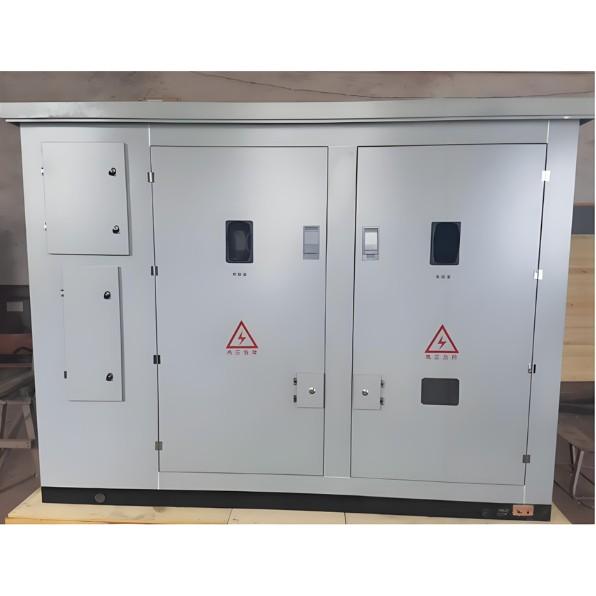
How Grounding Resistor Cabinets Protect Transformers?
In power systems, transformers, as core equipment, are critical to the safe operation of the entire grid. However, due to various reasons, transformers are often exposed to multiple threats. In such cases, the importance of grounding resistor cabinets becomes evident, as they provide indispensable protection for transformers.Firstly, grounding resistor cabinets can effectively protect transformers from lightning strikes. The instantaneous high voltage caused by lightning can severely damage tran
12/03/2025
Consult
Tip
Consult
Tip
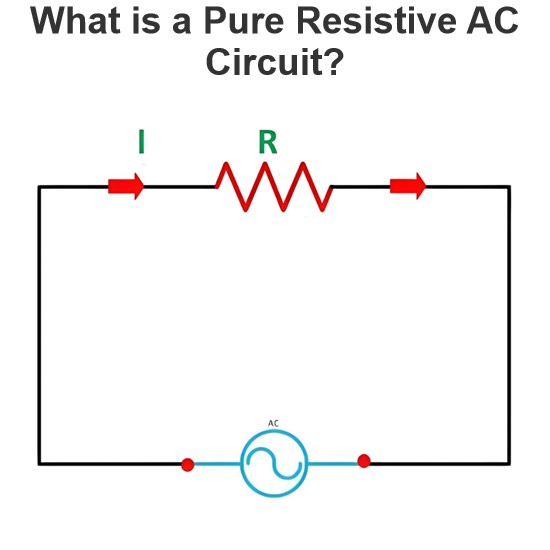
What is a Pure Resistive AC Circuit?
Pure Resistive AC CircuitA circuit containing only a pure resistanceR(in ohms) in an AC system is defined as a Pure Resistive AC Circuit, devoid of inductance and capacitance. Alternating current and voltage in such a circuit oscillate bidirectionally, generating a sine wave (sinusoidal waveform). In this configuration, power is dissipated by the resistor, with voltage and current in perfect phase—both reaching their peak values simultaneously. As a passive component, the resistor neit
06/02/2025
Consult
Tip
Consult
Tip
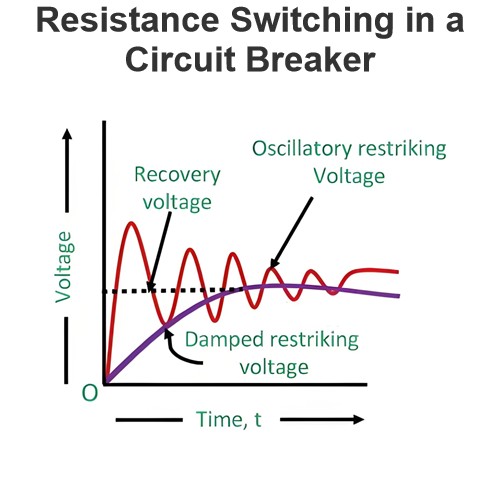
Resistance Switching in a Circuit Breaker
Resistance SwitchingResistance switching refers to the practice of connecting a fixed resistor in parallel with the contact gap or arc of a circuit breaker. This technique is applied in circuit breakers with high post-arc resistance in the contact space, primarily to mitigate re-striking voltages and transient voltage surges.Severe voltage fluctuations in power systems arise from two main scenarios: interrupting low-magnitude inductive currents and breaking capacitive currents. Such overvoltages
05/23/2025
Consult
Tip
Consult
Tip
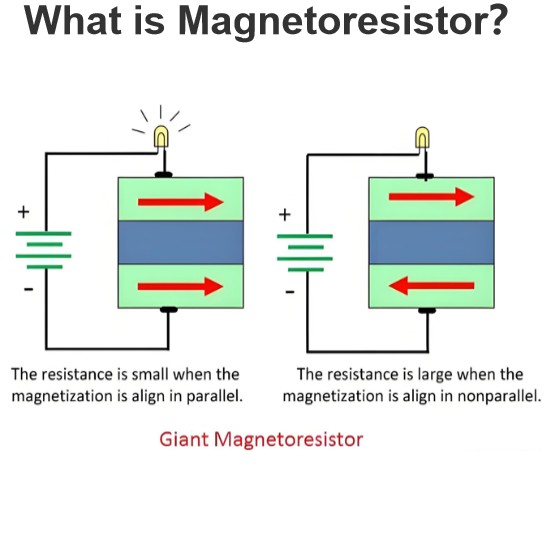
What is Magnetoresistor?
Definition: When the resistance of certain metals and semiconductor materials changes in the presence of a magnetic field, this phenomenon is referred to as the magnetoresistance effect. The components that exhibit this effect are called magnetoresistors. Put simply, a magnetoresistor is a type of resistor whose resistance value fluctuates with the strength and direction of an external magnetic field.Magnetoresistors play a crucial role in detecting the presence of a magnetic field, measuring it
05/10/2025
Consult
Tip
Consult
Tip
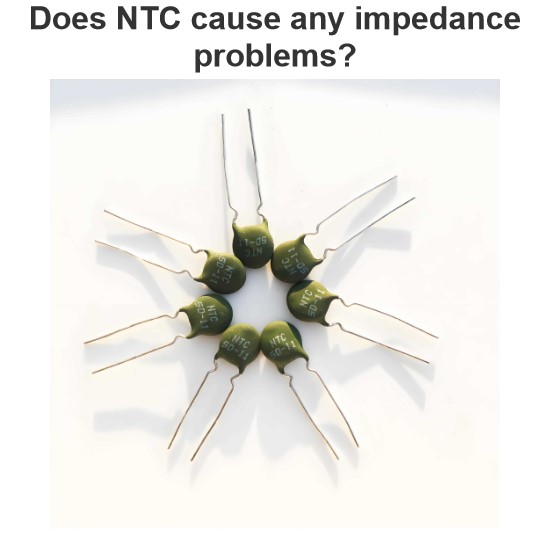
Does NTC cause any impedance problems?
Can NTC Cause Any Impedance Issues?NTC (Negative Temperature Coefficient) thermistors are electronic components whose resistance decreases as temperature increases. They are widely used in temperature measurement, temperature compensation, and overheat protection applications. However, in certain scenarios, NTC thermistors can lead to impedance-related issues. Below are several potential situations and their solutions:1. High Initial Impedance Issue: At low temperatures, the resistance of an NTC
01/18/2025
Consult
Tip
Consult
Tip
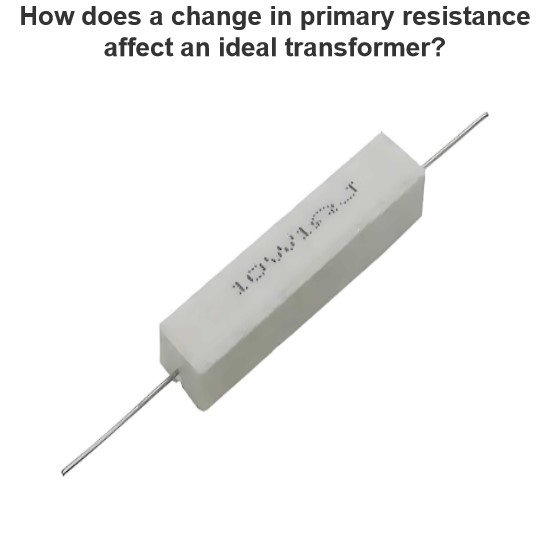
How does a change in primary resistance affect an ideal transformer?
How Does the Change in Primary Resistance Affect an Ideal Transformer?The change in primary resistance has significant implications for the performance of an ideal transformer, especially in practical applications. While an ideal transformer assumes no losses, real-world transformers have some resistance in both the primary and secondary windings, which can affect performance. Below is a detailed explanation of how changes in primary resistance impact an ideal transformer:Assumptions of an Ideal
11/27/2024
Consult
Tip
Consult
Tip
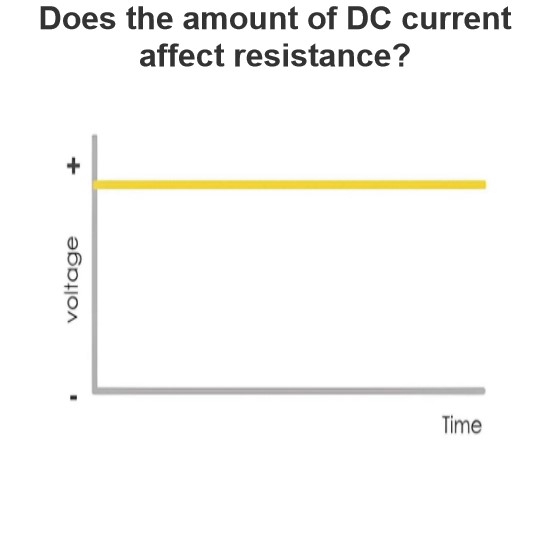
Does the amount of DC current affect resistance?
The magnitude of the DC current itself does not directly affect resistance, but it can indirectly influence resistance through several mechanisms. Here is a detailed explanation:1.Basic Definition of ResistanceResistance R is an inherent property of a circuit element that indicates the degree to which the element opposes the flow of current. According to Ohm's Law, resistance R can be calculated using the formula:R=IVwhere: Vis th
10/31/2024
Consult
Tip
Consult
Tip
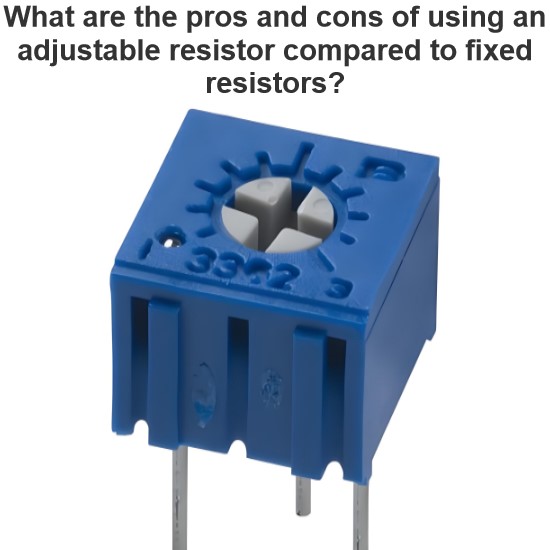
What are the pros and cons of using an adjustable resistor compared to fixed resistors?
Advantages Flexibility: The greatest advantage of adjustable resistors lies in their flexibility. They allow users to adjust the resistance value as needed, which is extremely useful in situations where circuit parameters require dynamic adjustment. Multi-functionality: Potentiometers excel in a wide range of applications, including volume control, brightness control, and voltage regulation.Disadvantages Low Accuracy: Potentiometers typically have lower accuracy, making them unsuitable for appli
10/30/2024
Consult
Tip
Consult
Tip
What causes the temperature of a resistor to increase when it is connected to an electric circuit?
Reasons for Temperature Increase in Resistors When Connected to a CircuitWhen a resistor is connected to a circuit, its temperature increases primarily due to the conversion of electrical energy into thermal energy. Here is a detailed explanation:1. Power DissipationThe main function of a resistor in a circuit is to dissipate electrical energy as heat. According to Ohm's Law and Joule's Law, the power dissipation P in a resistor can be expressed as:where:P is the power dissipation (in watts, W)I
10/29/2024
Consult
Tip
Consult
Tip
How does a high impedance electrical fault differ from a low impedance fault?
High impedance electrical faults (High Impedance Fault, HIF) and low impedance faults differ significantly in their characteristics and the hazards they pose in electrical systems. Understanding these differences is crucial for fault diagnosis and prevention. Here are the basic distinctions between the two types of faults and how to identify them:High Impedance Electrical Fault (HIF)Characteristics Higher Impedance: In high impedance electrical faults, the impedance at the fault point is higher,
10/21/2024
Consult
Tip
Consult
Tip
Send inquiry
+86
Click to upload file

IEE Business will not sell or share your personal information.

Download
Get the IEE Business Application
Use the IEE-Business app to find equipment, obtain solutions, connect with experts, and participate in industry collaboration anytime, anywhere—fully supporting the development of your power projects and business.