
What is a PLC?PLC stands for “Programmable Logic Controller.” A PLC is a computer specially designed to operate reliably in harsh industrial environments, such as extreme temperatures and wet, dry, and/or dusty conditions. PLCs are used to automate industrial processes such as a manufacturing plant’s assembly line, an ore processing plant, or a wastewater treatment plant.PLCs share many features of the personal computer you have at home. They both have a power supply, a CPU (Central Processing U
03/28/2024
Consult
Tip
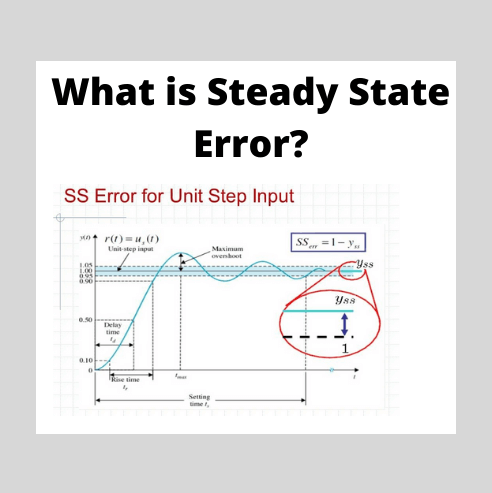
What is Steady State Error?Steady-state error is defined as the difference between the desired value and the actual value of a system output in the limit as time goes to infinity (i.e. when the response of the control system has reached steady-state).Steady-state error is a property of the input/output response for a linear system. In general, a good control system will be one that has a low steady-state error.First, we will discuss the steady-state error in a first-order transfer function by an
03/28/2024
Consult
Tip
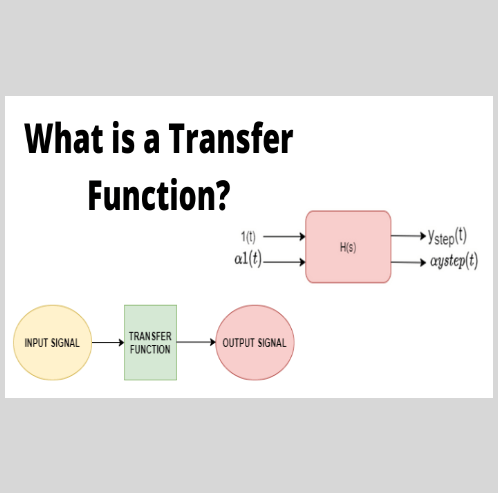
What is a Transfer Function?A transfer function describes the relationship between the output signal of a control system and the input signal. A block diagram is a visualization of the control system that uses blocks to represent the transfer function and arrows representing the different input and output signals. Transfer Function The transfer function is a convenient representation of a linear time-invariant dynamical system. Mathematically the transfer function is a function of complex v
03/28/2024
Consult
Tip
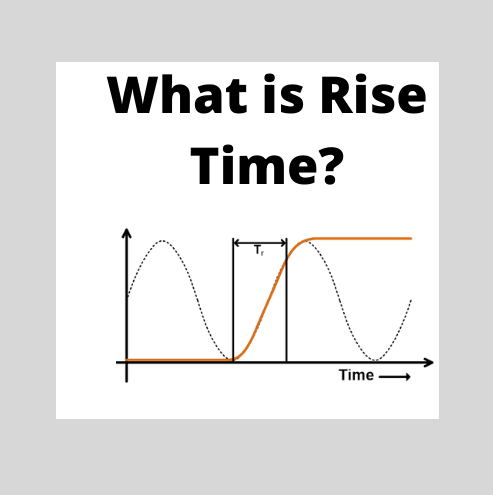
What is Rise Time?Rise time is defined as the time taken for a signal to cross from a specified low value to a specified high value. In analog and digital electronics, the specified lower value and specified higher value are 10% and 90% of the final or steady-state value. So the rise time is typically defined as how long it takes for a signal to go from 10% to 90% of its final value.The rise time is an essential parameter in analog and digital systems. It describes the time taken for the output
03/28/2024
Consult
Tip
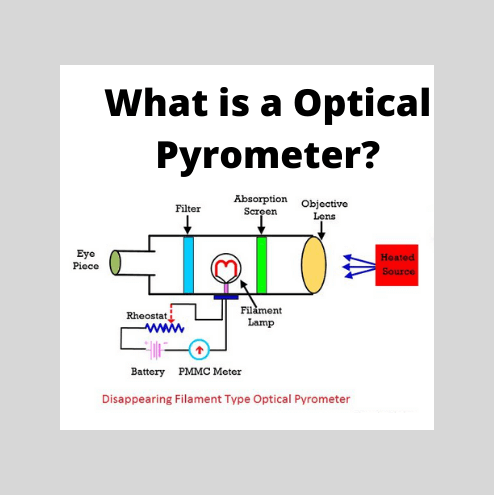
The working principle and construction of an Optical Pyrometer are quite simple. We have drawn an experimental model of this type of temperature sensors. It is a measuring instrument that measures temperature of a hot glowing object.The instrument has an illuminated reference, with which the brightness of that of the hot body is matched by controlling the input electric current of the reference.When, the glow of the reference matches with the hot object through an eye piece, that electric curren
03/28/2024
Consult
Tip
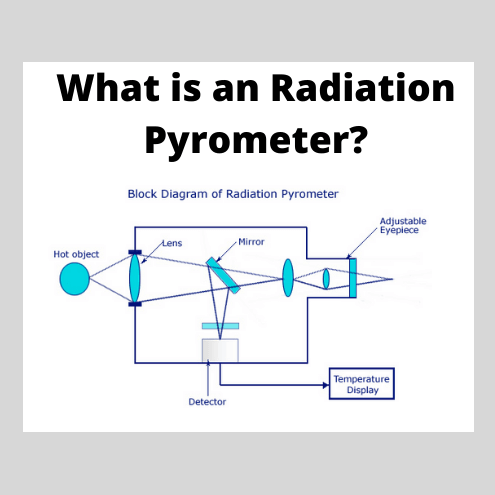
A radiation pyrometer is a device that measures the temperature of a distant object by detecting the thermal radiation it emits. This type of temperature sensor does not need to touch the object or be in thermal contact with it, unlike other thermometers such as thermocouples and resistance temperature detectors (RTDs). Radiation pyrometers are mainly used for measuring high temperatures above 750°C, where physical contact with the hot object is not possible or desirable.What is a Radiation Pyro
03/28/2024
Consult
Tip
Sensors are characterized depending on the value of some of the parameters. Important characteristics of sensors and transducers are listed below: Input characteristics Transfer characteristics Output characteristicsInput Characteristics of Sensors Range:It is the minimum and maximum value of physical variable that the sensor can sense or measure. For example, aResistance Temperature Detector(RTD) for the measurement of temperature has a range of -200 to 800oC. Span:It is the difference between
03/28/2024
Consult
Tip
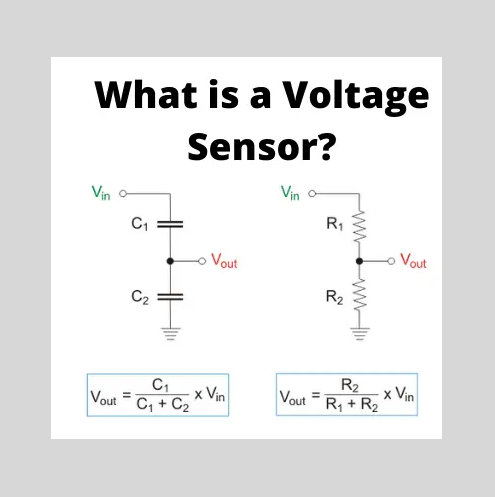
What is a Voltage Sensor?A voltage sensor is a sensor used to calculate and monitor the amount of voltage in an object. Voltage sensors can determine the AC voltage or DC voltage level. The input of this sensor is the voltage, whereas the output is the switches, analog voltage signal, a current signal, or an audible signal.Sensors are devices that can sense or identify and react to certain types of electrical or optical signals. The implementation of a voltage sensor and current sensor technique
03/28/2024
Consult
Tip
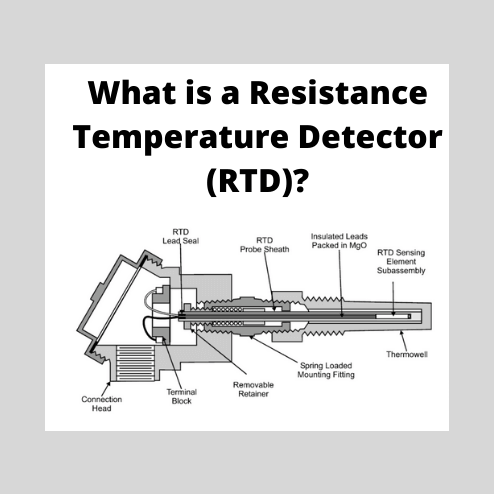
What is an RTD (Resistance Temperature Detector)?A Resistance Temperature Detector (also known as a Resistance Thermometer or RTD) is an electronic device used to determine the temperature by measuring the resistance of an electrical wire. This wire is referred to as a temperature sensor. If we want to measure temperature with high accuracy, an RTD is the ideal solution, as it has good linear characteristics over a wide range of temperatures. Other common electronics devices used to measure temp
03/28/2024
Consult
Tip
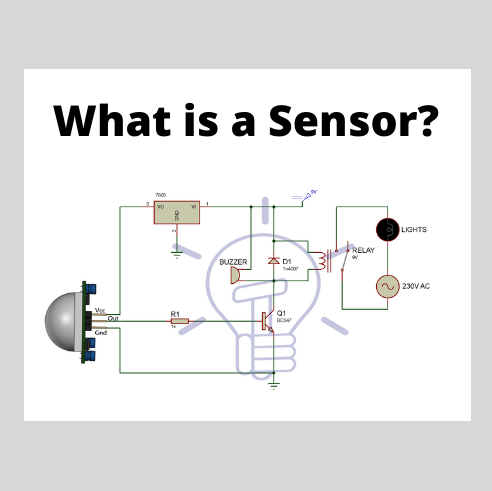
Let us consider a measurement system. It is composed of an input device which senses the environment or surrounding to generate an output and, a signal processing block which processes the signal from input device and an output device which presents the signal to human or machine operator in a more readable and usable form.The initial stage is input device which is mainly what we are going to discuss in this chapter.SensorA sensor is a device that responds to any change in physical phenomena or
03/28/2024
Consult
Tip






