• Product
  • Suppliers
  • Manufacturers
  • Solutions
  • Free tools
  • Knowledges
  • Experts
  • Communities
Search


Free Expert Guides on Power Systems, Circuit Design & Electrical Troubleshooting

Access free engineering resources from IEE Business—covering power design, circuit layout, equipment selection, and troubleshooting. Expert-developed guides help engineers, procurement, and project teams make better decisions. Stay ahead on smart grids, renewables, efficiency, and AI tools. Improve reliability, reduce downtime, and enhance outcomes with real-world solutions. Explore our knowledge hub today.
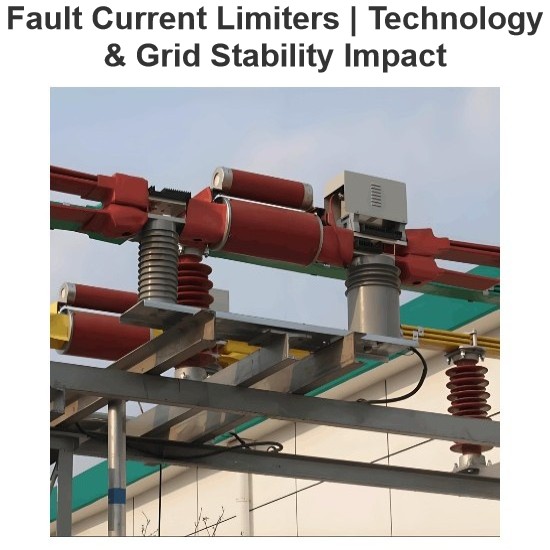
Fault Current Limiters | Technology & Grid Stability Impact
1 Introduction to Fault Current Limiter (FCL) TechnologyTraditional passive fault current limitation methods—such as using high-impedance transformers, fixed reactors, or split-busbar operation—suffer from inherent drawbacks, including disruption of grid structure, increased steady-state system impedance, and reduced system security and stability. These approaches are becoming increasingly unsuitable for today's complex and large-scale power grids.In contrast, active fault cu
08/26/2025
Consult
Tip
Consult
Tip
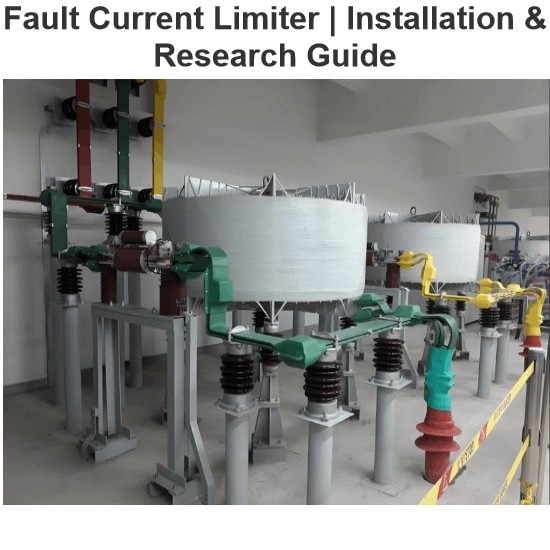
Fault Current Limiter | Installation & Research Guide
1 Locations for Installing Fault Current Limiters (FCLs) At Generator Terminals:Installing an FCL at this location reduces the short-circuit current level in the grid during faults, minimizes mechanical and thermal stress on the generator, and consequently reduces losses in equipment and devices. At Plant Distribution Substations:Short-circuit current levels at this location are typically very high. Installing an FCL can significantly suppress fault currents. Across the Entire Busbar:When increa
08/26/2025
Consult
Tip
Consult
Tip
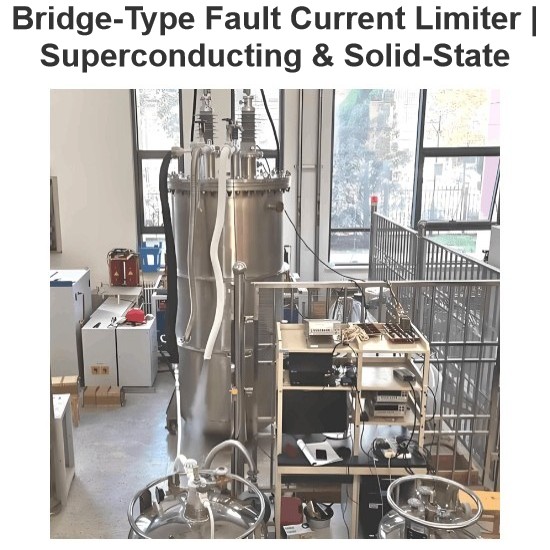
Bridge-Type Fault Current Limiter | Superconducting & Solid-State
1 Bridge-Type Superconducting Fault Current Limiter1.1 Structure and Operating Principle of the Bridge-Type SFCLFigure 1 shows the single-phase circuit diagram of the bridge-type SFCL, which consists of four diodes D₁ to D₄, a DC bias voltage source V_b, and a superconducting coil L. A circuit breaker CB is connected in series with the limiter to interrupt the fault current after it has been limited. The bias source V_b provides a bias current i_b to the superconducting coil L. The voltage of V_
08/25/2025
Consult
Tip
Consult
Tip
Study on Optimal Resistance Selection of Resistive Superconducting Fault Current Limiters for Flexible DC Transmission Systems
1 Resistive Superconducting Fault Current Limiter1.1 Operating PrincipleAs power grid scales continue to expand, the short-circuit capacity of domestic power systems is rapidly increasing, posing significant challenges to grid construction and operation. To address the problem of excessive short-circuit currents, superconducting fault current limiters (SFCLs) based on superconductivity principles are receiving growing attention. Depending on their damping characteristics when transitioning into
08/25/2025
Consult
Tip
Consult
Tip
Reliability Analysis of Fault Current Limiters in High-Voltage Substations
1 IntroductionTo meet the rapidly growing demand for electric energy, power generation, transmission, and distribution systems must develop accordingly. One of the critical issues arising from this development is the rapid increase in short-circuit currents. The rise in short-circuit currents leads to several hazards:overheating of series-connected devices along the fault path;increased transient and recovery voltages during current interruption, which may damage insulation systems;generation of
08/25/2025
Consult
Tip
Consult
Tip
Application Instructions for 50kA Current-Limiting Devices on Offshore Oil Platforms
1. Operation of the System With and Without CLiP (Current-Limiting Device)Under normal operating conditions, the switchboard operates as follows:All bus tie breakers are closed, connecting the three bus sections in parallel;Two generators are online and supplying power to the switchboard.Under this configuration, the prospective fault current at the switchboard is less than 50kA. Therefore, the current-limiting device (CLiP) is not inserted into the circuit.During maintenance operations involvin
08/25/2025
Consult
Tip
Consult
Tip
Send inquiry
+86
Click to upload file

IEE Business will not sell or share your personal information.

Download
Get the IEE Business Application
Use the IEE-Business app to find equipment, obtain solutions, connect with experts, and participate in industry collaboration anytime, anywhere—fully supporting the development of your power projects and business.