• Product
  • Suppliers
  • Manufacturers
  • Solutions
  • Free tools
  • Knowledges
  • Experts
  • Communities
Search


Free Expert Guides on Power Systems, Circuit Design & Electrical Troubleshooting

Access free engineering resources from IEE Business—covering power design, circuit layout, equipment selection, and troubleshooting. Expert-developed guides help engineers, procurement, and project teams make better decisions. Stay ahead on smart grids, renewables, efficiency, and AI tools. Improve reliability, reduce downtime, and enhance outcomes with real-world solutions. Explore our knowledge hub today.
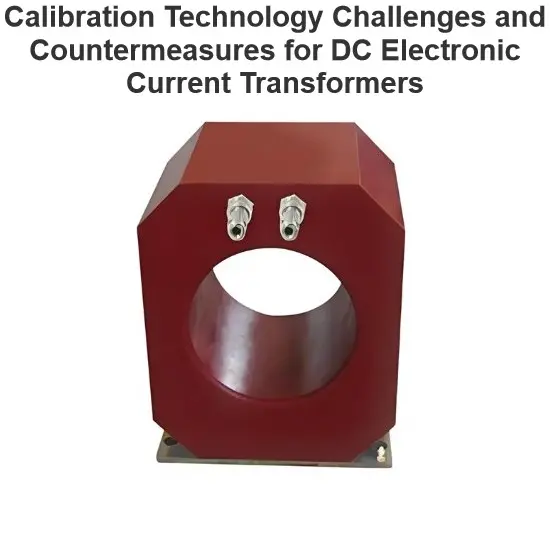
Calibration Technology Challenges and Countermeasures for DC Electronic Current Transformers
In modern power systems, DC electronic current transformers play a crucial role. They are not only used for high-precision current measurement but also serve as key tools for grid optimization, fault detection, and energy management. With the rapid development of high-voltage direct current (HVDC) transmission technology and its widespread deployment globally, the performance requirements for DC current transformers have become increasingly stringent, especially in terms of measurement accuracy
07/23/2025
Consult
Tip
Consult
Tip
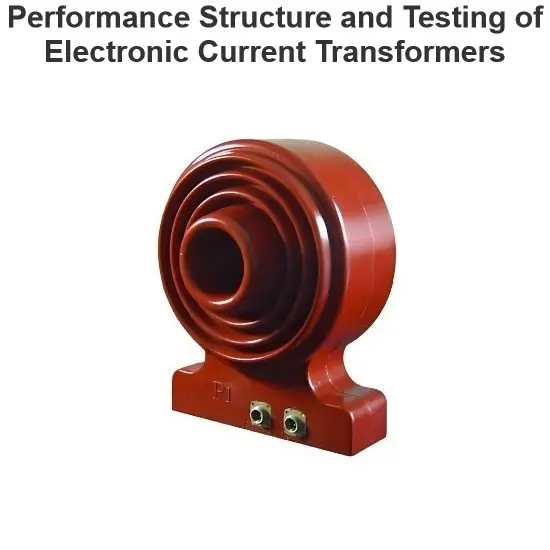
Performance Structure and Testing of Electronic Current Transformers
1 Performance AdvantagesIn recent years, electronic current transformers (ECTs) have emerged as a key industry trend. National standards classify them into two types: Active Optical Current Transformers (AOCTs, active hybrid type) and Optical Current Transformers (OCTs, passive optical type). Active hybrid ECTs use low-power electromagnetic transformers and Rogowski coils as core sensing elements (Figure 1).Rogowski coils outperform traditional sensors with non-saturation and wide dynamic ranges
07/22/2025
Consult
Tip
Consult
Tip
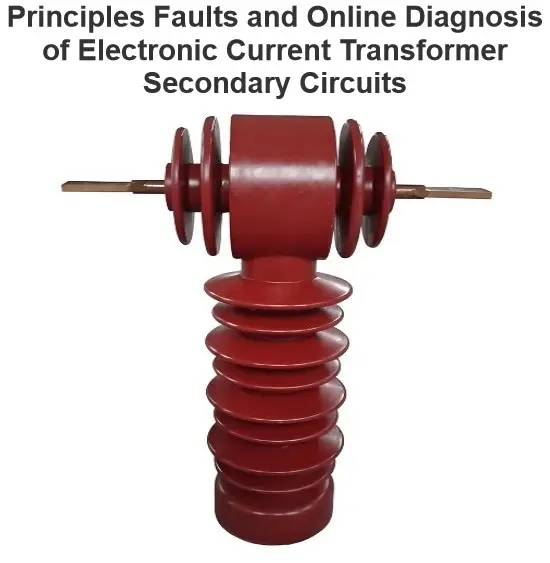
Principles Faults and Online Diagnosis of Electronic Current Transformer Secondary Circuits
1 Principle and Role of Electronic Current Transformers1.1 Working Principle of ECTAn Electronic Current Transformer (ECT) is a key device for managing safe power system operations, converting large currents into manageable small-current signals for measurement and control. Unlike traditional transformers (relying on direct magnetic field interaction between primary and secondary windings), ECTs use sensors (e.g., Hall effect sensors) to detect magnetic field changes from the primary winding. Th
07/22/2025
Consult
Tip
Consult
Tip
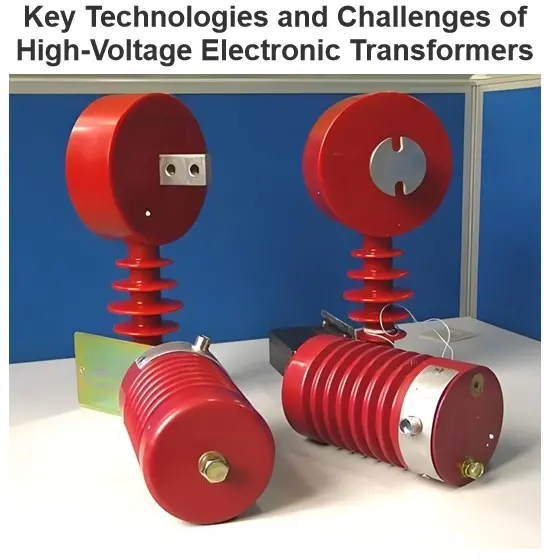
Key Technologies and Challenges of High-Voltage Electronic Transformers
Traditional power transformers face inherent issues due to their sensors. Critically, they are vital for power plant monitoring, control, and protection (e.g., fault recording, safety control). However, large electrical energy transmission via information carriers and the lack of digital signal output from digital systems complicate secondary communication. Complex secondary wiring compensates for microcomputers’ high reliability, streamlining protection and secondary devices. This inn
07/22/2025
Consult
Tip
Consult
Tip
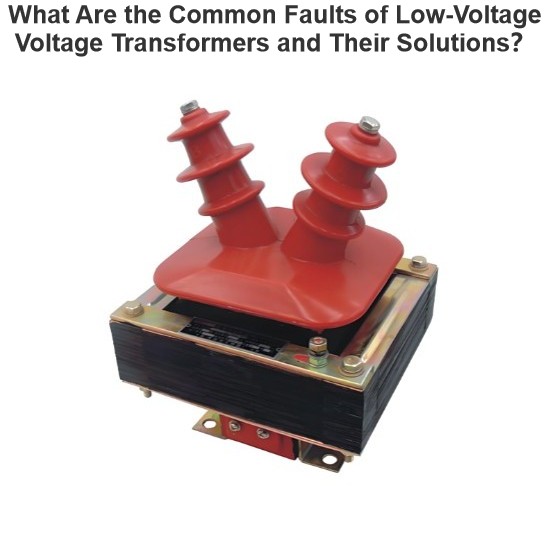
What Are the Common Faults of Low-Voltage Voltage Transformers and Their Solutions?
Open - Circuit Fault on the Secondary SideOpen - circuit in the secondary side is a typical fault of low - voltage voltage transformers, showing abnormal voltmeter readings (zero/fluctuation), faulty power meters, buzzing noises, and core overheating. When open - circuited, the secondary voltage spikes (no secondary current to balance the primary EMF), causing core saturation, flux distortion, and potential overheating/damage.Causes include loose terminals, poor contact, or human error. In low
07/18/2025
Consult
Tip
Consult
Tip
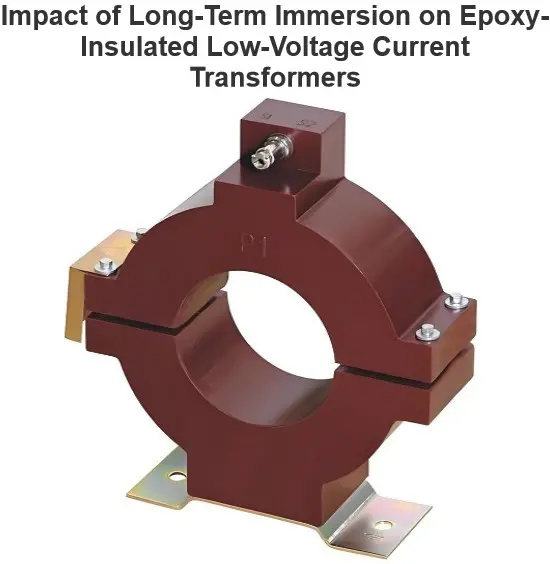
Impact of Long-Term Immersion on Epoxy-Insulated Low-Voltage Current Transformers
1 IntroductionLow - voltage current transformers for metering, with a through - core type epoxy resin structure, are widely used in distribution transformer areas and for small - to - medium - sized industrial and commercial electricity consumption. As a range expander for electric energy metering, their performance directly relates to electricity consumption safety and the accuracy of users' trade calculations. Studying long - term immersion's impact on these transformers is practically signifi
07/17/2025
Consult
Tip
Consult
Tip
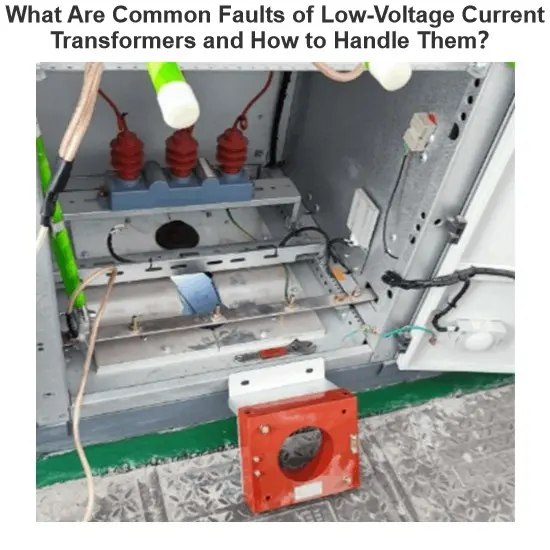
What Are Common Faults of Low-Voltage Current Transformers and How to Handle Them?
Low-voltage current transformers, as indispensable measurement and protection devices in power systems, often encounter various faults when used in combination with other power equipment due to environmental factors, equipment linkage issues, and improper installation and maintenance. These faults not only affect the normal operation of power equipment but may also endanger personal safety. Therefore, it is necessary to gain an in-depth understanding of fault types, judgment methods, and prevent
07/17/2025
Consult
Tip
Consult
Tip
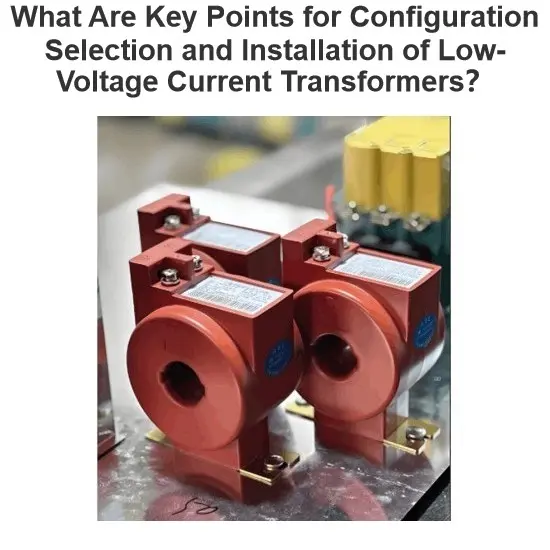
What Are Key Points for Configuration Selection and Installation of Low-Voltage Current Transformers?
1. Selection of Low - Voltage Current Transformer ConfigurationThere are many factors leading to wrong selection of low - voltage current transformers in civil construction projects. For example, common factors include design problems: the calculated coefficient designed for the load of electrical equipment is relatively large, or the transformation ratio of the current transformer is selected incorrectly. Such a series of reasons will affect the use of electrical equipment. Therefore, in the co
07/16/2025
Consult
Tip
Consult
Tip
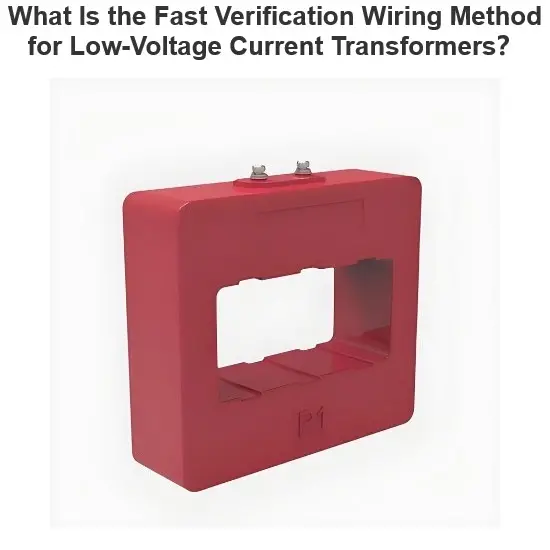
What Is the Fast Verification Wiring Method for Low-Voltage Current Transformers?
To ensure safe operation of the power system, power equipment operation must be monitored/measured. General devices can’t connect to primary high - voltage equipment directly; instead, large primary currents are scaled down for current transformation, electrical isolation, and use by measurement/protection devices. For AC large - current measurement, conversion to a unified current eases secondary instrument use.Current transformers split into measurement - and protection - type, with
07/16/2025
Consult
Tip
Consult
Tip
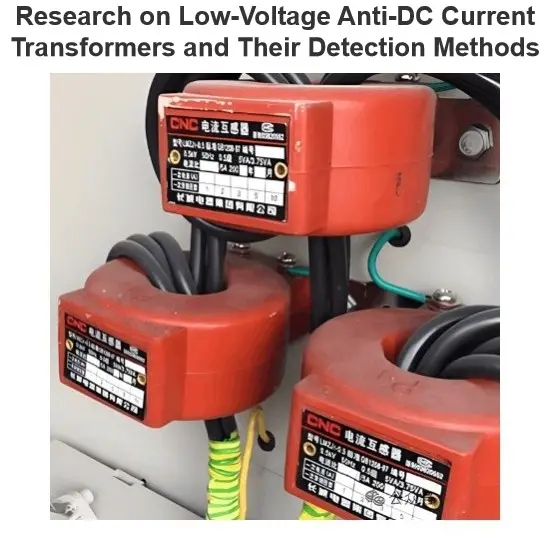
Research on Low-Voltage Anti-DC Current Transformers and Their Detection Methods
1. Overview of Components and IssuesTA (low-voltage current transformer) and electric energy meters are key components of low-voltage electric energy metering. The load current of such meters is no less than 60A. Electric energy meters vary in type, model, and anti-DC performance, and are connected in series in the metering device. Due to the lack of anti-DC capability, they suffer from metering errors under DC component loads, usually caused by non-linear loads. With the increasing use of DC or
07/16/2025
Consult
Tip
Consult
Tip
Send inquiry
+86
Click to upload file

IEE Business will not sell or share your personal information.

Download
Get the IEE Business Application
Use the IEE-Business app to find equipment, obtain solutions, connect with experts, and participate in industry collaboration anytime, anywhere—fully supporting the development of your power projects and business.