• Product
  • Suppliers
  • Manufacturers
  • Solutions
  • Free tools
  • Knowledges
  • Experts
  • Communities
Search


Free Expert Guides on Power Systems, Circuit Design & Electrical Troubleshooting

Access free engineering resources from IEE Business—covering power design, circuit layout, equipment selection, and troubleshooting. Expert-developed guides help engineers, procurement, and project teams make better decisions. Stay ahead on smart grids, renewables, efficiency, and AI tools. Improve reliability, reduce downtime, and enhance outcomes with real-world solutions. Explore our knowledge hub today.
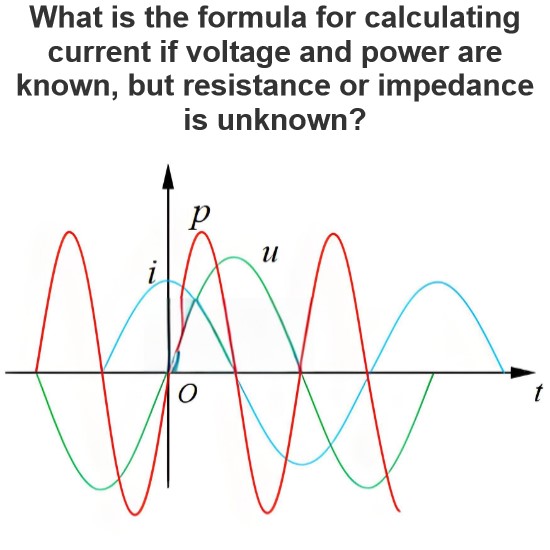
What is the formula for calculating current if voltage and power are known, but resistance or impedance is unknown?
For DC Circuits (Using Power and Voltage)In a direct - current (DC) circuit, the power P (in watts), voltage V (in volts), and current (in amperes) are related by the formula P=VIIf we know the power P and voltage V, we can calculate the current using the formula I=P/V. For example, if a DC device has a power rating of 100 watts and is connected to a 20- volt source, then the current I=100/20=5 amperese.In an alternating - current (AC) circuit, we deal with apparent power S (in volt - amperes),
10/04/2024
Consult
Tip
Consult
Tip
What applications are best for a synchronous motor and an induction motor?
Synchronous motors and induction motors (also known as asynchronous motors) are two common types of AC motors, which have their own characteristics and are suitable for different application scenarios. The following are detailed descriptions of the most suitable application areas for synchronous and induction motors:Synchronous motorPeculiarity Constant speed: When the synchronous motor is operating under rated load, its speed is proportional to the frequency of the grid, so it can maintain a co
10/04/2024
Consult
Tip
Consult
Tip
What is the allowable voltage drop in the circuit?
The Voltage Drop allowed in a circuit is the reduction in voltage due to the presence of resistance when a current passes through a wire or circuit element. The size of the voltage drop depends on the specific application and design criteria of the circuit. Different applications and national standards have different regulations on the allowable voltage drop. Below are some common voltage drop requirements:Home and commercial buildingsIn the electrical wiring of homes and commercial buildings, i
09/30/2024
Consult
Tip
Consult
Tip
What are some examples where a low voltage transformer is used?
Applications in power systemsResidential area power supplyIn residential areas, the voltage introduced from the high-voltage distribution network (such as 10kV) needs to be reduced by the transformer before it can be supplied to residents. The low-voltage transformer will reduce the 10kV voltage to 380V/220V three-phase four-wire low-voltage electricity to meet the electricity demand of home lighting, electrical equipment (such as TV, refrigerator, air conditioning, etc.). This low-voltage power
09/30/2024
Consult
Tip
Consult
Tip
What is the difference between a fixed tap-changer transformer and an on-load tap-changer (OLTC) transformer?
Fixed Tap Changer (Fixed Tap Changer) and On-Load tap changer (OLTC) are both devices used to regulate the output voltage of a Transformer, but they work differently and in different application scenarios. Here are the differences between the two types of transformers:Fixed Tap Transformer (Fixed Tap Transformer)Working principle Fixed tap-changer transformers usually have only one or a few pre-set tap-changer positions, which determine the ratio of the transformer. When the transformer ratio ne
09/30/2024
Consult
Tip
Consult
Tip
How stators increase air pressure in jet engine?
The Stator's role in a jet engine is to increase air pressure and help improve the direction and stability of the air flow. The stator, usually located in the compressor part of the engine, is a ring structure consisting of a series of stationary blades. Here's a detailed explanation of how stators increase air pressure in jet engines:Working principle What the compressor blades do: In a jet engine, the rotor blades rotate to compress the air entering the engine, thereby increasing the pressure
09/30/2024
Consult
Tip
Consult
Tip
Why does electricity only pass through one person when touched by another person near an electrical cable?
The reason why electricity passes through the human body involves the principles of electricity in physics. When the human body becomes part of the circuit, the current will pass through the human body, and the reason why the human body can become part of the circuit is because the human body has a certain conductivity. The following explains why current only passes through another person when that person touches near the cable:The conditions under which the current flowsCurrent always tends to
09/30/2024
Consult
Tip
Consult
Tip
Why does the overload relay trip in a fridge compressor?
Overload Relay trips in refrigerator compressors are usually done to protect the compressor from damage. The function of the overload relay is to cut off the power supply when the current is too large to prevent overheating or damage to the compressor. Here are some common causes of overload relay trip:Overload Difficulty in starting: If the compressor experiences difficulty in starting, it may cause excessive instantaneous current, which can trigger the overload relay. Continuous high load: If
09/30/2024
Consult
Tip
Consult
Tip
Can a gear pump operate a separate motor?
Gear pump is a pump that relies on one or more pairs of meshing gears to rotate to transport fluid. Gear pumps are usually used to transport viscous fluids, such as lubricating oil, hydraulic oil, polymer solutions, etc. As for whether the gear pump can drive a separate motor, this is actually a reverse problem, because normally, the motor drives the gear pump, rather than the gear pump drives the motor. Let's explore in detail:Working principle of gear pumpGear pump is mainly composed of a pair
09/30/2024
Consult
Tip
Consult
Tip
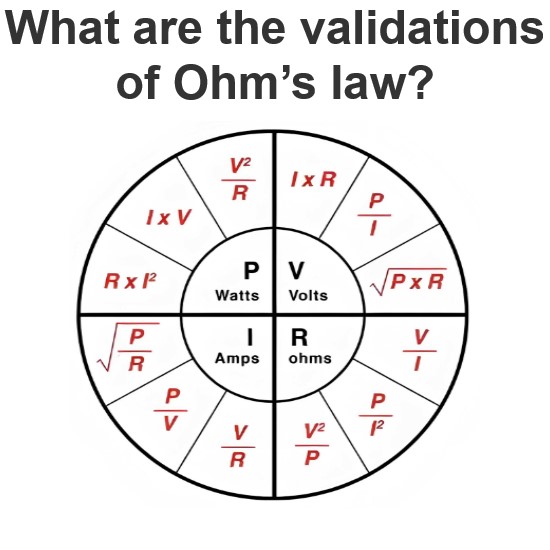
What are the validations of Ohm’s law?
Ohm's Law is a fundamental principle in electrical engineering and physics that describes the relationship between the current flowing through a conductor, the voltage across the conductor, and the resistance of the conductor. The law is expressed mathematically as:V=I×R V is the voltage across the conductor (measured in volts, V), I is the current flowing through the conductor (measured in amperes, A), R is the resistance of the conductor (measured in ohms, Ω).While Ohm's Law is widely accepted
09/30/2024
Consult
Tip
Consult
Tip
Send inquiry
+86
Click to upload file
Download
Get the IEE Business Application
Use the IEE-Business app to find equipment, obtain solutions, connect with experts, and participate in industry collaboration anytime, anywhere—fully supporting the development of your power projects and business.