• Product
  • Suppliers
  • Manufacturers
  • Solutions
  • Free tools
  • Knowledges
  • Experts
  • Communities
Search


Free Expert Guides on Power Systems, Circuit Design & Electrical Troubleshooting

Access free engineering resources from IEE Business—covering power design, circuit layout, equipment selection, and troubleshooting. Expert-developed guides help engineers, procurement, and project teams make better decisions. Stay ahead on smart grids, renewables, efficiency, and AI tools. Improve reliability, reduce downtime, and enhance outcomes with real-world solutions. Explore our knowledge hub today.
Why is it that when an inductor produces high voltage and not a high current?
When an inductor collapses (for example, when a switch in the inductor circuit suddenly opens), it produces a high voltage rather than a high current. This can be explained by the basic properties of an inductor and its energy storage mechanism. Here is a detailed explanation:Basic Properties of an InductorThe fundamental property of an inductor can be expressed by the following formula:where:V is the voltage across the inductor.L is the inductance of the inductor.dI/dt is the rate of change of
11/13/2024
Consult
Tip
Consult
Tip
How can you decrease the capacitance of a capacitor?
How to Reduce the Capacitance of a CapacitorReducing the capacitance of a capacitor can be achieved through various methods, primarily involving changes to the physical parameters of the capacitor. The capacitance C of a capacitor is determined by the following formula:where: C is the capacitance, measured in farads (F). ϵ is the permittivity, which depends on the dielectric material used in the capacitor. A is the area of the plates, measured in square meters (m²). d is the distance between the
11/13/2024
Consult
Tip
Consult
Tip
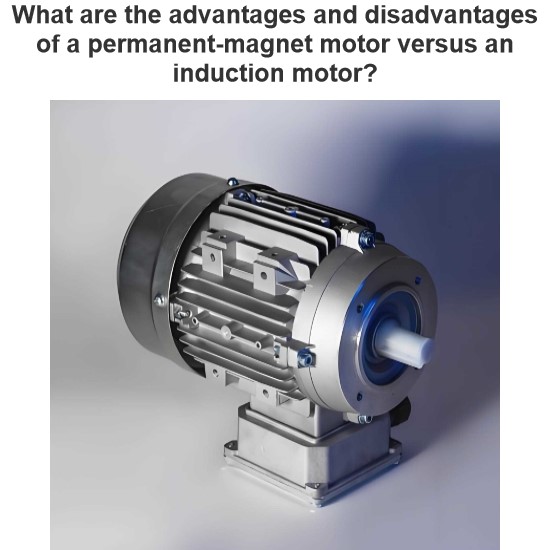
What are the advantages and disadvantages of a permanent-magnet motor versus an induction motor?
Permanent Magnet Motors (PMM) and Induction Motors (IM) each have unique characteristics and application scenarios. Below are the advantages and disadvantages of permanent magnet motors compared to induction motors:Advantages of Permanent Magnet Motors (PMM)High Efficiency:Permanent magnet motors do not require excitation current due to the use of permanent magnets, resulting in higher efficiency.They maintain high efficiency under both light and full load conditions.High Power Density:Permanent
11/12/2024
Consult
Tip
Consult
Tip
What are the starters employed in AC motors?
Types of Starters Used for AC MotorsStarters for AC motors are used to control the current and torque during the motor's starting process to ensure smooth and safe startup. Depending on the application and motor type, there are several types of starters available. Here are the most common ones:1. Direct-On-Line Starter (DOL) Working Principle: The motor is directly connected to the power supply, starting at full voltage. Application Range: Suitable for small power motors, with high starting curr
11/12/2024
Consult
Tip
Consult
Tip
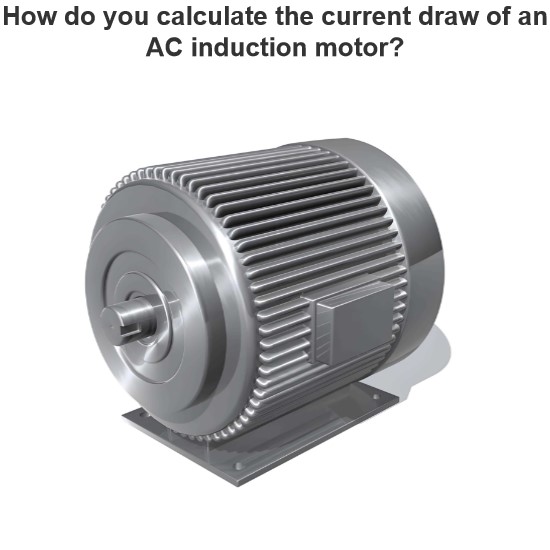
How do you calculate the current draw of an AC induction motor?
Calculating the current consumption of an AC induction motor involves multiple parameters. Below are the detailed steps and formulas to help you calculate the current consumption of an AC induction motor.Basic ParametersRated Power P (Unit: Watts, W or Kilowatts, kW)Rated Voltage V (Unit: Volts, V)Power Factor PF (Dimensionless, usually between 0 and 1)Efficiency η (Dimensionless, usually between 0 and 1)Number of Phases n (Single-phase or three-phase, typically 1 or 3)Calculation Formulas1. Sin
11/12/2024
Consult
Tip
Consult
Tip
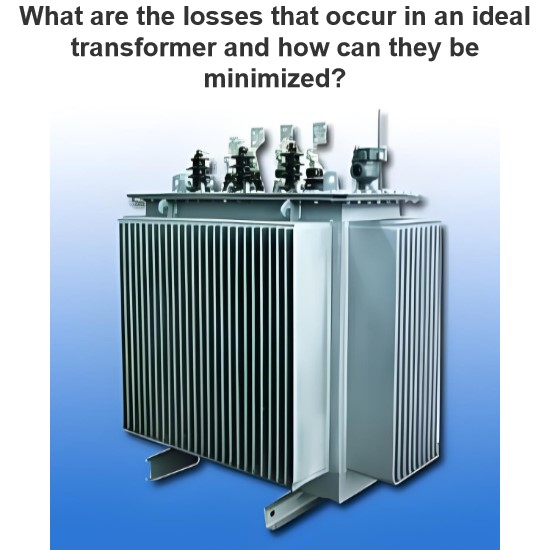
What are the losses that occur in an ideal transformer and how can they be minimized?
An ideal transformer is a theoretical model that assumes no losses. However, in practical applications, transformers always experience some losses. These losses can be primarily categorized into two types: copper losses (resistance losses) and iron losses (core losses). Below is a detailed explanation of these losses and how to minimize them:1. Copper LossesDefinitionCopper losses are the energy losses due to the resistance of the transformer windings. When current flows through the windings, th
11/12/2024
Consult
Tip
Consult
Tip
Is there a relationship between the voltage of a transformer and the distance it travels?
Relationship Between Transformer Voltage and Transmission DistanceThere is indeed a relationship between the voltage of a transformer and the distance over which power is transmitted. This relationship primarily affects the efficiency, losses, and economic feasibility of power transmission. Here is a detailed explanation:1. Transmission LossesOhmic Losses: During power transmission, the resistance of the conductors causes ohmic losses (I²R losses). These losses are proportional to the square of
11/12/2024
Consult
Tip
Consult
Tip
What are the classifications of AC motors?
Types of AC MotorsAC motors (AC Motors) are a widely used class of motors that can be classified based on different working principles, structures, and applications. Below are the main categories of AC motors and their characteristics:1. Induction Motors1.1 Squirrel Cage Induction MotorStructure: The rotor is made of cast aluminum or copper bars, shaped like a squirrel cage, hence the name.Characteristics:Simple structure, low cost, and easy maintenance.High starting current but moderate startin
11/12/2024
Consult
Tip
Consult
Tip
Disconnector Switches Grouping in HVDC Grids
HVDC disconnector switches:HVDC disconnecting switches (DS) are used to disconnect various circuits in HVDC transmission networks. For example, the HVDC DS is applied to switching duties such as line or cable-charging current switching, no-load line, or cable transfer switching, in addition to disconnecting equipment including a converter bank (thyristor valve), a filter bank, and a grounding line. HVDC DS is also applied to DC switchgear to terminate the residual or leakage current through an in
11/12/2024
Consult
Tip
Consult
Tip
How does torque, speed and power affect an electric motor?
1. Basic Definitions of Torque, Speed, and PowerBefore discussing the relationship between torque, speed, and power of an electric motor, it is necessary to clarify the basic definitions of these three concepts: Torque (Torque): Torque is the force that causes an object to rotate, and it is a measure of the amount of rotational force that an electric motor can provide. In physics, torque is equal to the product of force and the lever arm, with the international unit being newton meters (N·m). Sp
11/11/2024
Consult
Tip
Consult
Tip
Send inquiry
+86
Click to upload file
Download
Get the IEE Business Application
Use the IEE-Business app to find equipment, obtain solutions, connect with experts, and participate in industry collaboration anytime, anywhere—fully supporting the development of your power projects and business.