• Product
  • Suppliers
  • Manufacturers
  • Solutions
  • Free tools
  • Knowledges
  • Experts
  • Communities
Search


Free Expert Guides on Power Systems, Circuit Design & Electrical Troubleshooting

Access free engineering resources from IEE Business—covering power design, circuit layout, equipment selection, and troubleshooting. Expert-developed guides help engineers, procurement, and project teams make better decisions. Stay ahead on smart grids, renewables, efficiency, and AI tools. Improve reliability, reduce downtime, and enhance outcomes with real-world solutions. Explore our knowledge hub today.
Control Engineering: What is it? (And its History)
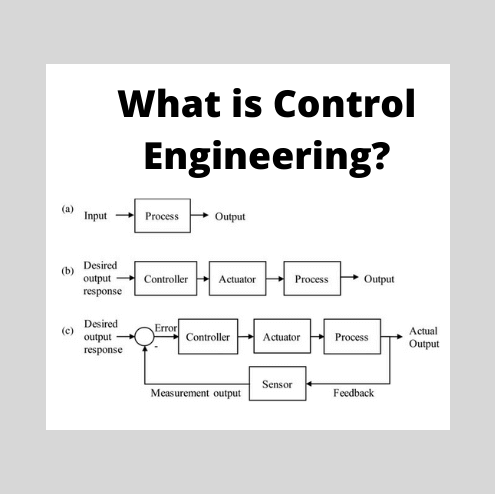
What is Control EngineeringControl system engineering is the branch of engineering which deals with the principles of control theory, to design a system which gives yields the desired behavior in a controlled manner. Hence, although control engineering is often taught within electrical engineering at university, it is an interdisciplinary topic.Control system engineers analyze, design, and optimize complex systems which consist of highly integrated coordination of mechanical, electrical, chemica
03/28/2024
Consult
Tip
Consult
Tip
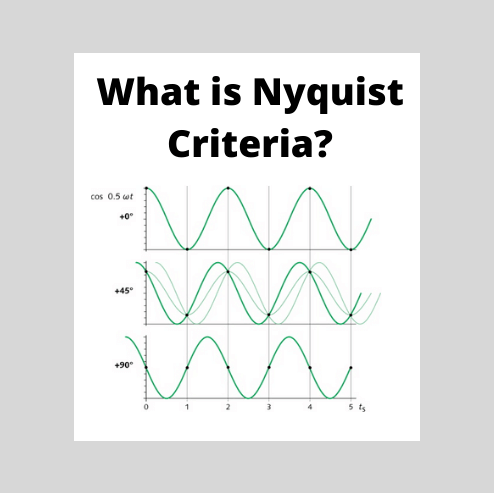
Nyquist Stability Criterion: What is it? (Plus Matlab Examples)
What is Nyquist Stability Criterion?Nyquist stability criterion (or Nyquist criteria) is defined as a graphical technique used in control engineering for determining the stability of a dynamical system. As Nyquist stability criteria only considers the Nyquist plot of open-loop control systems, it can be applied without explicitly computing the poles and zeros of either the closed-loop or open-loop system.As a result, Nyquist criteria can be applied to systems defined by non-rational functions (s
03/28/2024
Consult
Tip
Consult
Tip
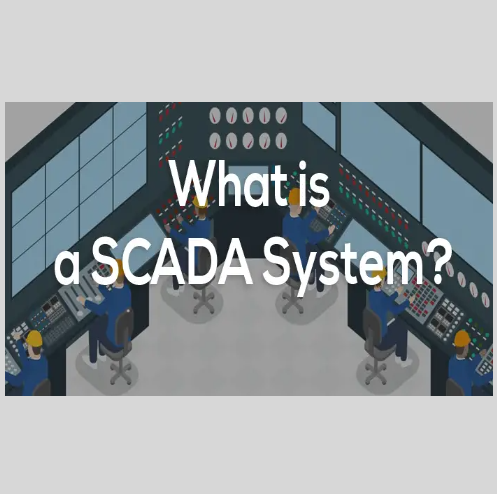
SCADA System: What is it? (Supervisory Control and Data Acquisition)
What is SCADA?SCADA stands for “Supervisory Control and Data Acquisition.” SCADA is a process control system architecture that uses computers, networked data communications, and graphical Human Machine Interfaces (HMIs) to enable high-level process supervisory management and control.SCADA systems communicate with other devices, such as programmable logic controllers (PLCs) and PID controllers to interact with industrial process plants and equipment.SCADA systems form a large part of control syst
03/28/2024
Consult
Tip
Consult
Tip
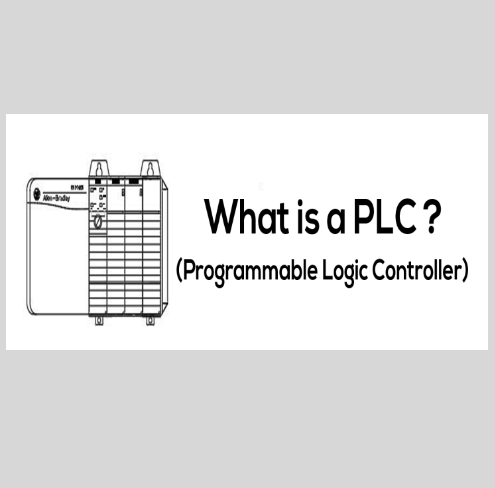
 Programmable Logic Controllers (PLCs): Basics, Types & Applications
What is a PLC?PLC stands for “Programmable Logic Controller.” A PLC is a computer specially designed to operate reliably in harsh industrial environments, such as extreme temperatures and wet, dry, and/or dusty conditions. PLCs are used to automate industrial processes such as a manufacturing plant’s assembly line, an ore processing plant, or a wastewater treatment plant.PLCs share many features of the personal computer you have at home. They both have a power supply, a CPU (Central Processing U
03/28/2024
Consult
Tip
Consult
Tip
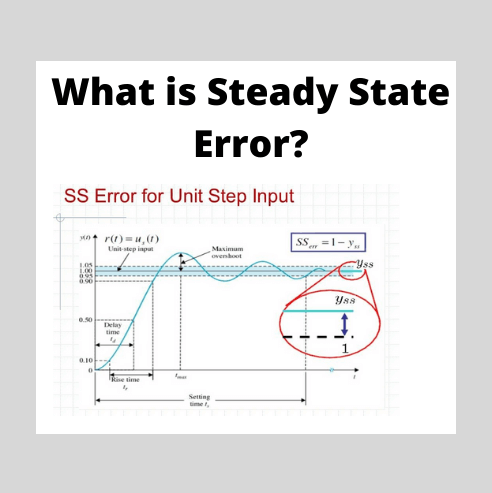
Steady State Error: What is it? (Steady-State Gain, Value & Formula)
What is Steady State Error?Steady-state error is defined as the difference between the desired value and the actual value of a system output in the limit as time goes to infinity (i.e. when the response of the control system has reached steady-state).Steady-state error is a property of the input/output response for a linear system. In general, a good control system will be one that has a low steady-state error.First, we will discuss the steady-state error in a first-order transfer function by an
03/28/2024
Consult
Tip
Consult
Tip
 How to Find the DC Gain of a Transfer Function (Examples Included)
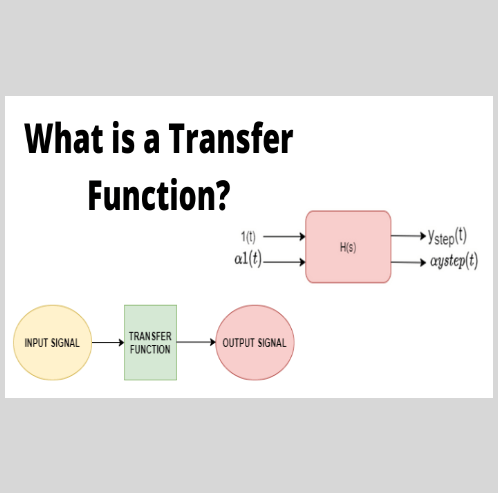
What is a Transfer Function?A transfer function describes the relationship between the output signal of a control system and the input signal. A block diagram is a visualization of the control system that uses blocks to represent the transfer function and arrows representing the different input and output signals. Transfer Function The transfer function is a convenient representation of a linear time-invariant dynamical system. Mathematically the transfer function is a function of complex v
03/28/2024
Consult
Tip
Consult
Tip
Rise Time: What is it? (Equation And How To Calculate It)
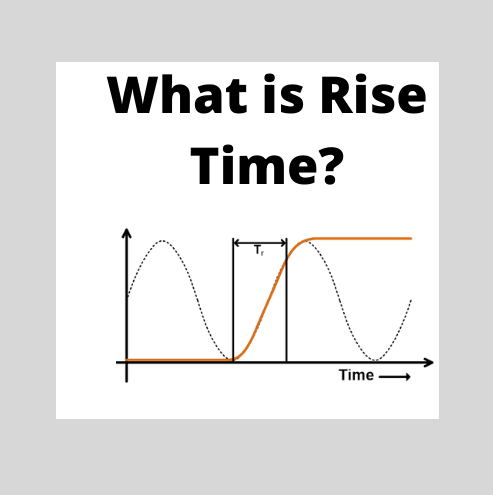
What is Rise Time?Rise time is defined as the time taken for a signal to cross from a specified low value to a specified high value. In analog and digital electronics, the specified lower value and specified higher value are 10% and 90% of the final or steady-state value. So the rise time is typically defined as how long it takes for a signal to go from 10% to 90% of its final value.The rise time is an essential parameter in analog and digital systems. It describes the time taken for the output
03/28/2024
Consult
Tip
Consult
Tip
Send inquiry
+86
Click to upload file

IEE Business will not sell or share your personal information.

Download
Get the IEE Business Application
Use the IEE-Business app to find equipment, obtain solutions, connect with experts, and participate in industry collaboration anytime, anywhere—fully supporting the development of your power projects and business.