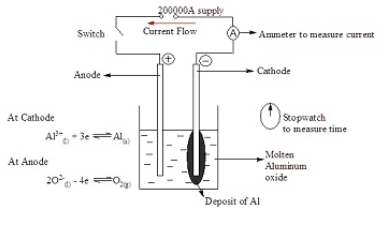
Faraday’s Laws of ElectrolysisBefore understanding Faraday’s laws of electrolysis, we must first understand the process of electrolysis of a metal sulfate.Whenever an electrolyte like metal sulfate is diluted in water, its molecules split into positive and negative ions. The positive ions (or metal ions) move to the electrodes connected with the negative terminal of the battery where these positive ions take electrons from it, becoming a pure metal atom and getting deposited on the electrode.The
03/13/2024
Consult
Tip
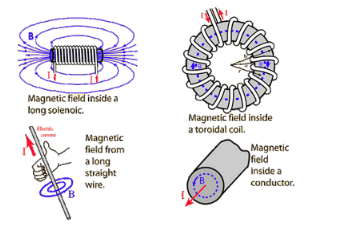
Ampere’s Circuital Law states the relationship between the current and the magnetic field created by it.This law states that the integral of magnetic field density (B) along an imaginary closed path is equal to the product of current enclosed by the path and permeability of the medium.James Clerk Maxwell had derived that.It alternatively says, the integral of magnetic field intensity (H) along an imaginary closed path is equal to the current enclosed by the path.Let us take an electrical conduct
03/13/2024
Consult
Tip
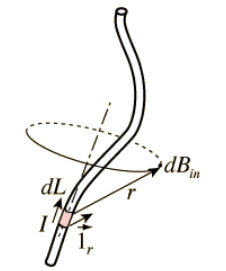
What is Biot Savart LawThe Biot Savart Law is an equation describing the magnetic field generated by a constant electric current. It relates the magnetic field to the magnitude, direction, length, and proximity of the electric current. Biot–Savart law is consistent with both Ampere’s circuital law and Gauss’s theorem. The Biot Savart law is fundamental to magnetostatics, playing a role similar to that of Coulomb’s law in electrostatics. Biot-Savart law was created by two French physicists, Jean
03/13/2024
Consult
Tip
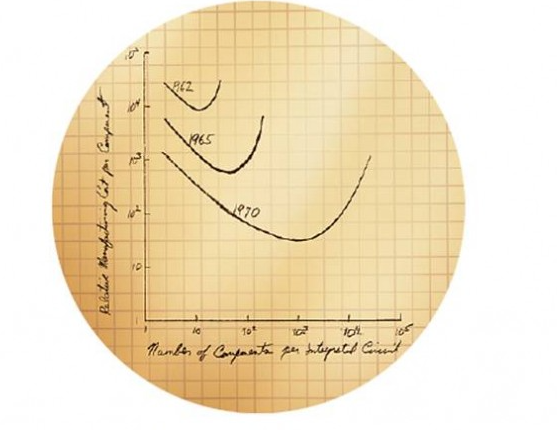
What is Moore’s Law?Moore’s Lawrefers to the observation that the number oftransistorsin anintegrated circuit(IC) doubles approximately every 2 years. It is often cited as an explanation for the exponential growth of technology, sometimes even being coined as the ‘law of exponential growth’.Moore’s law is named after Gordon Moore, the co-founder of Intel. Moore observed that since the invention of integrated circuits, the number of transistors has doubled every year. Moore produced an article in
03/13/2024
Consult
Tip
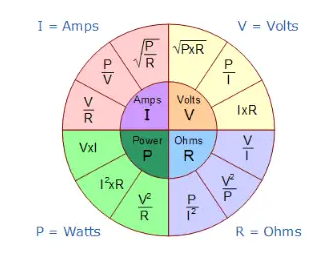
What is Watts Law?Watt’s law defines the relationship between power, amperage, and voltage drop in an electrical circuit. Watts Law also states that the power of an electrical circuit is the product of its voltage and current.Watts Law FormulaThe formula for Watts law can be given as follows. It gives the relationships between power (watts), current (amps) and voltage(volt)Watts Law Example 1Suppose you were trying to find out how many 500-watt lighting devices you could plug into a circuit with
03/13/2024
Consult
Tip
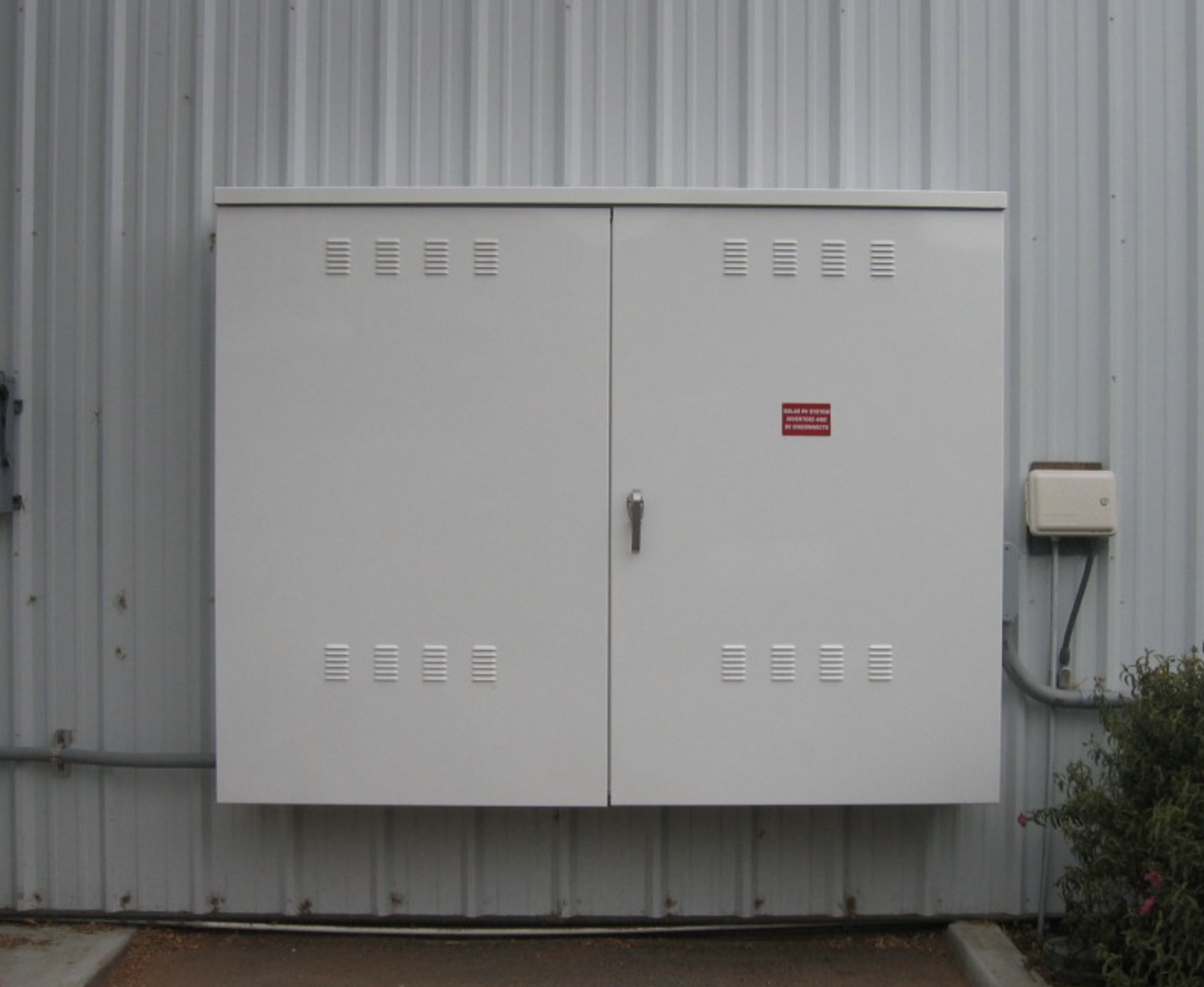
magine afeeder pillaras the unsung hero in your neighborhood, ensuring electricity flows safely to every home. This crucial cabinet, often seen but rarely noticed, orchestrates the distribution of power, safeguarding circuits and simplifying control. It’s like the brain of your area’s electrical system, quietly keeping the lights on and appliances running smoothly.Similar to ajunction box, a feeder pillar box protects people from coming into contact with live wires, as well as protecting wires f
03/13/2024
Consult
Tip
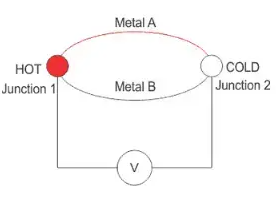
The Seebeck effect is a phenomenon that converts temperature differences into electric voltage and vice versa. It is named after Thomas Johann Seebeck, a German physicist who discovered it in 1821. The Seebeck effect is the basis of thermocouples, thermoelectric generators, and spin caloritronics. What is the Seebeck Effect?The Seebeck effect is defined as the generation of an electric potential (or voltage) across two different conductors or semiconductors that are connected in a loop and have
03/13/2024
Consult
Tip
Consider a RLC circuit in which resistor, inductor and capacitor are connected in parallel to each other. This parallel combination is supplied by voltage supply, VS. This parallel RLC circuit is exactly opposite to series RLC circuit.In series RLC circuit, the current flowing through all the three components i.e the resistor, inductor and capacitor remains the same, but in parallel circuit, the voltage across each element remains the same and the current gets divided in each component depending
03/13/2024
Consult
Tip
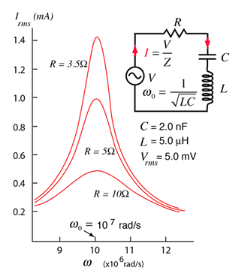
Consider a RLC circuit in which resistor, inductor and capacitor are connected in series across a voltage supply. This series RLC circuit has a distinguishing property of resonating at a specific frequency called resonant frequency.In this circuit containing inductor and capacitor, the energy is stored in two different ways. When acurrentflows in an inductor, energy gets stored inmagnetic field. When a capacitor is charged, energy gets stored in static electric field.The magnetic field in the in
03/13/2024
Consult
Tip

A junction box – also known as an ‘electrical box’, ‘jbox’, ‘or ‘terminal box’ – is a protective box where wires are interconnected. Junction boxes are often built into the plaster of a wall, in the ceiling, or within concrete. They are standard within most homes, buildings, and factories.Junction boxes are found both indoors and outdoors. Waterproof junction boxes are commonly used outdoors.Junction boxes are typically made of metal or plastic. There 4 main electrical junction box types: Metal
03/13/2024
Consult
Tip






