
The running capacitor and the starting capacitor mainly have the following differences:I. In terms of usage Starting capacitor Mainly used to provide a momentary high current when the motor starts, helping the motor overcome the inertia of the stationary state and start smoothly. For example, in a single-phase asynchronous motor, the starting capacitor is connected in series with the starting winding. At the moment the motor starts, a rotating magnetic field with a large phase difference is ge
10/16/2024
Consult
Tip

The amount of current flowing in a circuit is primarily determined by several factors:1. VoltagePower Source: The voltage provided in the circuit is the main driving force of current flow. According to Ohm's Law I=V/RcurrentIis directly proportional to voltageV. This means that the higher the voltage, the larger the current in the circuit (assuming the resistance remains constant).2. Resistance Circuit Elements: Resistive elements in the circuit (such as resistors, bulbs, motors, etc.) affect th
10/15/2024
Consult
Tip

Capacitors play a crucial role in voltage multiplier circuits, significantly impacting the output voltage, waveform, efficiency, and circuit stability. Here are specific effects of capacitors on the output of a voltage multiplier circuit:Effect of Output VoltageThe size of the capacitor directly affects the magnitude of the output voltage. With the same capacitance, the larger the output voltage, the larger the capacitance. If the capacitance is too small, the output voltage will become unstable
10/15/2024
Consult
Tip

Here are several ways to obtain 220 volts:I. Using power generation equipmentSmall generator You can purchase a small gasoline or diesel generator. When 220 volts is needed, start the generator. It drives the generator to generate electricity by burning fuel to drive the engine. For example, in some construction sites, field operation places or in emergency situations when there is a power outage, a small generator can provide 220 volts of alternating current to meet the power needs of equipment
10/15/2024
Consult
Tip

Electric current passing through the ground (i.e., through a grounding path) can pose a fire hazard mainly because the current generates heat when traveling through unintended paths. This heat can potentially ignite flammable materials nearby. Below are some mechanisms by which electric current passing through the ground can cause a fire hazard:1. Overcurrent Short Circuit: If the current travels through a path not designed to carry the intended current strength (such as the ground), it can resu
10/14/2024
Consult
Tip
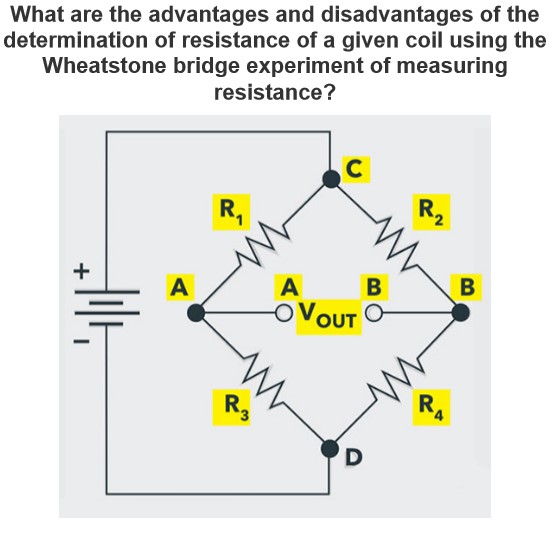
Advantages and Disadvantages of Measuring the Resistance of a Given Coil with a Wheatstone Bridge1. Advantages(I) High precision and accuracyThe Wheatstone bridge is based on the principle of proportional measurement, measuring by comparing known and unknown resistances (in this case, the unknown resistance is the resistance of the given coil). This method of measurement is highly sensitive to changes in resistance values and can achieve a high degree of measurement accuracy. For example, under
10/12/2024
Consult
Tip
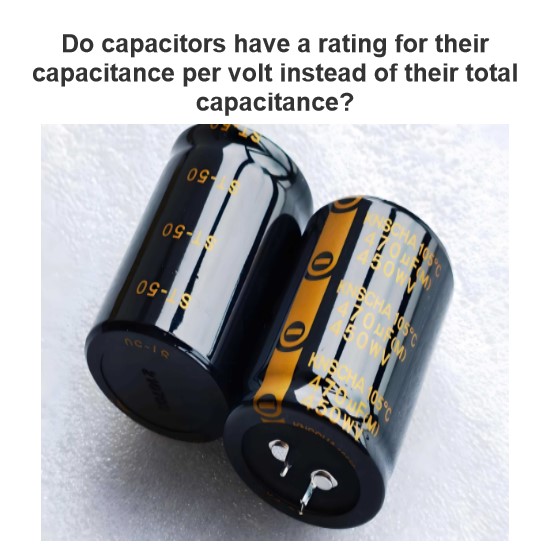
The rated capacitanceof a capacitor refers to the capacitance value of the capacitor at a given voltage, but it is not a "capacitance per volt" value; instead, it refers to the total capacitance of the capacitor. Here are some clarifications:1. Capacitance ValueThe capacitance value of a capacitor is an inherent property, usually measured in farads (F). Common units include microfarads (μF), nanofarads (nF), and picofarads (pF). The capacitance value reflects the capacitor’s ability to store ele
10/12/2024
Consult
Tip
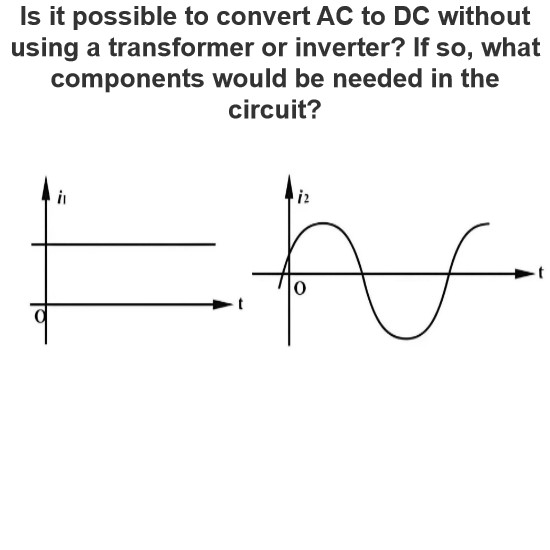
Converting alternating current (AC) to direct current (DC) is typically achieved using a rectifier (Rectifier). While transformers and inverters play crucial roles in power systems, they are not essential for converting AC to DC. In fact, this conversion can be accomplished with a basic rectifier circuit. Here is how AC can be converted to DC without using transformers or inverters and the main components required in the circuit:1. RectifierA rectifier is a circuit that converts AC to DC. Common
10/12/2024
Consult
Tip
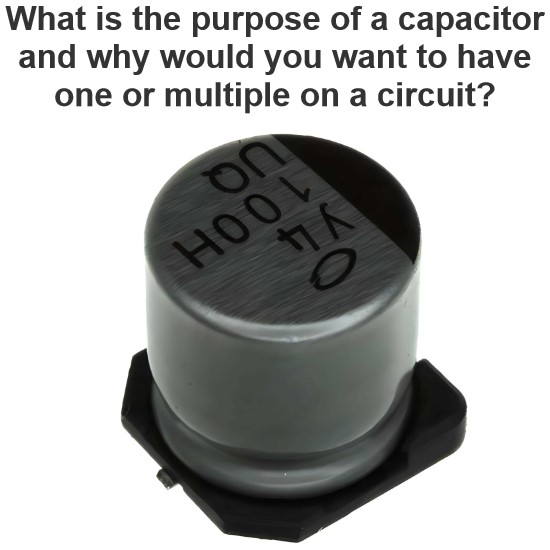
In circuit design, using multiple capacitor values can achieve more comprehensive circuit performance optimization.Improved Filtering EffectUsing capacitors with different capacitance values can filter out noise at different frequencies. A large capacitor removes low-frequency noise, while a small capacitor eliminates high-frequency noise. When used together, they can adapt to both high and low frequency filtering needs, improving the filtering effect.Preventing Skin EffectMultiple capacitors in
10/12/2024
Consult
Tip

An electromagnetic field (Electromagnetic Field) is a combination of an electric field (Electric Field) and a magnetic field (Magnetic Field), linked together through Maxwell's equations. To decompose an electromagnetic field into a purely electric field and a purely magnetic field, we need to understand how these fields interact and how they can be analyzed independently under specific conditions.1. Understanding the Basic Characteristics of the Electromagnetic FieldAn electromagnetic field is
10/12/2024
Consult
Tip






