• Product
  • Suppliers
  • Manufacturers
  • Solutions
  • Free tools
  • Knowledges
  • Experts
  • Communities
Search


Green and Efficient Power Distribution Solution for Rail Transit

RW Energy
Zhejiang Rockwell Energy Technology Co., Ltd.

1. Industry Background and Pain Point Analysis

1.1 Industry Background

Urban rail transit is a major energy consumer in cities. The traditional traction power supply system adopts an "AC power supply + onboard rectification" architecture, which suffers from regenerative braking energy waste, large equipment footprint, and high energy consumption. Full DC power supply represents a technological revolution for rail transit power supply.
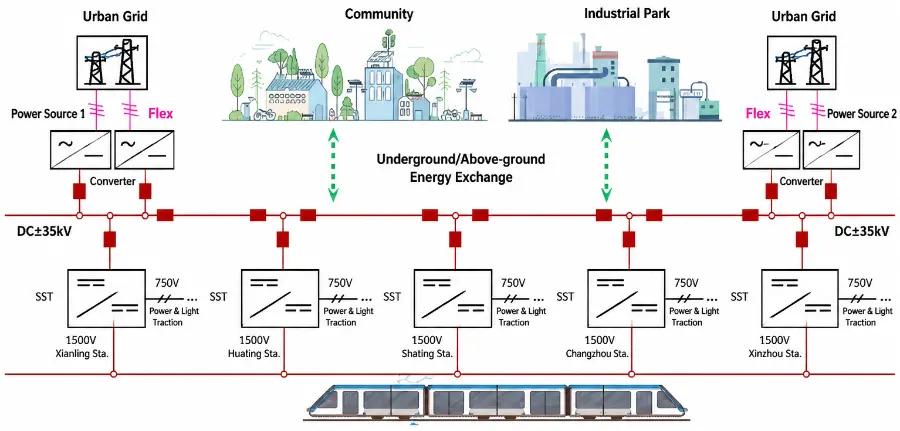
Flexible DC Power Supply and Distribution System

1.2 Four Major Pain Points of Traditional Rail Transit Power Supply

Pain Point Manifestation Physical Root Cause
Regenerative Braking Waste Braking energy dissipated as heat through resistors AC architecture cannot directly recover energy
Large Equipment Footprint Bulky substations + rectifier units Power frequency transformer + rectifier
Low Energy Efficiency Losses from multiple conversion stages AC to DC through multiple stages
High Construction Cost Numerous equipment pieces and large civil works Complex architecture

1.3 Core Differences Between Traditional and SST Full DC Power Supply (Physical Essence)

Traditional AC Power Supply

Aspect Physical Principle Limitation
Urban Grid → AC Substation Step-down power supply Onboard rectification required
Onboard Rectification AC → DC for traction Braking energy cannot be fed back

SST Full DC Power Supply

Aspect Physical Principle Advantage
SST Substation AC → DC±35kV Single-stage conversion
DC Ring Network Direct DC supply Regenerative braking energy directly fed back

Physical Essence: The full DC architecture enables regenerative braking energy to be fed back directly to other trains or the grid through the DC ring network. This is the physical foundation for achieving +5% energy efficiency improvement.


2. Solution Overview and Value Proposition

2.1 Solution Definition (BLUF)

The SST Full DC Power Supply Solution replaces traditional AC power supply with a three-level DC architecture of DC±35kV/1500V/750V:
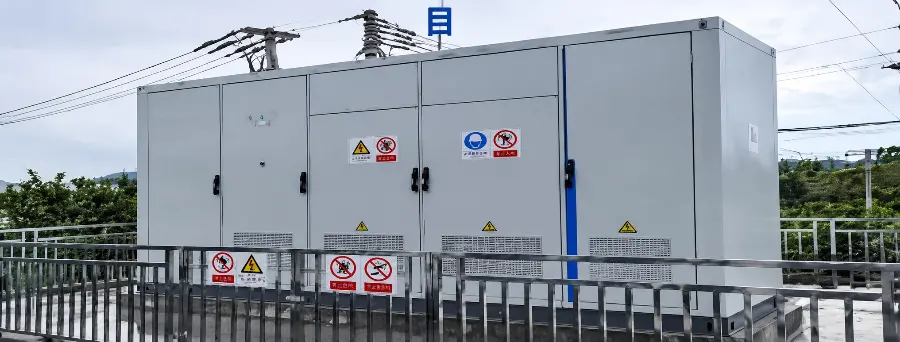
  • Construction cost -20%

  • Energy efficiency +5%

  • Verified through the Guangzhou Metro Line 8 pilot project

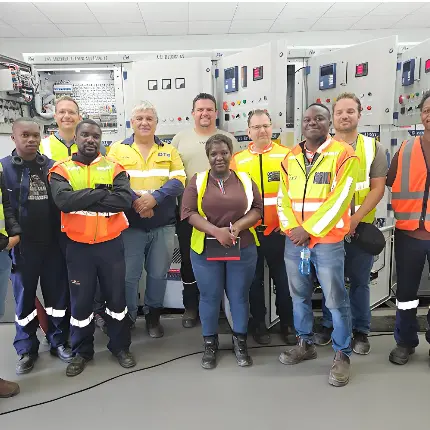
On-site Operation Diagram

2.2 Core Value Proposition

Value Dimension Quantitative Metric Description
DC Voltage Levels ±35kV/1500V/750V Three-level DC power supply
Construction Cost -20% Eliminates transformers and rectifiers
Energy Efficiency +5% Regenerative braking direct feedback
Pilot Project Guangzhou Metro Line 8 Engineering verification

3. System Architecture Design

3.1 System Topology (Layered Breakdown)

Urban Grid ──► SST Substation (DC±35kV)
                    │
                    ├──► DC Ring Network
                    │      ├──► Onboard DC1500V
                    │      └──► Onboard DC750V
                    │
                    └──► Regenerative Braking Energy Feedback

Topology Layer-by-Layer Explanation

Layer Composition Power Flow Design Rationale
Substation SST Urban Grid → DC±35kV Single-stage conversion
DC Ring Network ±35kV Bus Substation → Trains Direct DC supply
Train Power Supply DC1500V/750V Ring Network → Onboard Regenerative feedback

3.2 Regenerative Braking Feedback Principle

When a train brakes, the motor operates as a generator. In traditional solutions, this energy is dissipated as heat through resistors. The SST full DC architecture allows braking energy to be fed directly through the DC ring network to adjacent accelerating trains or back to the grid, significantly improving energy utilization.


4. Core Equipment and Technical Parameters

Parameter Value Physical Significance
DC Voltage Levels ±35kV/1500V/750V Three-level DC power supply
Construction Cost -20% Eliminates transformers and rectifiers
Energy Efficiency +5% Regenerative braking feedback
Pilot Project Guangzhou Metro Line 8 Engineering verification

5. Technical Highlights and In-Depth Physical Principle Analysis

5.1 Highlight 1: Full DC Architecture

Physical Principle: Eliminates power frequency transformers and rectification stages. The urban grid power is converted to DC through SST in a single stage.

Quantified Benefit: Construction cost reduced by 20%, fewer equipment pieces.

5.2 Highlight 2: Regenerative Braking Feedback

Physical Principle: The DC ring network allows braking energy to be fed back directly, eliminating resistive heat dissipation losses.

Quantified Benefit: Traction energy consumption reduced, energy efficiency +5%.
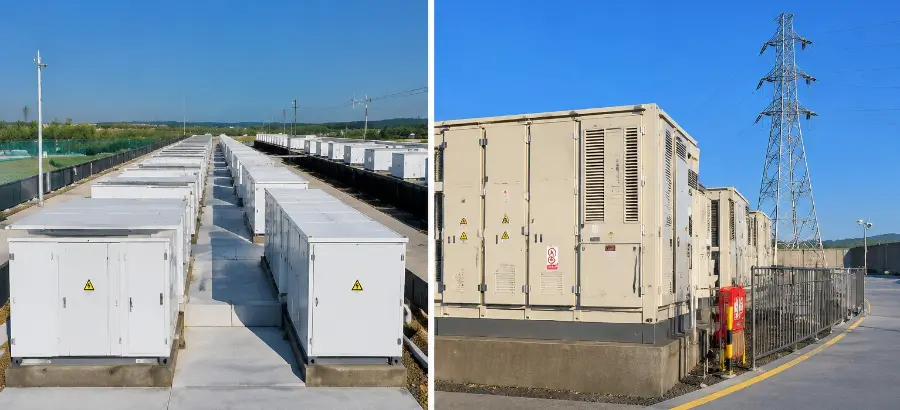
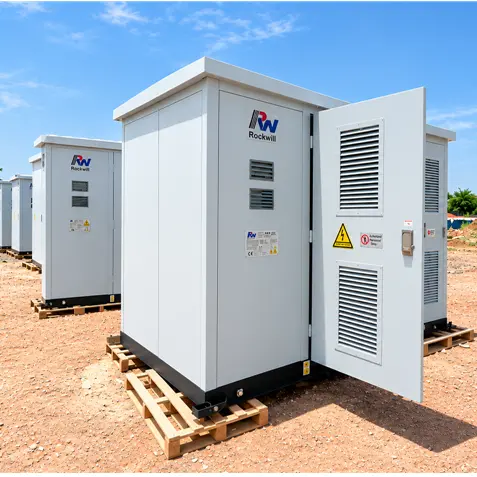
On-site Operation Diagram


6. Economic Comparison with Traditional Solutions

Cost Item Traditional Solution SST Solution Savings
Equipment Investment Baseline -20% Eliminates rectifier equipment
Energy Consumption Baseline +5% Significant annual electricity savings
Civil Works Baseline Reduced Smaller substation footprint

7. Benchmark Engineering Projects

Project Key Data Significance
Guangzhou Metro Line 8 Construction cost -20%, Energy efficiency +5% Full DC pilot project

8. Technical Standards and Compliance

Standard Content
GB/T 32583 Urban Rail Transit Traction Power Supply
IEC 61850 Communication Protocol

9. Delivery and Services

  • Modular substation prefabrication

  • Full lifecycle operation and maintenance

Leave your contact information to receive the full technical documentation and a free consultation from our engineers.

Comments

Share your question or perspective
WhatsApp
Send inquiry
+86
Click to upload file
Download
Get the IEE Business Application
Use the IEE-Business app to find equipment, obtain solutions, connect with experts, and participate in industry collaboration anytime, anywhere—fully supporting the development of your power projects and business.
Login
or continue with
New here?
Register