• Product
  • Suppliers
  • Manufacturers
  • Solutions
  • Free tools
  • Knowledges
  • Experts
  • Communities
Search


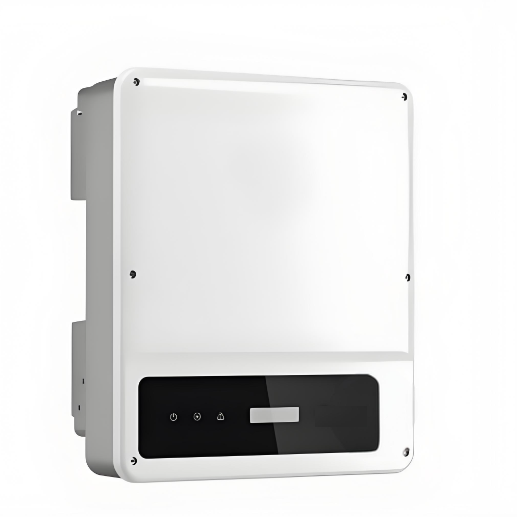
4-15kW Three Phase 2 MPPTs Residential Grid-tied Inverters

  • 4-15kW Three Phase 2 MPPTs Residential Grid-tied Inverters
  • 4-15kW Three Phase 2 MPPTs Residential Grid-tied Inverters

Key attributes

Brand Wone
Model NO. 4-15kW Three Phase 2 MPPTs Residential Grid-tied Inverters
weight 16Kg
Max.Input Voltage 1000V
Max. Input Current per MPPT 12.5A
Number of MPP trackers 2
Nominal Output Voltage 620V
Series Residential Grid-tied Inverters

Product descriptions from the supplier

Description

Description:

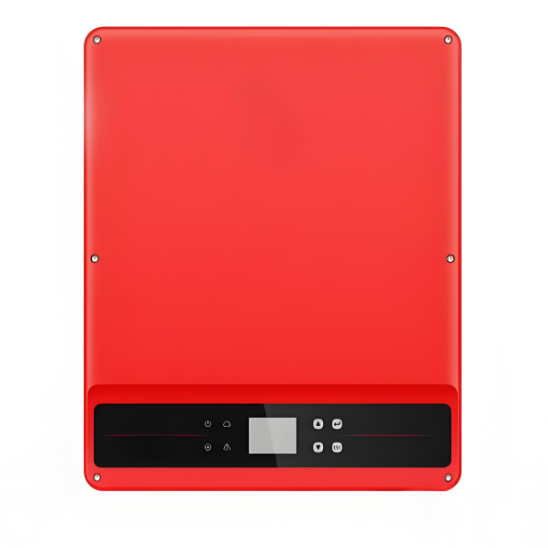
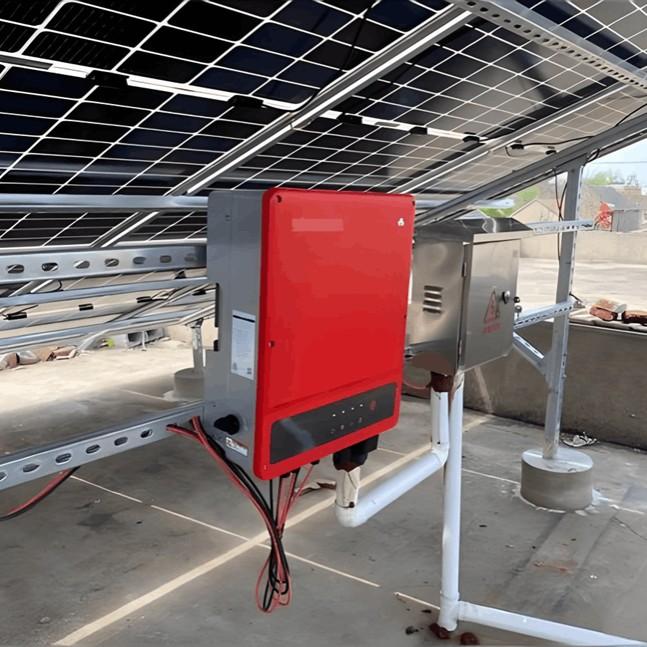
The SDT Series is one of the best options available on the residential & commercial segments thanks to its technical strengths that make it one of the most efficient in the market. For enhanced safety, this inverter is able to incorporate AFCI. Its high efficiency (98.3%) and its enhanced oversizing & overloading capabilities represent an outstanding improvement in the industry. Moreover, its plug-in AC connector make operation & maintenance easier.

Feature:

  • Up to 98.3% max. efficiency.

  • 150% DC input oversizing & 110% AC output overloading.

  • Arc-fault circuit interrupter optional.

  • Easy installation and O&M.

System Parameters:

image.png

image.png

What is AFCI?

Definition: AFCI (Arc-Fault Circuit Interrupter) is a special circuit breaker or outlet that is used to detect arc discharges in electrical wires and cut off the power supply when an arc is detected to prevent fires and other electrical faults.

Working Principle:

  • Arc Discharge: Arc discharge refers to the electric spark or arc generated when current passes through an air gap. This usually occurs when the wire insulation is damaged, the connection is loose, or the wire is aged.

  • Detection Mechanism: AFCI devices identify the current signal characteristic of arc discharge by monitoring the current waveform in the circuit.

  • Power Cut - off: Once arc discharge is detected, AFCI will quickly cut off the power supply to prevent the arc from causing a fire or other electrical accidents.
Know your supplier
Online store
On-time delivery rate
Response time
100.0%
≤4h
Company overview
Workplace: 65666m²m² Total staff: 300+ Highest Annual Export(usD): 50000000
Workplace: 65666m²m²
Total staff: 300+
Highest Annual Export(usD): 50000000
Services
Business Type: Design/Manufacture/Sales
Main Categories: Wire cable/High Voltage Electrical Apparatus/Low Voltage Electrical Apparatus/Instrument meters/New energy/Tester/Integrated Electrical Equipment/Production equipment/Generator/Electrical fittings
Whole life care manager
Whole-life care management services for equipment procurement, use, maintenance, and after-sales, ensuring safe operation of electrical equipment, continuous control, and worry-free electricity consumption.
The equipment supplier has passed platform qualification certification and technical evaluation, ensuring compliance, professionalism, and reliability from the source.

Related Products

Related Knowledges

  • Chinese String Inverter TS330KTL-HV-C1 Obtains UK G99 COC Certificate
    The UK grid operator has further tightened certification requirements for inverters, raising the market entry threshold by mandating that grid-connection certificates must be of the COC (Certificate of Conformity) type.The company’s self-developed string inverter, featuring a high-safety design and grid-friendly performance, has successfully passed all required tests. The product fully complies with the technical requirements for four distinct grid-connection categories—Type A, Type B, Type C, a
    12/01/2025
  • How to Resolve the Islanding Lockout of Grid-Connected Inverters
    How to Resolve the Islanding Lockout of Grid-Connected InvertersResolving the islanding lockout of a grid-connected inverter usually refers to situations where, despite the inverter appearing to have a normal connection to the grid, the system still fails to establish an effective connection with the grid. Below are general steps to address this issue: Check inverter settings: Verify the inverter’s configuration parameters to ensure they comply with local grid requirements and regulations, inclu
    11/07/2025
  • What Are the Common Inverter Fault Symptoms and Inspection Methods? A Complete Guide
    Common inverter faults mainly include overcurrent, short circuit, ground fault, overvoltage, undervoltage, phase loss, overheating, overload, CPU malfunction, and communication errors. Modern inverters are equipped with comprehensive self-diagnostic, protection, and alarm functions. When any of these faults occurs, the inverter will immediately trigger an alarm or shut down automatically for protection, displaying a fault code or fault type. In most cases, the fault cause can be quickly identifi
    11/04/2025
  • Inverter Overvoltage: Causes & Solutions Explained
    Overvoltage Fault Analysis in Inverter Voltage DetectionThe inverter is the core of modern electric drive systems, enabling precise motor speed control. To ensure safe and stable operation, it continuously monitors key parameters—voltage, current, temperature, and frequency. This article analyzes overvoltage faults in inverter voltage detection circuits.Inverter overvoltage refers to the DC bus voltage exceeding a safe threshold, risking component damage and triggering protective shutdown. Under
    10/21/2025
  • What is the difference between a low frequency inverter and a high frequency one?
    The primary distinctions between low-frequency inverters and high-frequency inverters lie in their operating frequencies, design structures, and performance characteristics in different application scenarios. Below are detailed explanations from several perspectives:Operating Frequency Low-Frequency Inverter: Operates at a lower frequency, typically around 50Hz or 60Hz. Because its frequency is close to that of utility power, it is suitable for applications requiring stable sine wave output. Hig
    02/06/2025
  • What maintenance do solar microinverters require?
    What Maintenance Does a Solar Micro-Inverter Need?A solar micro-inverter is used to convert the DC power generated by photovoltaic (PV) panels into AC power, with each panel typically equipped with its own micro-inverter. Compared to traditional string inverters, micro-inverters offer higher efficiency and better fault isolation. To ensure their long-term stable operation, regular maintenance is crucial. Below are the main maintenance tasks for solar micro-inverters:1. Cleaning and Inspection Cl
    01/20/2025
Haven't found the right supplier yet? Let matching verified suppliers find you. Get Quotation Now
Haven't found the right supplier yet? Let matching verified suppliers find you.
Get Quotation Now
Send inquiry
+86
Click to upload file
Download
Get the IEE Business Application
Use the IEE-Business app to find equipment, obtain solutions, connect with experts, and participate in industry collaboration anytime, anywhere—fully supporting the development of your power projects and business.