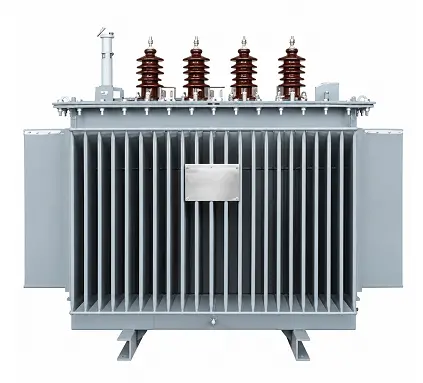
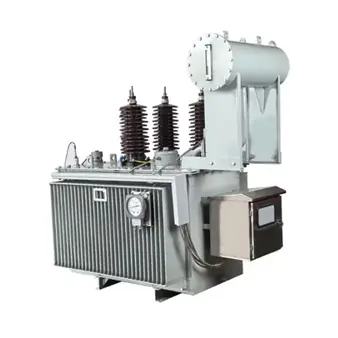
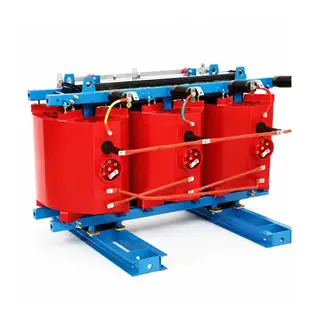
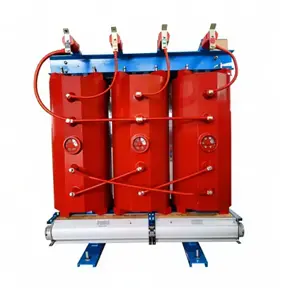
Grounding transformers mainly include Zigzag grounding transformers and grounding transformers converted from ordinary three-phase transformers. Their working principles are as follows:
Zigzag Grounding Transformer
Winding Structure: The windings of a Zigzag grounding transformer adopt a zigzag connection. Each phase winding consists of two sections wound on different core columns. These two sections have equal turns and opposite winding directions.
Working Principle: Under normal operation, since the three-phase voltages are symmetrical, the sum of currents in the three-phase windings is zero, and the grounding transformer operates in a no-load state with only a small excitation current. When a single-phase ground fault occurs in the system, the voltage of the faulty phase drops to zero, while the voltage of the non-faulty phases rises to the line voltage.
Due to the special structure of the Zigzag winding, the zero-sequence magnetic fluxes generated by the two sections of each phase winding cancel each other out in the core under the action of zero-sequence voltage.
This results in a very small zero-sequence impedance, thereby providing a sufficiently large zero-sequence current path for the system to ensure reliable operation of the ground protection devices.
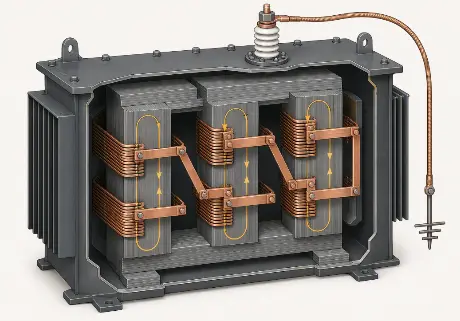
Grounding Transformer Converted from Ordinary Three-Phase Transformer
- Winding Connection: Typically, the windings of an ordinary three-phase transformer are connected in a Star (Y) configuration, with the neutral point grounded through a grounding resistor or an arc-suppression coil (Petersen coil).
- Working Principle: Under normal operation, the three-phase voltages are symmetrical, the neutral point potential is zero, and there is no zero-sequence current in the windings. When a single-phase ground fault occurs, the neutral point potential rises, generating a zero-sequence voltage. Under the action of this zero-sequence voltage, zero-sequence current appears in the windings. By reasonably selecting the parameters of the grounding resistor or arc-suppression coil, the magnitude of the zero-sequence current can be controlled to meet grounding protection requirements and limit overvoltages during faults.
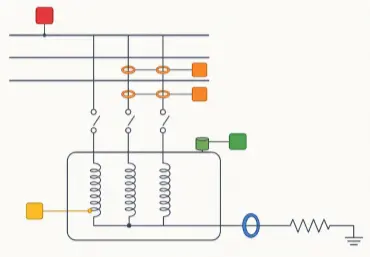
Protection Configuration of Grounding Transformers
The protection configuration for grounding transformers mainly includes the following:
Zero-Sequence Current Protection
- Configuration Principle: A zero-sequence current transformer is installed at the lead-out line of the grounding transformer's neutral point. Under normal system operation, the vector sum of the three-phase currents is zero, so the zero-sequence current transformer has no output. When a single-phase ground fault occurs, zero-sequence current is generated. When this current reaches the set value, the protection device operates.
- Function: Quickly detects and clears ground faults to prevent fault expansion, protecting equipment and system safety.
Overcurrent Protection
- Configuration Principle: Current transformers are installed on the primary or secondary side of the grounding transformer to monitor its current. When the current exceeds the set overcurrent threshold, the protection device operates after a time delay.
- Function: Protects the grounding transformer from damage during overloads or short-circuit faults.
Gas Protection (Buchholz Protection)
- Configuration Principle: A gas relay (Buchholz relay) is installed on oil-immersed grounding transformers. When a minor internal fault occurs, generating a small amount of gas, the light gas protection activates to send a signal. When a severe fault occurs, generating a large amount of gas and oil flow impact, the heavy gas protection activates to trip the breaker.
- Function: Sensitively responds to internal faults in the grounding transformer, especially early-stage minor faults, allowing for timely measures.
Temperature Protection
- Configuration Principle: Temperature sensors are installed on the windings or core of the grounding transformer to monitor temperature in real-time. When the temperature exceeds the set value, the protection device operates.
- Function: Prevents the grounding transformer from damaging its insulation due to overheating, extending equipment service life and ensuring safe operation.
Overvoltage Protection
- Configuration Principle: Monitors the voltage of the grounding transformer by installing overvoltage relays or utilizing the overvoltage protection function within integrated protection devices. When an overvoltage condition occurs, the protection device operates.
- Function: Limits potential overvoltages in the system, protecting the insulation of the grounding transformer and other equipment.

 Login