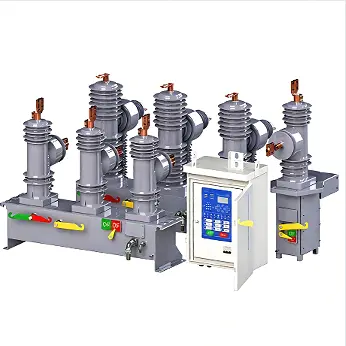
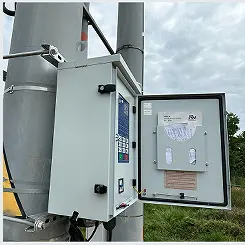
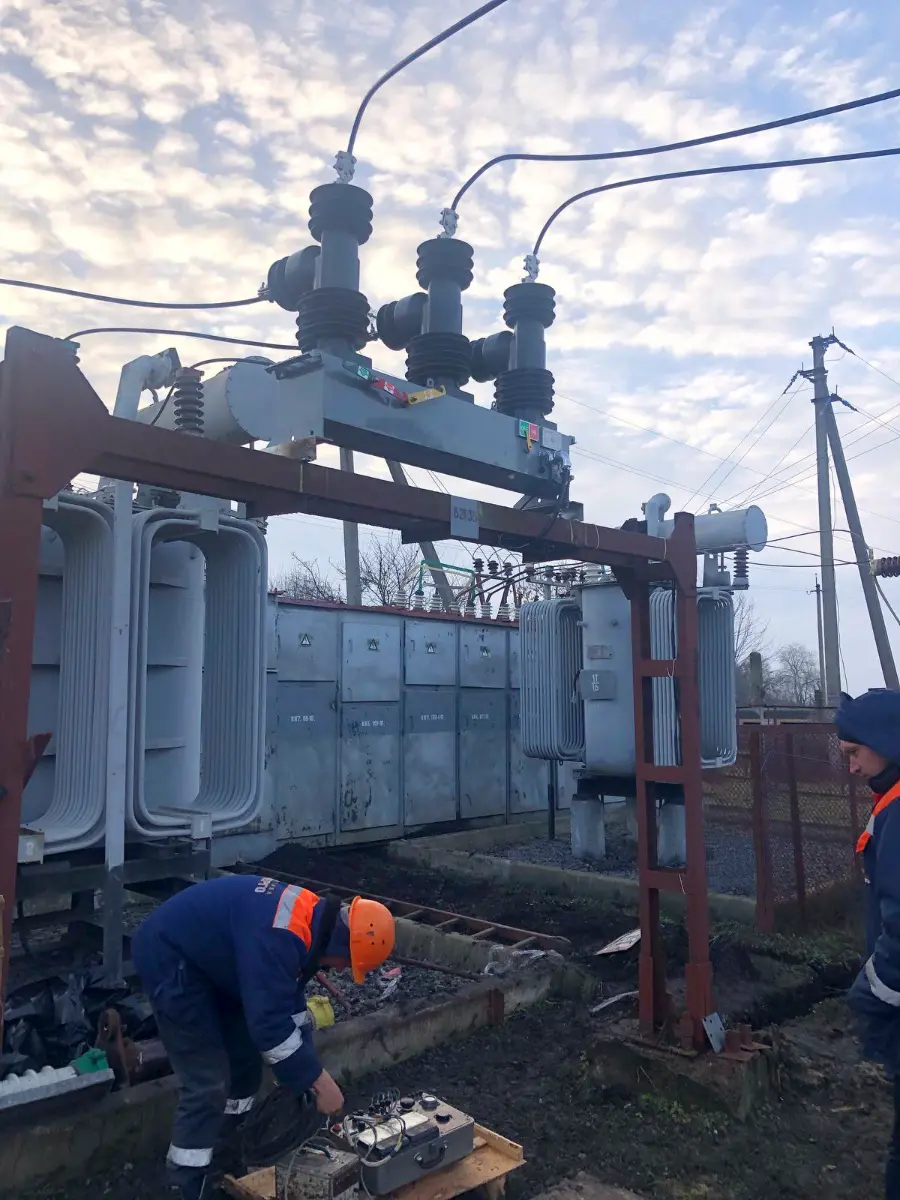
The mechanical life of a permanent magnetic actuator (PMA) in medium-voltage reclosers typically reaches 30,000 to 100,000 operations, whereas spring-operated mechanisms generally achieve only about 10,000 operations. This order-of-magnitude advantage stems fundamentally from a change in energy conversion principles that drastically simplifies the mechanical structure.
The reasons can be broken down into four core dimensions:
1. Exponential Reduction in the Number of Moving Parts
-
Spring mechanism: A purely mechanical energy-storage and release device, comprising motors, gears, cams, ratchets, latches, springs, and various linkages—totaling over 100 components. The more moving parts there are, the higher the probability of jamming,dislodgement, fatigue, and other mechanical failures, which increases exponentially.
-
Permanent magnetic actuator: Extremely simple in construction, consisting mainly of a static iron core, a moving iron core (armature), permanent magnets, and an excitation coil. There is effectively only one moving part (the armature), fundamentally eliminating the risks associated with multiple mechanical interfaces.
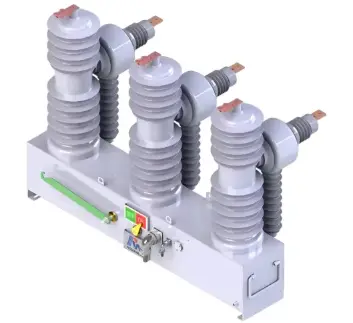
RCW Series Three-Phase Permanent Magnet Smart Recloser
2. Elimination of Wear-Prone Mechanical Latches
-
Spring mechanism: In both closed and open positions, the mechanism relies on mechanical pawls (latches) to lock it in place. With every operation, these latches endure significant mechanical impact and friction, making them highly susceptible to wear, deformation, or sticking due to dried-out lubrication—leading to failure to open or close.
-
Permanent magnetic actuator: Uses magnetic latching technology. In both closed and open positions, the armature is held securely by the magnetic force generated by permanent magnets. This is a contactless locking method that produces zero physical wear.
3. Elimination of Complex Transmission Chains
-
Spring mechanism: The motor's rotary motion is converted into spring potential energy via gears and cams, and then, during release, converted back into linear motion through linkages to drive the vacuum interrupter contacts. This long transmission chain results in significant energy loss, and mechanical clearances at each joint inevitably increase over time.
-
Permanent magnetic actuator: A capacitor discharges current into the coil, generating an electromagnetic force that moves the armature directly in a linear motion to drive the moving contact of the vacuum interrupter (direct-drive). The energy transfer path is the shortest possible, with virtually zero mechanical clearance, greatly reducing mechanical fatigue.
4. Controllable Operating Impact
-
Spring mechanism: The instantaneous release of the spring generates extremely high impact forces, and the force profile is difficult to adjust dynamically. Over time, high-frequency shock leads to mechanical fatigue in the linkage system and the bellows of the vacuum interrupter.
-
Permanent magnetic actuator: The electronic control board can regulate the discharge current magnitude and speed of the capacitor, optimizing the armature's motion profile (intelligent and flexible operation). This effectively reduces rigid impact on the vacuum interrupter and bellows, further extending the overall service life.
Summary and Selection Guidelines
Even though spring mechanisms have a shorter mechanical life than PMAs, this does not mean they will be entirely phased out. Under certain grid conditions and application needs, spring mechanisms still offer irreplaceable advantages (e.g., intuitive purely mechanical interlocking, and the ability to be manually operated when completely de-energized).
So, how do you choose for your project?
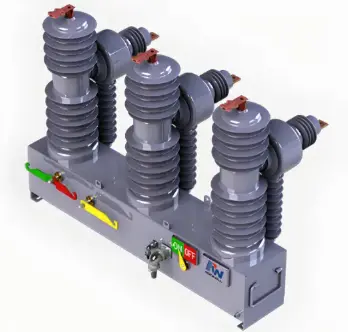
RCW Series Pole Mounted outdoor vacuum recloser
Why Choose Rockwill RCW Permanent Magnetic Reclosers?
In the global high-end power distribution market, where frequent operation and maintenance-free performance are critical, the Rockwill RCW permanent magnetic recloser stands out as a highly competitive solution. Its core advantage lies in reducing moving parts to a single direct-drive armature, complemented by high-performance solid-insulated poles and an extreme-cold-resistant electronic control system, effortlessly achieving an extended operational life of up to 100,000 operations. In terms of critical interrupting performance, extreme environmental tolerance, and grid automation response speed, the RCW series matches the performance of leading international medium-voltage distribution brands. More importantly, while delivering comparable technical performance, Rockwill offers a more cost-effective solution that significantly reduces your total cost of ownership (TCO)—covering both initial procurement and long-term maintenance—for distribution network retrofit projects.
Edited From:Garca

 Login