Search


What are the differences between single-phase and three-phase American pad-mounted transformers?

Single-phase vs three-phase pad-mounted transformers: capacity, application, and installation differences for residential and commercial distribution.

Rockwill
Field: Manufacturing
10Year<
China
Add us on Google
 
The pad-mounted transformer is a critical component in modern distribution networks, widely deployed for its compact structure, high safety, and flexible installation. Based on the supply system and internal core components, pad-mounted transformers are primarily classified into single-phase and three-phase types. The two types exhibit systematic differences in electrical parameters, physical structure, and engineering applications. Below is an in-depth analysis from five core dimensions.
iee-business

I. Basic Definition and Internal Structure

The core design concept of a pad-mounted transformer is to integrate high-voltage load switches, protective fuses, and other components together with the transformer core and windings within a fully sealed, fully insulated oil-filled tank.

  • Single-phase pad-mounted transformer : Designed for single-phase AC systems, the internal transformer contains one primary winding and one secondary winding. The HV side requires only a single incoming line, and the associated protection components (e.g., bayonet fuse) are configured as a single set.
  • Three-phase pad-mounted transformer: Designed for three-phase AC systems, the internal core adopts a three-limb or five-limb structure with three symmetrical sets of primary and secondary windings. The HV side requires three symmetrical incoming lines, and the load switches and fuses are configured independently or ganged per phase.

II. Capacity Range and Electrical Parameters

The capacity and voltage parameters of both types strictly follow international standards (e.g., ANSI/IEEE C57 series), with clear boundaries in system matching.

  • Rated capacity range: Single-phase pad-mounted transformers are suited for small-capacity, low-voltage distribution needs; three-phase units cover a broader capacity range for medium to high load density scenarios.
  • Voltage and vector group: Both types support a wide range of medium-voltage levels on the primary side. On the secondary (LV) side, single-phase units supply single-phase voltage for residential and light commercial loads; three-phase units provide a three-phase four-wire system for industrial and commercial power loads, requiring stable neutral-point operation.

III. Physical Characteristics and Lifecycle Economics

Due to differences in internal electromagnetic component complexity, the two types show marked differences in physical form and lifecycle cost.

  • Size and weight: The simplified winding and core structure of single-phase units makes them significantly smaller and lighter than three-phase units of equivalent capacity, imposing lower foundation requirements and suiting confined installation spaces.
  • Cost and maintenance: Single-phase units have a lower initial purchase cost. However, when multiple single-phase units are banked together to replace a single three-phase unit in areas requiring three-phase supply, the total installation cost and footprint increase substantially. Three-phase units carry higher initial investment but offer better per-unit-capacity maintenance cost and loss performance under sustained high-load conditions.

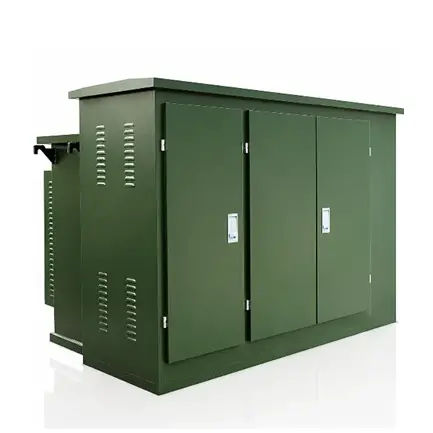
Single Phase  Pad Mounted Transformer Up to 34.5 kV

Single Phase Pad Mounted Transformer 

IV. Application Scenarios and Selection

Based on the technical and physical characteristics above, the two types serve distinctly different roles in power engineering.

  • Typical single-phase applications: Low-density residential areas, rural single-phase supply networks, and small commercial facilities requiring only single-phase power.
  • Typical three-phase applications: Commercial complexes, industrial parks, data centers, and municipal infrastructure, serving as the primary distribution equipment for three-phase motors, HVAC systems, and other high-power loads.

V. Standards Certification and Regional Adaptation

  • International certification requirements: Both types must pass stringent testing per ANSI/IEEE C57.12 series, CSA C22.2, and DOE energy-efficiency standards.
  • Adaptation for the Chinese market: Due to differences between North American standards and China's 10/0.4 kV grid system, single-phase pad-mounted transformers are rarely used in China, appearing only in special temporary supply scenarios. Three-phase pad-mounted transformers are more common in Chinese industrial and commercial distribution, but typically require localization per Chinese national standards (e.g., adding energy metering and reactive power compensation on the LV side) to meet domestic distribution grid compliance requirements.

Summary

The choice between single-phase and three-phase pad-mounted transformers hinges on load type and distribution architecture: single-phase solutions suit distributed, small-capacity scenarios, while three-phase solutions address centralized, high-density load applications. Engineering selection should consider supply reliability, installation space, lifecycle cost, and local standards compliance to achieve the optimal techno-economic solution.

Edited From:Noah

Give a tip and encourage the author!

Comments

Share your question or perspective
WhatsApp
Send inquiry
+86
Click to upload file
Download
Get the IEE Business Application
Use the IEE-Business app to find equipment, obtain solutions, connect with experts, and participate in industry collaboration anytime, anywhere—fully supporting the development of your power projects and business.
Login
or continue with
New here?
Register