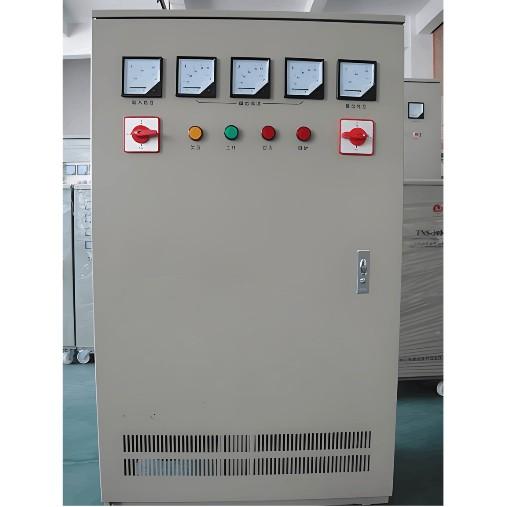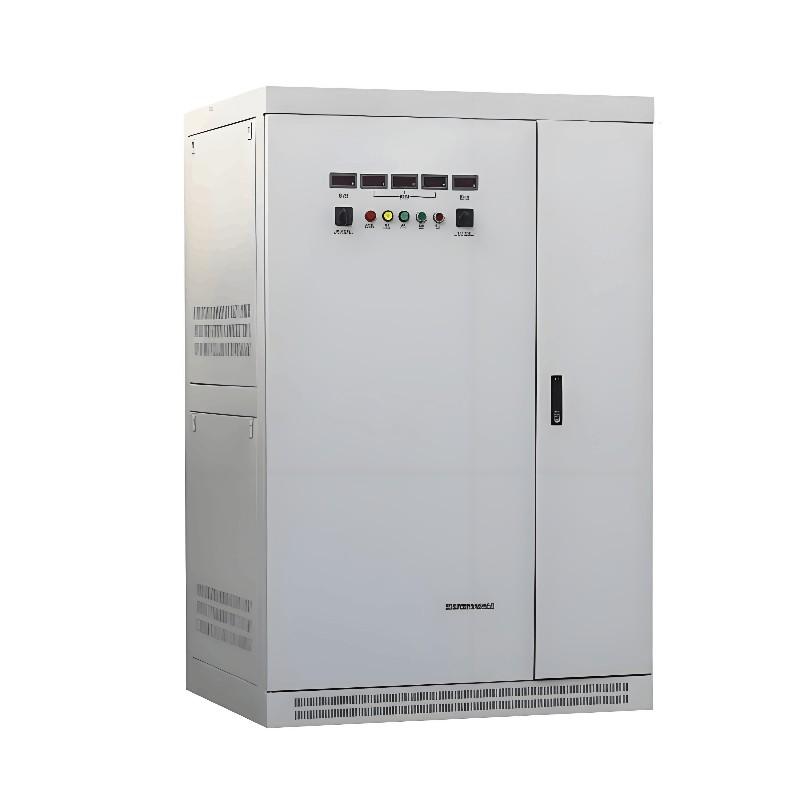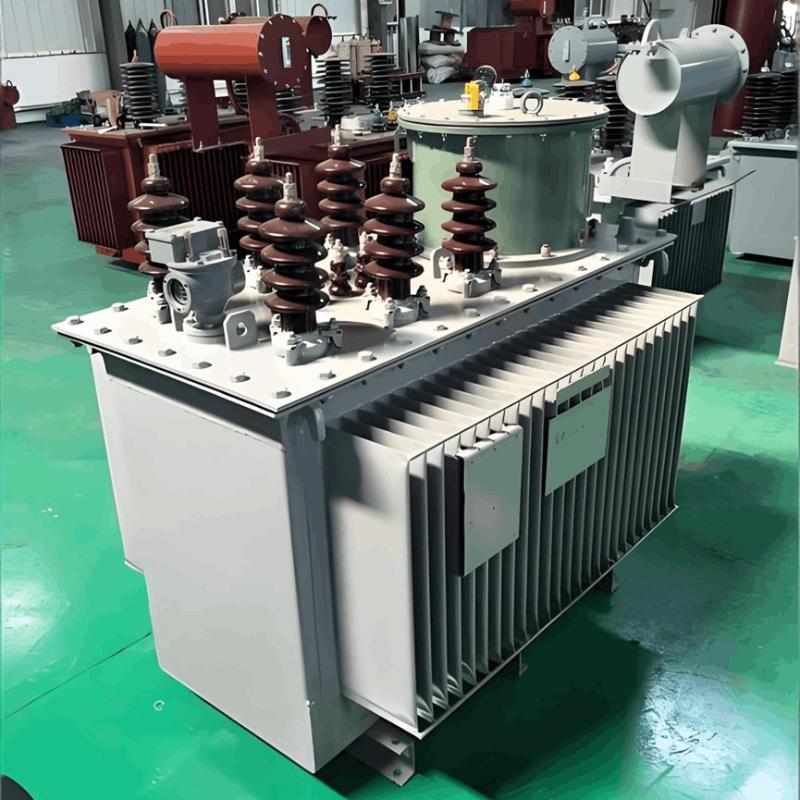
Ang volt ay isang kritikal na factor sa pag-evaluate ng kalidad ng kuryente. Ang kalidad ng volt ay karaniwang tinatasa sa pamamagitan ng pagsukat ng deviation, fluctuation, waveform distortion, at three-phase symmetry—ang deviation ng volt ang pinakamahalagang indicator. Upang matiyak ang mataas na kalidad ng volt, kinakailangan ang voltage regulation. Sa kasalukuyan, ang pinaka-widely used at epektibong paraan para sa voltage regulation ay ang pag-adjust ng tap changer ng mga power transformers.
Ang papel na ito ay pangunahing naglilipat ng PLC at microcomputer technologies upang mag-disenyo at analisa ng isang intelligent power voltage regulator, na nagresulta sa mabilis na voltage regulation habang iniiwas sa transient voltage surges sa panahon ng proseso ng adjustment.
1. Working Principle and Key Features of the Intelligent Power Voltage Regulator
1.1 Main Working Principle
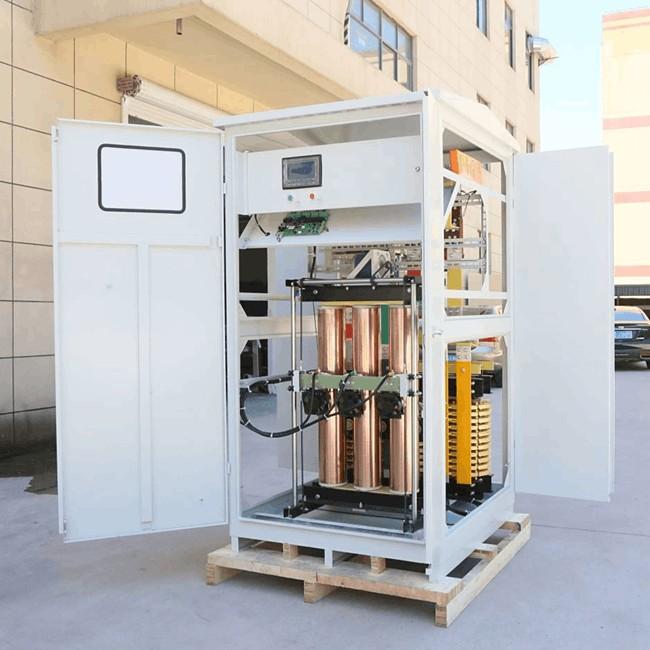
Ang intelligent power voltage regulator ay binubuo ng main unit at auxiliary units. Ang main unit ay may primary at secondary capacitors kasama ang regulating transformer, na nagbibigay ng reactive power compensation at automatic voltage regulation.
Ang auxiliary units ay kasama ang isang intelligent control unit at tatlong execution adjustment units. Ang intelligent control unit ay gumagawa at nagsasala ng mga control commands, na tinatanggap nang wirelessly ng mga execution units upang makapagbigay ng real-time voltage regulation sa distribution line.
Bilang core component, ang intelligent control unit ay nagdetermina ng automation level, intelligence, at regulation accuracy ng device. Ito ay maikling nagsusuri ng feeder voltage, naggagawa ng appropriate commands, at nagsasala nito sa tap changer control module upang mapanatili ang feeder voltage sa target setpoint. Ang kanyang pangunahing functions ay kinabibilangan ng:
Real-time monitoring and control of feeder voltage—promptly correcting any deviations;
Real-time monitoring and control of output load current;
Providing protective functions against undervoltage, overcurrent, and overheating conditions.
Ang intelligent power voltage regulator ay nagbibigay ng mga sumusunod na advantages:
Dual functionality: It simultaneously provides reactive power compensation and voltage regulation. During voltage adjustment, it also partially compensates for grid reactive power, improving power factor, preventing line damage, enhancing grid load capacity, and ensuring voltage quality. Additionally, it can monitor three-phase voltage and current.
Optimized and eco-friendly structure: The design employs graded insulation to increase dielectric strength. Data transmission between the control and execution units uses voltage isolation, enabling oil-free signal transfer. All voltage and current sensors are integrated internally, eliminating the need for external potential or current transformers—enhancing reliability, stability, and ease of installation.
Intelligent voltage regulation: It automatically measures tap positions based on user-defined thresholds and self-corrects inaccurate settings to ensure stable grid operation.
Maintenance-free tap changer operation: By connecting the regulating transformer in series with reactive compensation capacitors, short-circuit currents during voltage adjustment remain low, minimizing operational impact.
Intelligent protection: Continuously monitors line load and transformer temperature; automatically exits regulation mode upon detecting anomalies and resumes operation once conditions normalize.
Real-time data logging: The control unit accurately records voltage, current, and the number of tap changes before and after each regulation event.
Efficient wireless communication: On-site data can be read directly, and regulation parameters (e.g., time intervals, voltage thresholds) can be adjusted remotely—simplifying operation.
Given its high cost-effectiveness, reliability, and safety, the intelligent power voltage regulator is well-suited for widespread deployment in rural power grids, significantly reducing voltage deviation issues.
2. Application of PLC Control Technology in the Hardware Design of the Intelligent Power Voltage Regulator
Batay sa functional requirements at technical specifications ng intelligent power voltage regulator, ang hardware architecture nito ay ipinapakita sa Figure 1.
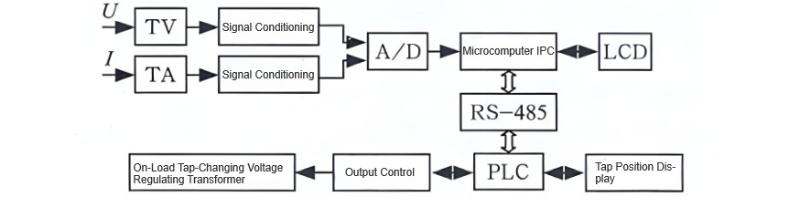
Ang microcontroller basic system ay pangunahing nag-aadopt ng industrial personal computer (IPC), gamit ang CPU card model na All2In2One na may 256MB memory, na may dalawang serial at isang parallel interface. Kasama rin dito ang PCI2S3-compatible graphics acceleration chip, na may laki ng graphics card na nasa 1 hanggang 2MB. Upang mapataas ang reliability ng sistema, ginagamit ang low-power components upang mabawasan ang current consumption.
Sa panahon ng setup ng input channels, ang input signals ay nakilala bilang secondary signals mula sa voltage at current transformers. Ang mga signal na ito ay dinadaan sa conditioning bago maiconvert sa pamamagitan ng ADC para sa input sa MCU. Ang signal conditioning circuit ay pangunahing binubuo ng current at voltage transformers kasama ang three-stage operational amplifier. Ang current at voltage transformers ay epektibong nagsasalin ng mataas na voltages at currents sa mas maliit na ones na may mataas na precision at good linearity. Ang three-stage op-amp ay nagsasala ng mga naconvert at rectified na signals.
Alang sa maong intelligent power voltage regulator, gipili ang Panasonic series FP1 PLC nga naghatag og hangtod sa 5000 steps ka program capacity, simple nga operation commands, ug comprehensive nga functionality. Usa ra kini nga gamiton ang RS485 twisted pair cables, nakuha niya ang transmission rate sa 100bps ug nag-enable sa networking hangtod sa 32 ka PLCs sa radius nga 1200 meters. Ang model sa PLC kini may excellent nga monitoring capabilities, capable sa real-time monitoring sa ladder diagrams ug dynamic timing aron masiguro ang smooth nga voltage regulation.
Ang output channels nag-adopt og logical output methods. Aron mahimo ang steady nga voltage regulation pinaagi sa minimal nga switching voltage ug crossover current, kinahanglan ang zero-crossing triggering, sama sa pag-setup sa contactless electronic switches.
Pagkahuman sa pag-power on ug pag-initiate sa intelligent power voltage regulator, kinahanglan ang initialization ug self-check procedures. Sa dili pa mapasabot ang self-check, imong masukod kung ang device anaa sa operating mode o configuration mode. Sa configuration mode, mahimong iset ang mga parameters pinaagi sa keyboard sa pag-enter sa setup menu, pag-select sa specific settings, ug pag-adjust sa values pinaagi sa up/down keys. Sa operating mode, ang sampling ug digital filtering mogawas, sumala sa pagpili sa appropriate nga voltage regulation methods:
Automatic Regulation: Gipatuman ang corresponding nga programs aron masukod kung ang voltage anaa sa specified range. Kon wala, walay adjustment needed; otherwise, gipahimulos ang adjustments aron ibalik ang voltage sa limits.
Manual Regulation: Manual nga operations pinaagi sa panel buttons mag-adjust sa voltage levels. Human sa pag-complete sa voltage adjustments, ang display programs moshow ang transformer secondary voltage ug current values, sama sa daily regulator actions, aron masiguro ang continuous nga operation.
Arong matugutan ang user requirements para sa voltage deviation, importante ang effective nga application sa control algorithms. Kini nagsama sa pag-calculate sa values independent sa sampled time points gikan sa discrete data sets pinaagi sa mathematical operations, pag-compare nian sa design specifications, ug pag-perform sa logic operations para sa tap changer adjustments. Ang calculation formulas alang sa measurement sa current, voltage, ug active power mao kini:
(Note: Ang specific formulas alang sa current, voltage, ug active power measurement wala gibutang sa imong text, pero kasagaran nagsama sa standard electrical engineering calculations sama sa Ohm's law, power factor calculations, etc.)
Kini nga mga descriptions naghatag og detailed explanation sa paano ang intelligent power voltage regulator molihok, ang iyang hardware configuration, ug ang software processes nga involved sa pag-maintain sa optimal nga voltage regulation.

Sa formulas, ang i(k) ug u(k) represent sa k-th current sampling value ug voltage sampling value, respectively. Pinaagi kining duha, makaderive ug calculate ang uban pang quantities sama sa Q ug cosφ.
Pinaagi sa testing sa intelligent power voltage regulator, ang paper naa'y nakita nga ang device makaepektibo nga mag-adjust sa voltage sa short period of time, avoiding problems sama sa surges ug short circuits, ensuring the stability sa voltage regulation, ug achieving a relatively ideal nga voltage regulation effect. Makita nga ang application sa PLC control technology sa intelligent power voltage regulator makaepektibo nga realize ang automatic detection ug regulation sa voltage, accelerate ang speed sa voltage regulation, ug ang actual operation kay relatively simple. Moreover, wala'y surge nga mogawas sa duration sa voltage adjustment, ug ang upper computer makamonitor sa real-time ang various working states sa device, nga nag-play og great role sa transformation ug management sa substations ug distribution stations.