Akwai kyau a tattalin karkashin jirgin yara a duniya, amma tattalin da ake bi wani suna da muhimmanci suna da muhimmiyar matsalolin masu saukarwa da gajerun zafi, don haka ya kamata karfi don inganta aiki mai kyau. Inbaitar da mutum da tsarin jirgin yara suna ba amsa na bincike masu kyau don inganta aiki da kuma hada zafi a makarantar jirgin yara.
1 Bayanin Inbaitar da Mutum Da Tsarin Jirgin Yara
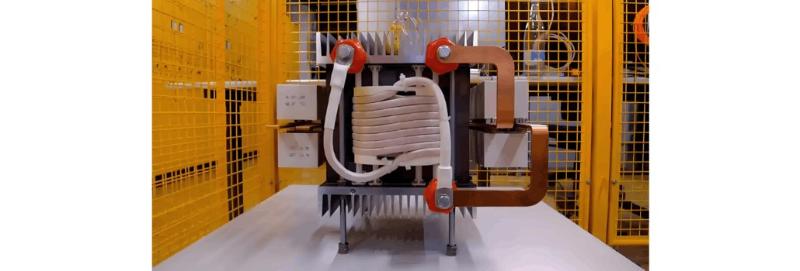
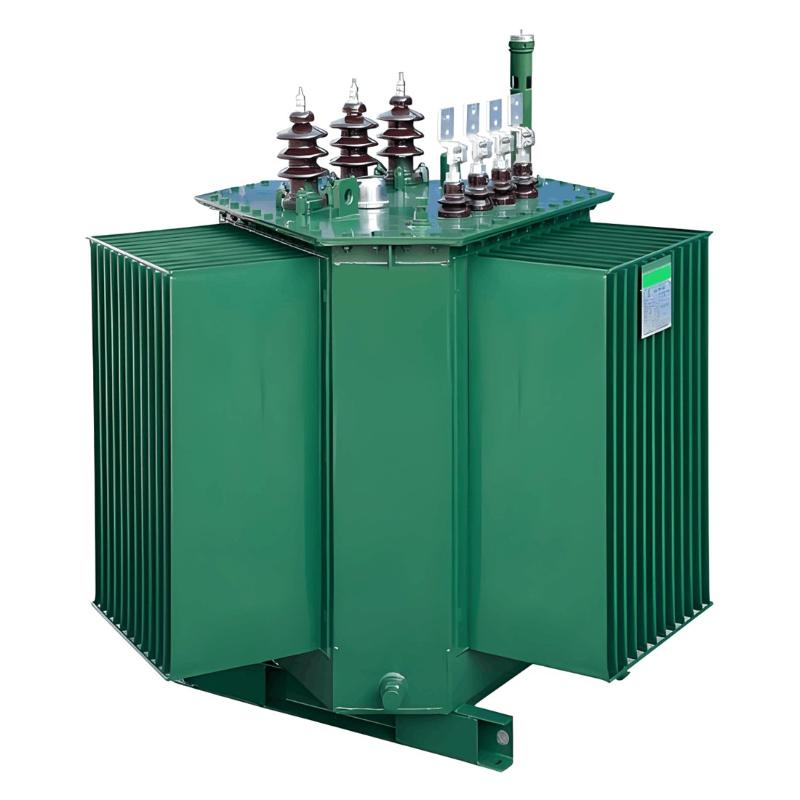
Inbaitar da mutum da tsarin jirgin yara suna yi aiki da maimakon mota da transformer da suka da shugaban tsari, wanda ke taimaka wajen inganta aiki, kuma samun rarrabe da inganta ranar aiki. An kawo inbaitar, circuit breakers, disconnect switches, da transistors, domin yi aiki musamman don inganta aiki. Inbaitar, wanda ke cikin ma'aikata, ke yi tasiri ga fadada da tsari don haɗa da talabubban load, kuma inganta aiki. Wannan ke hada saukarwa da kuma hada zafi da aka iya shiga ko kuma hada sarrafa, kuma inganta ranar aiki.
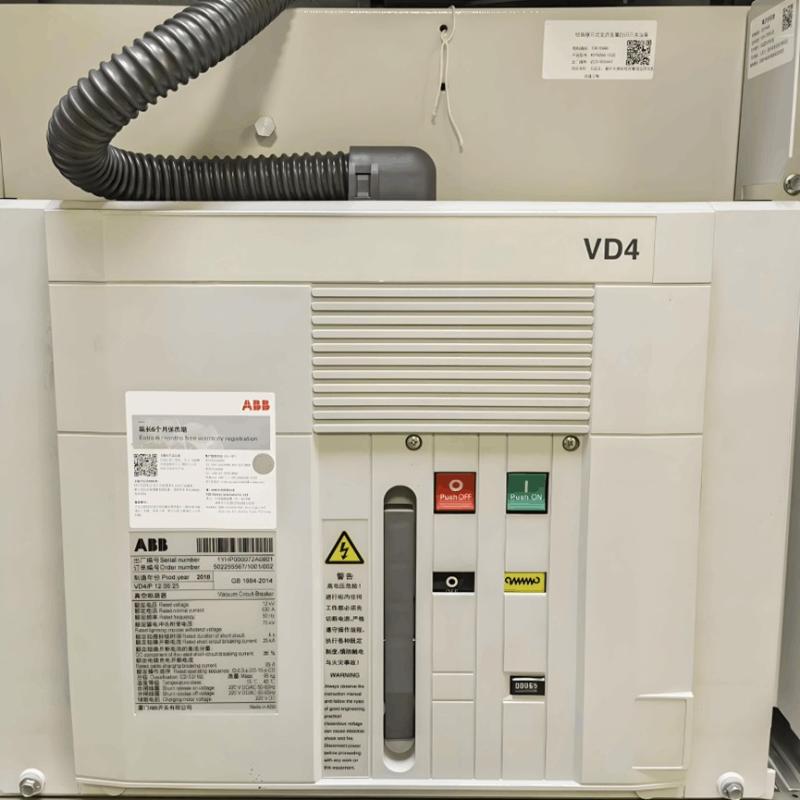
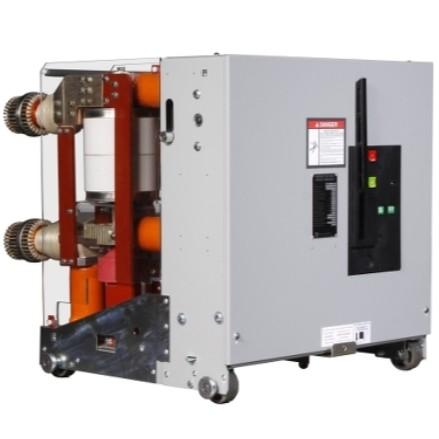
Circuit breakers suna taimaka wajen hada sarrafa da kuma hada zafi; Disconnect switches suna taimaka wajen hada nasararsa a lokacin wasu ayyuka. Transistors suna taimaka wajen haɗa current da kuma inganta aiki. Wannan abubuwan da suka da amfani suka taimaka wajen amfani da inbaitar da mutum da tsarin jirgin yara a kasashe jirgin yara, nafta, kimiyar, da kuma kudurkar don yi aiki da fans, pumps, da compressors da kuma inganta aiki.
2 Ma'ana A Tattalin Karkashin Jirgin Yara
2.1 Inganta Aiki Na Boiler
Boilers, wanda ke cikin ma'aikata na tattalin karkashin jirgin yara, suna taimaka wajen inganta aiki da kuma hada zafi. Inbaitar da mutum da tsarin jirgin yara suna inganta aiki na boiler domin yi bincike na speed na feedwater pumps, forced draft, da induced draft fans. Wannan ke taimaka wajen yi bincike ta hanyar load da kuma talabubban combustion, kuma inganta aiki na water, air, da flue gas flow. Binciken da ta fiye ya hada saukarwa da kuma hada zafi, kuma ya inganta thermal efficiency da rarraba. Wannan ke hada sarrafa da kuma hada zafi, kuma ya inganta ranar aiki da kuma hada sarrafa.
2.2 Hadin Sarrafa Da Turbine Thermal Losses
Steam turbines suna da muhimmanci wajen tattalin karkashin jirgin yara, amma thermal losses suna hada aiki da kuma hada zafi. Inbaitar da mutum da tsarin jirgin yara suna hada wannan domin haɗa steam intake da kuma regulation na speed. Saboda haka, inbaitar suna yi adjustment na steam flow a baya-bayan ta hanyar load, kuma ya inganta aiki na turbine. Suna yi aiki da kuma inganta aiki na turbine, kuma ya hada sarrafa da kuma hada zafi, kuma ya inganta aiki da kuma hada zafi.
2.3 Hadin Sarrafa Da Saunkin Zafi Na Makaranta
Auxiliary equipment kamar pumps da fans suna da sauki na zafi, wanda ke taimaka wajen inganta aiki. Inbaitar da mutum da tsarin jirgin yara suna inganta aiki domin yi bincike na speed control, kuma ya haɗa power ta hanyar load. Wannan ke hada saukarwa, kuma ya inganta aiki. Misali, inbaitar da cooling pumps da fans suna yi bincike na flow ta hanyar demand, kuma ya hada saukarwa. Suna inganta aiki na auxiliary equipment, kuma ya hada sarrafa, kuma ya inganta ranar aiki, kuma ya hada sarrafa da kuma hada zafi.
3 Amfani Na Inbaitar Da Mutum Da Tsarin Jirgin Yara A Tattalin Karkashin Jirgin Yara
3.1 A Boiler Systems
Daga baya-bayan basic speed control, inbaitar da mutum da tsarin jirgin yara suna taimaka wajen inganta aiki na boiler. Integrated with sensors and data analytics, they enable intelligent combustion control by monitoring flame temperature, flue gas, and oxygen levels, adjusting fuel and air for peak efficiency and low emissions of NOx and SOx.
They also improve load-following capability. Using predictive algorithms, inverters adjust boiler output in anticipation of grid demand, enhancing flexibility and reducing losses from load swings. Deep integration with DCS and SIS enables coordinated control with turbines and generators, optimizing overall plant efficiency and response through data sharing and unified scheduling, supporting intelligent and efficient plant transformation.
3.2 A Condensate Pump Systems
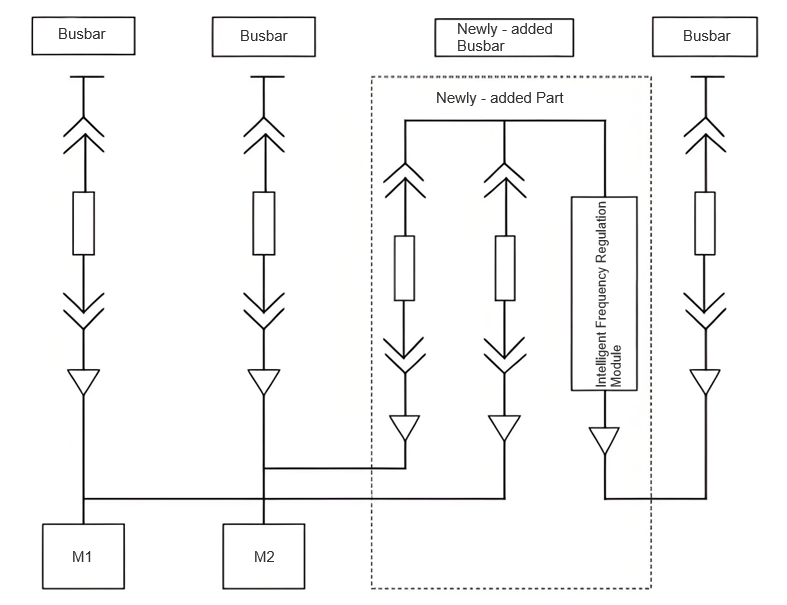
Traditional condensate pumps run at fixed speeds, wasting energy. High-voltage inverters solve this by enabling precise speed control based on condensate flow (Fig. 1). Pumps slow down at low loads to save energy and speed up at high loads to maintain supply, ensuring stability.
The system monitors motor temperature, current, and voltage in real time, using built-in protection to prevent overloads and faults, extending equipment life. Integration with boiler and turbine controls optimizes the steam-water cycle, maximizing efficiency. Remote monitoring and fault diagnostics allow early detection of issues, preventing unplanned outages. Data analysis further optimizes operations, uncovering additional energy savings and improving economic performance.
3.3 Application of High-Voltage Inverters in Dust Removal Systems
The application of high-voltage inverters in dust removal systems offers a new solution for improving environmental performance and energy efficiency in thermal power plants. With flexible speed control, intelligent coordination, and significant environmental benefits, high-voltage inverters are becoming a key choice for upgrading and optimizing dust removal systems.
Specifically, the high-voltage inverter control process in a power plant’s dust removal system includes key steps such as lance position setting, deviation calculation, PLC control, variable frequency speed regulation, and feedback optimization, as shown in Figure 2. The position of the oxygen lance is critical to dust removal efficiency. Traditional methods use fixed settings, unable to adjust in real time based on flue gas composition and dust removal performance. In contrast, high-voltage inverters integrate high-precision sensors to monitor dust concentration and oxygen content in flue gas in real time, dynamically calculating the optimal lance position using preset algorithms. In this process, the inverter not only drives motor speed control but also participates in closed-loop feedback for position adjustment, ensuring precise and rapid response to positioning commands.
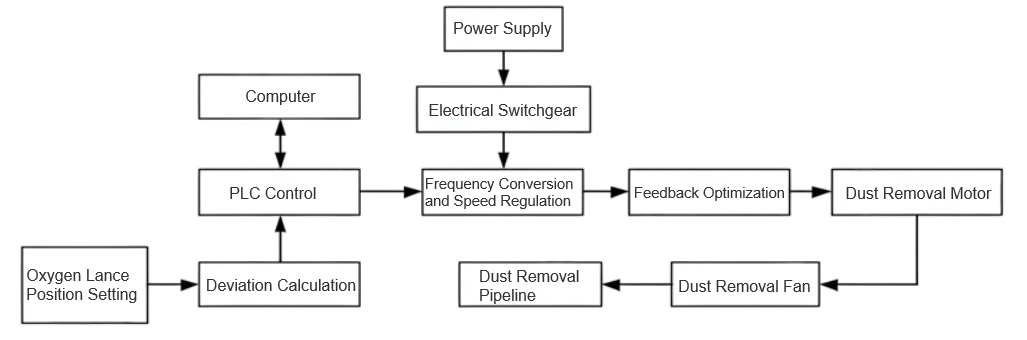
The programmable logic controller (PLC), as the core control unit, coordinates the operation of all system components. The tight integration between the high-voltage inverter and the PLC enables fine-grained control of each part of the dust removal system. By receiving control signals from the PLC, the inverter precisely adjusts the speed of the dust removal fan to match the current flue gas flow and dust concentration. This real-time data-driven speed control strategy improves dust removal efficiency while avoiding energy waste and equipment wear caused by excessive blowing.
The application of high-voltage inverters extends beyond simple speed control, enabling continuous optimization of control strategies through feedback mechanisms. By monitoring key indicators such as dust emission concentration and flue gas transparency in real time, the inverter automatically adjusts control parameters based on feedback data, achieving adaptive regulation. This ongoing optimization significantly enhances system stability and reliability while reducing operational and maintenance costs.
4 Conclusion
In summary, the widespread application of high-voltage inverters in thermal power generation—spanning intelligent boiler management, efficient condensate pump control, and environmentally optimized dust removal—demonstrates their significant potential and value. Through precise speed regulation, intelligent system optimization, and real-time feedback control, high-voltage inverters not only substantially improve energy efficiency and environmental performance but also enhance system flexibility and stability, providing solid technical support for the continuous, efficient, and safe operation of power plants.