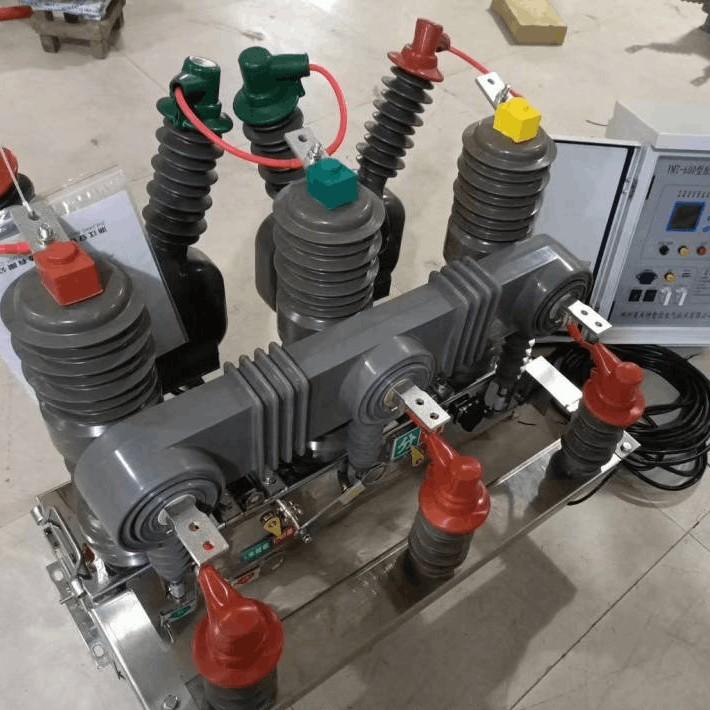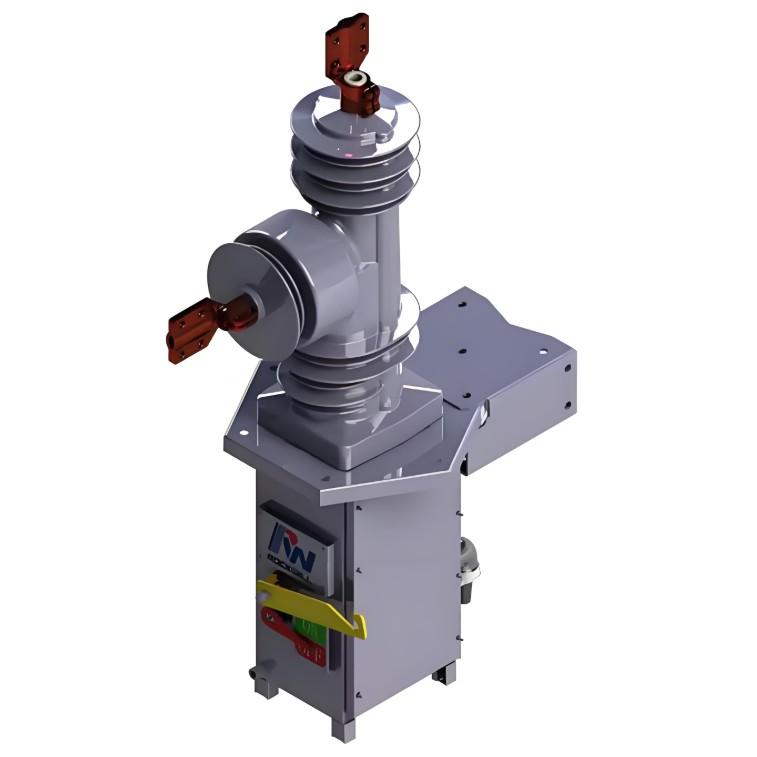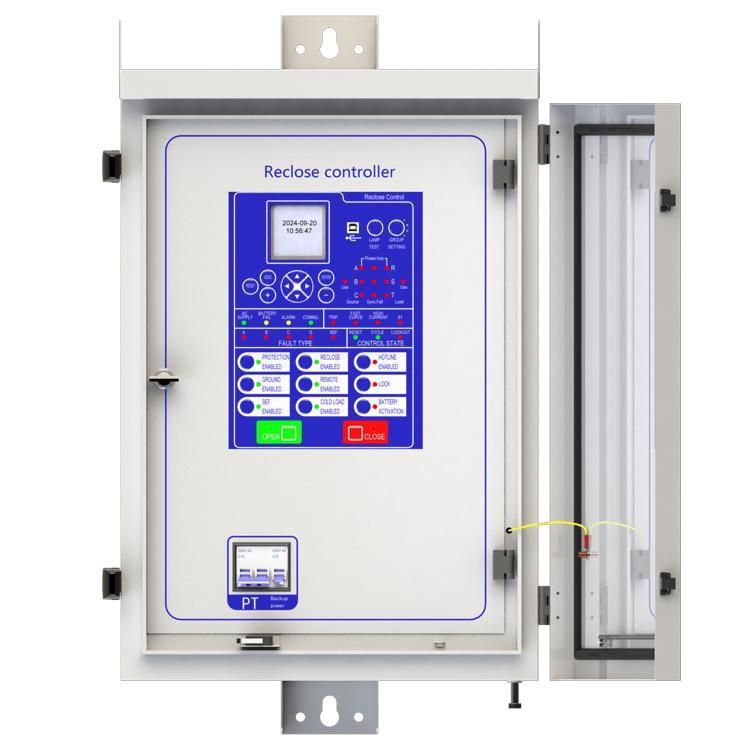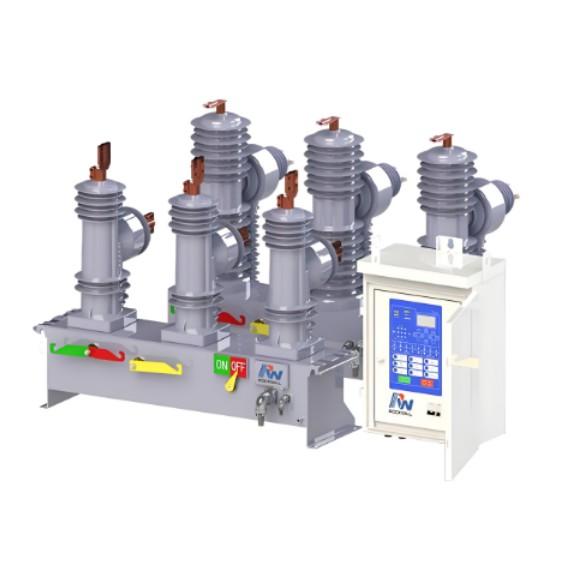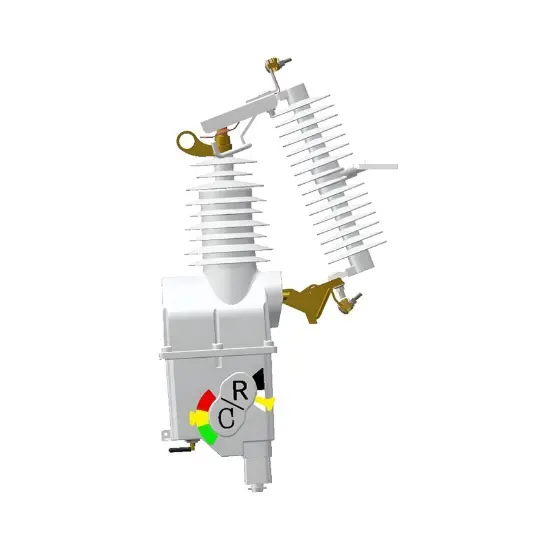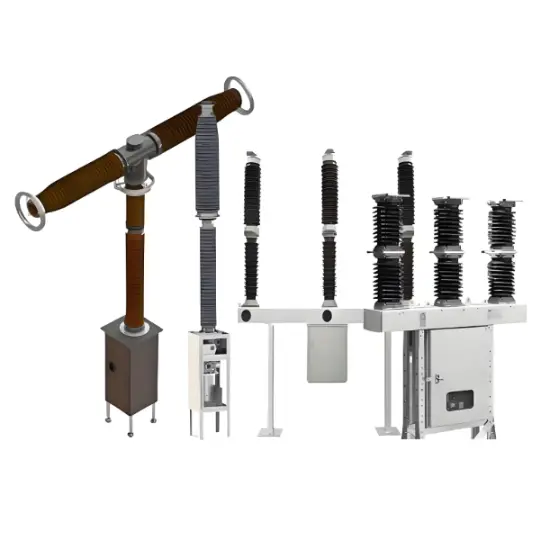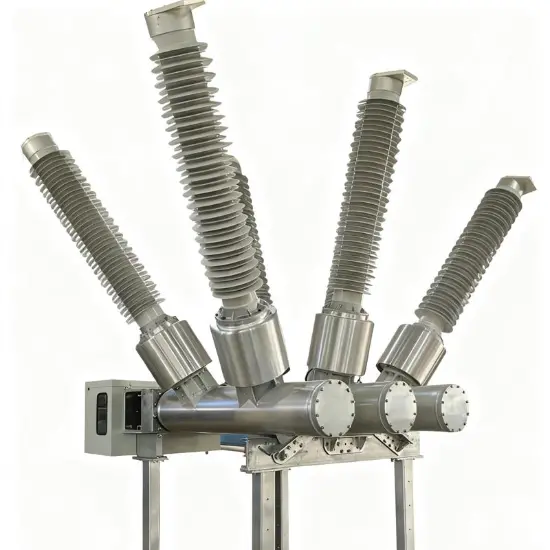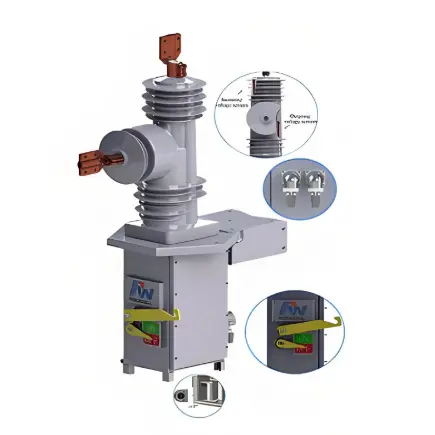
According to statistics, the vast majority of faults on overhead power lines are transient, with permanent faults accounting for less than 10%. Currently, medium-voltage (MV) distribution networks commonly employ 15 kV outdoor vacuum automatic circuit reclosers in coordination with sectionalizers. This setup enables rapid restoration of power supply after transient faults and isolates faulty line segments in the event of permanent faults. Therefore, it is essential to monitor the operational status of automatic recloser controllers to enhance their reliability.
1.Technical Research Overview (Domestic and International)
1.1 Classification of Automatic Reclosers
Automatic reclosers fall into two main categories: current-type and voltage-type. Current-type reclosers detect fault currents, trip accordingly, and automatically reclose—typically performing one to three reclosing attempts. They function both as protective devices and as reclosers. Fault isolation proceeds by progressively eliminating sections starting from the furthest downstream segment until the faulted section is identified. However, this method subjects the grid to multiple fault current reclosures, causing significant stress. Moreover, the more line sections there are, the greater the number of required reclosures and the longer the total restoration time. Consequently, such systems are generally limited to no more than three sections and are best suited for branch or radial feeders.
Voltage-type reclosers, on the other hand, trip upon loss of voltage and reclose after a preset delay once voltage is restored. In this scheme, the substation feeder circuit breaker must perform two reclosures to complete fault isolation and service restoration: the first reclosure identifies the faulted section based on the number of sectionalizer switches that close, after which switches adjacent to the fault are locked out to isolate it; the second reclosure restores power to non-faulted sections. Since overcurrent instantaneous protection relies on the substation feeder breaker, this approach is less suitable for long feeders. However, with increasing system capacity, this limitation has gradually diminished. Voltage-type reclosers are thus appropriate for short radial or looped networks and enable basic automation functionality.
1.2 Problems with Conventional Testing Methods
Due to manufacturing tolerances and mechanical wear from prolonged operation, automatic reclosers may experience malfunctions or false operations. Current testing methods primarily rely on manual inspection equipment, which entails high investment costs.
1.3 Current Research Status and Development Trends (Domestic and International)
For 15 kV MV outdoor vacuum automatic circuit reclosers, domestic practices in China predominantly adopt offline, periodic maintenance approaches, including insulation resistance tests, control circuit insulation resistance tests, and AC withstand voltage tests. These conventional methods suffer from several drawbacks: test equipment is bulky and difficult to transport; testing often requires elevated work, posing safety risks; and the process consumes substantial manpower and resources. Comprehensive, integrated diagnostic systems remain rarely implemented in actual field operations.
Significant progress has been made in controller-level diagnostics for 15 kV MV outdoor vacuum automatic circuit reclosers. Modern automatic analyzers are now widely used. These devices connect via simple, standardized interfaces—supporting “plug-and-play” compatibility across reclosers from different manufacturers. By injecting controlled current signals into the recloser controller, the analyzer measures key responses such as Time-Current Characteristic (TCC) curves and control sequences. It offers precise control over waveform, timing, and amplitude of injected currents and accurately records the controller’s response—with timing resolution down to the microsecond level. The system can fully automate a complete test sequence and instantly display textual results, including trip commands, reclose actions, reset, lockout events, and associated timestamped logs.
Current research on intelligent fault diagnosis focuses on three main directions:
Integrated intelligent fault diagnosis technologies;
Networked intelligent diagnostic systems;
Adaptive intelligent diagnostic architectures.
2.Fault Diagnosis Technology for 15 kV MV Outdoor Vacuum Automatic Circuit Reclosers
The fault diagnosis system for 15 kV MV outdoor vacuum automatic circuit reclosers is designed specifically for evaluating the performance of recloser controllers used in medium-voltage overhead lines. After connecting the "circuit breaker unit" to the recloser controller, the system uses software to inject various simulated fault currents into the controller and triggers corresponding open/close operations according to the controller’s logic. The system records the controller’s response to these simulated current changes and analyzes—via software—whether the controller correctly identifies fault conditions and executes appropriate control actions in compliance with specifications.
This diagnostic system supports a wide range of fault scenario tests, enabling fully automated detection of controller faults. It connects to various recloser models through either universal or customized interfaces, and all control and testing functions are executed through dedicated analysis software. Key features of the system include:
High-Precision Current Source: The system employs a high-accuracy, high-resolution, and reliable current source to ensure realistic simulation of fault currents. Software control allows comprehensive adjustment of current parameters—including waveform, amplitude, rise time, duration, and fall time—and provides real-time visualization of current waveforms and magnitudes for enhanced analytical capability.
Universal Interface Design: A standardized interface enables true “plug-and-play” operation in the field, facilitating seamless signal and data transmission.
Built-in TCC Curve Database: The ampere-second characteristic (i.e., Time-Current Characteristic or TCC curve) defines the inverse-time relationship between tripping time and fault current magnitude, including both fast and slow TCC curves. The analysis software incorporates multiple standard TCC curve libraries, such as Cooper, IEEE (US), and IEC standards, enabling convenient comparison and diagnostic judgment.
Automated Test Data Analysis: The system automatically interprets feedback from the recloser and instantly displays analytical results—including graphical representations and reports—detailing trip, reclose, lockout, and other operational events.
3.Conclusion
The fault diagnosis technology for 15 kV MV outdoor vacuum automatic circuit reclosers can effectively identify various anomalies, including:
Malfunction of instantaneous reclosing;
Deviation from standard TCC curves;
Failure of overcurrent protection;
Abnormal reclose interval timing;
Faulty closing lockout mechanisms.
This technology represents a critical shift from traditional scheduled maintenance toward advanced condition-based maintenance for reclosers. By enabling comprehensive analysis and diagnosis of the controller unit, it significantly enhances the technical capabilities of recloser condition monitoring and plays a vital role in preventing distribution network outages and ensuring grid reliability.