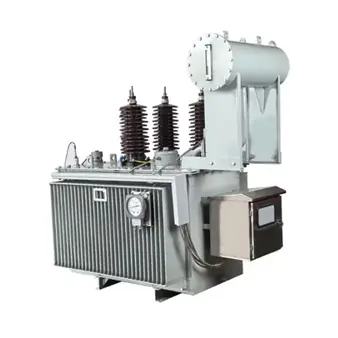
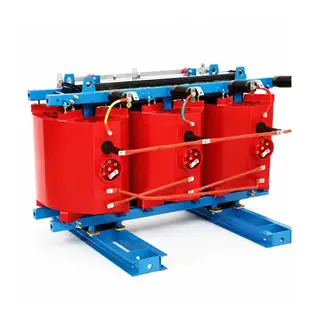
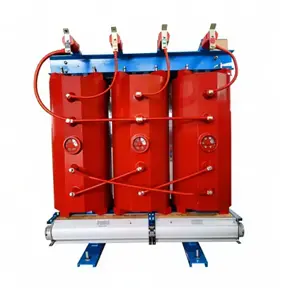
The primary and secondary coils are two fundamental components of a transformer, enabling the transmission and transformation of electrical energy through the principle of electromagnetic induction. The primary coil receives high-voltage current from the input source and generates a varying magnetic field, while the secondary coil, influenced by this magnetic field, produces a corresponding output voltage. Their interaction allows the transformer to perform voltage conversion, facilitating efficient power transmission and distribution.
Position and Structure
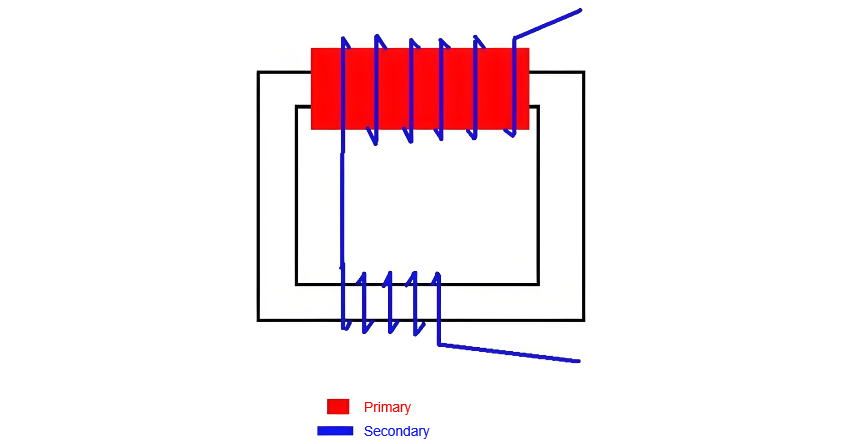
In a transformer, both coils are typically wound around a common iron core to ensure effective magnetic coupling through electromagnetic induction. The primary coil is connected to the input side, and the secondary coil to the output side. They are electrically isolated from each other by insulation materials and the core structure, preventing direct current flow.
Primary Coil: Located on the high-voltage side, the primary coil consists of many turns of insulated conductor wound on one side of the iron core. It receives the input current and generates a time-varying magnetic field in the core.
Secondary Coil: Positioned on the low-voltage side, the secondary coil has fewer turns of insulated conductor wound on the other side of the core. It captures the changing magnetic flux and delivers the transformed (stepped-up or stepped-down) voltage at the output.
Principle of Voltage Transformation
Voltage transformation in a transformer is governed by Faraday’s law of electromagnetic induction and Lenz’s law.
Primary Coil: When alternating current flows through the primary coil, it produces a continuously changing magnetic field in the iron core. This varying flux is essential for inducing voltage in the secondary coil.
Secondary Coil: The changing magnetic flux from the primary induces an electromotive force (EMF) in the secondary coil according to Faraday’s law. This induced EMF drives current through the load connected to the output, delivering the transformed electrical energy.
Turns Ratio and Voltage Transformation Ratio
The voltage transformation ratio is directly determined by the turns ratio between the primary and secondary coils. According to electromagnetic induction theory, the induced EMF in each coil is proportional to its number of turns.
In a step-up transformer, the secondary coil has more turns than the primary, resulting in a higher output voltage.
In a step-down transformer, the secondary coil has fewer turns than the primary, yielding a lower output voltage.
The turns ratio is precisely designed to meet specific voltage conversion requirements. Thus, the relationship between the number of turns and the voltage ratio is fundamental to the transformer’s operation, defining its performance and application.

 Login