I. Introduction: A Widely Misunderstood Concept
In distribution network equipment procurement, "maintenance-free" is practically a standard marketing claim for SF6 load switches. Many users interpret this to mean the equipment can be "installed and forgotten" once commissioned.
However, field failures resulting from lack of basic O&M are all too common. This article clarifies the true boundaries of "maintenance-free" from a technical perspective and provides practical O&M guidelines for outdoor installations.
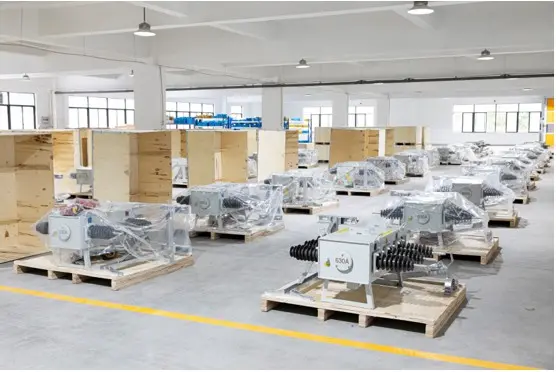
Outdoor Pole-Mounted SF6 Load Switch 24kV
II. What "Maintenance-Free" Actually Covers
The vendor term "maintenance-free" applies strictly to the SF6 gas compartment internals. SF6 gas offers superior insulation and arc-quenching properties. Modern switches employ laser-welded stainless steel enclosures or advanced casting processes to achieve full sealing, completely isolating internal contacts from the external environment — immune to moisture, dust, and salt fog — with a typical design life exceeding 30 years.
Precise meaning: The SF6 gas compartment itself requires no periodic servicing, gas replenishment, or internal component replacement under normal operating conditions. This does not mean the entire apparatus is exempt from any O&M.
III. Four Core Reasons Outdoor Equipment Still Needs O&M
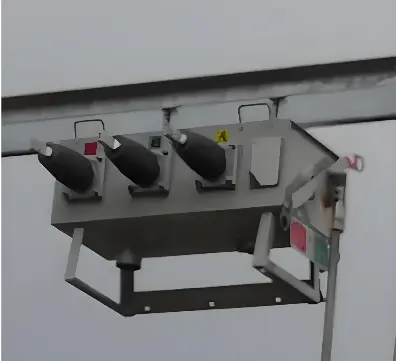
An outdoor pole-mounted SF6 load switch comprises an operating mechanism, gas compartment, and support insulators. A well-sealed gas compartment does not equate to a "set-and-forget" asset:
| Reason |
Details |
| External Environmental Degradation |
Salt fog, sand/dust, ice/snow, humidity, and UV radiation cause enclosure corrosion, fastener loosening, and insulator contamination that accumulate over time. |
| SF6 Gas Leakage Risk |
Seal aging and thermal cycling can cause micro-leaks. Pressure drop directly compromises insulation and arc-quenching performance, necessitating regular monitoring. |
| Operating Mechanism Aging |
Spring-operated mechanisms, linkages, and other mechanical parts suffer wear, corrosion, and lubrication failure. Long-term neglect can lead to failure to open (refusal to trip) or failure to close (refusal to close). |
| Electrical Connection Deterioration |
Terminal lugs and cable joints carrying continuous current can overheat due to rising contact resistance, requiring infrared thermography for detection. |
IV. Outdoor SF6 Load Switch O&M Essentials
Per industry operating procedures and maintenance standards, outdoor SF6 load switches shall undergo the following:
1. Routine Patrol & Periodic Inspection
- Daily patrol: At least once per day — check appearance, nameplates, open/close indicators, SF6 pressure gauge, lead condition, grounding bolts, mechanism box sealing, and heater operation.
- Comprehensive inspection: Urban areas ≥ monthly; suburban/rural areas ≥ quarterly.
2. SF6 Gas Pressure Monitoring
- Continuously monitor gas pressure during operation; verify readings against the temperature-pressure curve to confirm normal range.
- Pressure drops to alarm level → investigate cause and replenish gas promptly.
- Pressure drops to lockout level → cut control power and transfer load immediately.
3. Gas Leakage Detection
- Perform qualitative leak testing on all sealing surfaces every two years.
- Leak rate at any point ≤ 10⁻⁶ atm·cm³/s; annual leakage rate ≤ 1% (some manufacturers specify ≤ 0.5%).
4. Operating Mechanism Maintenance
- Lubricate rotating and transmission parts every six months; operate switch several times to verify function.
- Inspect charging motor, springs, limit switch contacts, and related components.
5. Anti-Corrosion & Insulation Maintenance
- Annually treat and repaint corroded enclosure areas.
- Clean insulators regularly; apply anti-pollution flashover coating in heavily contaminated areas.
6. Infrared Thermography
- Include IR thermal imaging in comprehensive inspections, focusing on lead connections, line clamps, and terminal joints for overheating.
V. Practical Recommendations for O&M Personnel
| Recommendation |
Action |
| Maintain Equipment Records |
Log initial SF6 pressure, commissioning date, operation counts, and all patrol data for trend analysis. |
| Monitor Seasonal Changes |
Rainy season: focus on moisture/condensation prevention. Winter: prevent freezing and seal failure. Summer peak: intensify contact point thermography. |
| Address "Minor" Issues |
Mechanism box seal degradation, heater failures, loose bolts — seemingly minor problems can escalate into serious incidents over time. |
| Follow Manufacturer Guidance |
Maintenance intervals and requirements vary by brand/model; adhere to the equipment manual and industry standards. |
VI. Conclusion
"Maintenance-free" is a genuine advantage of SF6 load switches in terms of sealed gas compartment and arc-quenching technology. However, overgeneralization of this concept creates a dangerous "install-and-forget" illusion among O&M personnel. The outdoor environment is complex and dynamic — salt fog corrosion, thermal cycling, mechanical wear, and electrical aging continuously act on the equipment exterior and operating mechanism. Zero O&M plants serious latent safety hazards.
The correct approach: Interpret "maintenance-free" as "gas compartment interior maintenance-free," while maintaining routine patrols and scheduled maintenance on the equipment exterior, operating mechanism, electrical connections, and gas pressure. A rational O&M strategy is the key to ensuring long-term reliable operation of SF6 load switches.
Edited From:Garca

 Login