Search


Surge Arrester Sudden Failure Despite Intact Exterior: Root Causes & Prevention

Learn why surge arresters fail despite an intact exterior – root causes and prevention measures for reliable overvoltage protection.

Rockwill
Field: Manufacturing
10Year<
China
Add us on Google
 
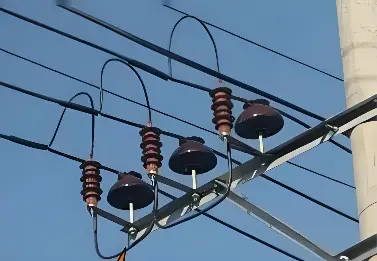
Surge arresters are critical overvoltage protection devices in power systems. Yet in actual operation, arresters with perfectly intact exteriors can suddenly fail or even explode.

The root cause lies in invisible internal degradation processes. The core component — the zinc oxide (ZnO) valve disc — deteriorates gradually: from minute increases in leakage current to eventual breakdown, a process that may span months or years, while the exterior shows no abnormality whatsoever.

Below are the primary categories of causes behind "sudden failure despite intact exterior."

1. Seal Failure & Internal Moisture Ingress — The Most Common "Invisible Killer"

This is the number one cause of arrester failure, and the most insidious.

An arrester's sealing structure includes flange sealing faces, pressure-relief device covers, and waterproof sealing compound at the porcelain-to-flange bonding joints. These seals age progressively during long-term operation:

Ageing Mechanism Effect
Thermal cycling shock Diurnal and seasonal temperature differences cause internal air to repeatedly expand and contract — a "breathing effect" — drawing moisture in through microscopic seal defects.
Sealant ageing Waterproof sealing compound peels and cracks over time; rainwater and moisture penetrate through the cracks into the interior.
Pressure-relief vent seal weakness Some arresters rely solely on surface adhesive to seal the pressure-relief vent, without a proper sealing ring. As the adhesive ages with service years, it becomes a primary moisture ingress path.
 

Once moisture enters, water droplets adhere to valve disc surfaces, insulation performance plummets, and internal breakdown or explosion can occur even at normal operating voltage. The entire process is completely invisible from the outside — porcelain housing intact, exterior perfectly normal.

iee-business

2. Valve Disc Ageing & Performance Degradation

Even without moisture ingress, zinc oxide valve discs themselves age progressively during long-term operation:

Ageing Mechanism Effect
Continuous electric field stress Prolonged exposure to system operating voltage causes gradual valve disc deterioration; leakage current increases slowly.
Valve disc non-uniformity Manufacturing variations mean individual valve discs do not have perfectly identical performance, nor do they age at the same rate. Weakest discs degrade first, increasing the burden on the remaining healthy discs, creating a vicious cycle that accelerates overall ageing.
Abnormal condition overvoltages During system faults such as single-phase-to-ground faults, arrester voltage stress increases, dramatically accelerating the ageing process.
  The direct consequence is increased leakage current and power loss, heightened valve disc heating, and ultimately  thermal runaway — temperature rises uncontrollably until breakdown or explosion occurs.

3. Surface Contamination & Environmental Factors — Long-Term "Chronic Erosion"

Arresters operate outdoors, permanently exposed to the natural environment:

Factor Effect
Contamination accumulation Industrial dust, salt-fog, bird droppings, and other pollutants adhere to the external insulation surface. In rain or snow, they form conductive paths, increasing surface leakage current.
Humidity variation High-humidity environments accelerate internal insulation degradation, especially when microscopic seal defects exist — moisture ingress accelerates.
UV ageing Long-term solar exposure degrades polymer materials such as silicone rubber housings and sealing compounds.
  Individually these factors have limited impact, but their long-term superposition significantly shortens arrester service life.

4. Manufacturing Defects — "Time Bombs" Planted at Factory

Some arresters leave the factory with hidden defects that are difficult to detect during routine acceptance testing:

Defect Type Description
Incomplete valve disc drying Residual moisture from production process manifests during operation.
Improper seal installation Seal gaskets mispositioned or omitted, leading to unreliable sealing.
Latent porcelain defects Substandard porcelain with microscopic pores invisible to the naked eye; moisture slowly permeates.
Batch (family) defects Shared raw material deviations in a production batch cause multiple units to develop problems in close succession.

 5. The "Last Straw" — Trigger Events

The above latent degradation processes may persist for months or years. The final "sudden failure" is typically triggered by an event that would be well within the design capability of a healthy arrester:

  • A lightning strike or switching overvoltage of unremarkable magnitude
  • A period of continuous rain followed by a sharp temperature drop, causing massive internal condensation
  • A single-phase-to-ground fault raising neutral-point voltage

These events do not exceed the arrester's design withstand capability — but for a unit already severely degraded, they become the last straw that breaks the camel's back.

How to Prevent "Invisible Failure"?

Since these latent degradation processes cannot be detected by visual inspection, professional testing and monitoring are essential:

Online Monitoring

Install leakage current monitoring devices to continuously acquire core parameters — total current, resistive current, etc. — capturing early degradation trends. Per the "25 Key Requirements for Preventing Power Production Accidents", arresters at 110 kV and above must be equipped with online monitoring instruments.

Infrared Thermography

Use infrared thermal imagers to detect abnormal heating. Moisture-affected or aged valve discs exhibit distinct temperature rises.

Energised Resistive Current Testing

Resistive current is one of the most sensitive indicators of arrester health. In the early stages of moisture ingress, its increase often precedes changes in other parameters.

Periodic Offline Testing

Comprehensive assessment via insulation resistance testing, DC leakage testing, and volt-ampere characteristic testing.

 iee-business

Summary

A surge arrester's "sudden failure" is never truly sudden — it is the concentrated eruption after long-term latent degradation reaches a critical threshold.

  • Failure nature:Not a sudden fault, but the cumulative result of long-term seal failure/moisture ingress, valve disc ageing, environmental erosion, and manufacturing defects.
  • Greatest deception:Exterior perfectly intact; interior severely degraded. Visual patrol inspection cannot detect it.
  • Trigger mechanism:An ordinary lightning strike, rainfall, or system abnormality becomes the "last straw" for an already critically degraded unit.
  • Prevention key:Do not rely on visual inspection. Must employ online monitoring, infrared thermography, resistive current testing, and other scientific means to transform "invisible degradation" into "visible data," enabling timely intervention before failure.
 
Edited From:Noah 
Give a tip and encourage the author!
Topics:

Comments

Share your question or perspective
WhatsApp
Send inquiry
+86
Click to upload file
Download
Get the IEE Business Application
Use the IEE-Business app to find equipment, obtain solutions, connect with experts, and participate in industry collaboration anytime, anywhere—fully supporting the development of your power projects and business.
Login
or continue with
New here?
Register