• Product
  • Suppliers
  • Manufacturers
  • Solutions
  • Free tools
  • Knowledges
  • Experts
  • Communities
Search


Effective Transformer Maintenance & Condition Monitoring for Power System Stability

Edwiin
Field: Power switch
China

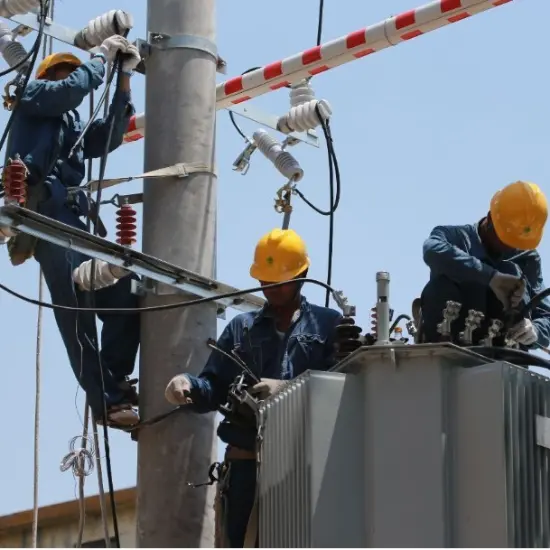
Transformer condition maintenance is a systematic engineering effort aimed at ensuring normal and stable operation. By employing technological means to scientifically monitor transformers in operation, collecting, organizing, and analyzing data, it becomes possible to assess future operational status and equipment health, promptly detect minor faults, and enable rapid repairs. This integrated preventive and corrective approach helps reduce economic losses and supports stable economic development and public life. In addition to condition-based maintenance, periodic maintenance is also required to ensure system stability.

Significance of Transformer Maintenance and Condition Monitoring

Impact on Substation Equipment Development

The growing number of power devices and accelerating technological upgrades place higher demands on maintenance. Traditional maintenance methods are costly, prone to safety risks, and increasingly inadequate for modern grid requirements, necessitating innovation.

Improved Maintenance Efficiency

Periodic maintenance involves frequent disassembly and reassembly, which may introduce faults. Repeated power outages subject equipment to voltage surges, increasing the risk of damage. Condition monitoring reduces unnecessary outages and handling, significantly enhancing maintenance efficiency.

Enhanced Equipment Quality and Performance

As equipment performance improves and upgrade cycles shorten, traditional maintenance methods are no longer suitable. Adaptive maintenance strategies tailored to specific equipment differences are essential to ensure stable system operation.
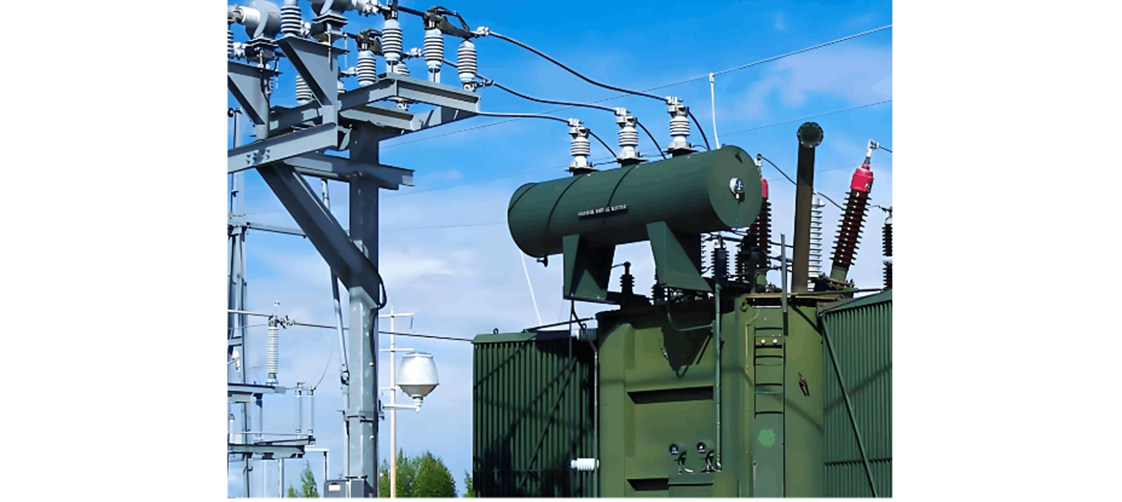
Transformer Maintenance and Condition Monitoring

Transformer Maintenance

Maintenance is categorized into minor and major overhauls. Minor maintenance, performed at least annually, includes inspection and cleaning of vulnerable components, grounding systems, and cooling systems, along with oil sampling for testing. Major overhauls, conducted every 5–10 years, involve disassembling and inspecting windings, switches, and cores, performing insulation oil tests, replacing seals, and servicing auxiliary equipment such as coolers and control boxes.

Condition Monitoring

This primarily involves three aspects: monitoring trace gas content in insulating oil to detect incipient faults via online analysis; measuring partial discharge to evaluate insulation condition; and measuring parameters reflecting winding deformation to prevent risks from short-circuit currents and long-term mechanical stress.

Conclusion

Transformer maintenance and condition monitoring are critical to power system stability. Outdated practices should be abandoned in favor of innovative, practical diagnostic methods tailored to real-world conditions, promoting sustainable development of the power system.
Give a tip and encourage the author!

Recommended

Faults and Handling of Single-phase Grounding in 10kV Distribution Lines
Characteristics and Detection Devices for Single-Phase Ground Faults1. Characteristics of Single-Phase Ground FaultsCentral Alarm Signals:The warning bell rings, and the indicator lamp labeled “Ground Fault on [X] kV Bus Section [Y]” illuminates. In systems with a Petersen coil (arc suppression coil) grounding the neutral point, the “Petersen Coil Operated” indicator also lights up.Insulation Monitoring Voltmeter Indications:The voltage of the faulted phase decreases (in
01/30/2026
Neutral point grounding operation mode for 110kV~220kV power grid transformers
The arrangement of neutral point grounding operation modes for 110kV~220kV power grid transformers shall meet the insulation withstand requirements of transformer neutral points, and shall also strive to keep the zero-sequence impedance of substations basically unchanged, while ensuring that the zero-sequence comprehensive impedance at any short-circuit point in the system does not exceed three times the positive-sequence comprehensive impedance.For 220kV and 110kV transformers in new constructi
01/29/2026
Why Do Substations Use Stones, Gravel, Pebbles, and Crushed Rock?
Why Do Substations Use Stones, Gravel, Pebbles, and Crushed Rock?In substations, equipment such as power and distribution transformers, transmission lines, voltage transformers, current transformers, and disconnect switches all require grounding. Beyond grounding, we will now explore in depth why gravel and crushed stone are commonly used in substations. Though they appear ordinary, these stones play a critical safety and functional role.In substation grounding design—especially when multiple gr
01/29/2026
Why Must a Transformer Core Be Grounded at Only One Point? Isn't Multi-Point Grounding More Reliable?
Why Does the Transformer Core Need to Be Grounded?During operation, the transformer core, along with the metal structures, parts, and components that fix the core and windings, are all situated in a strong electric field. Under the influence of this electric field, they acquire a relatively high potential with respect to ground. If the core is not grounded, a potential difference will exist between the core and the grounded clamping structures and tank, which may lead to intermittent discharge.I
01/29/2026
Related Products
Send inquiry
+86
Click to upload file
Download
Get the IEE Business Application
Use the IEE-Business app to find equipment, obtain solutions, connect with experts, and participate in industry collaboration anytime, anywhere—fully supporting the development of your power projects and business.