1. Background and Scope
This report provides a systematic review of primary-side (grid-side) voltage requirements for Solid-State Transformers (SSTs)—also referred to as Power Electronic Transformers (PETs)—in global markets outside of China.
Core Definitions:
-
Primary / Grid-Side Voltage: The medium-voltage distribution level to which the SST is connected. This is the fundamental basis for insulation design, number of series-connected power modules, arrester selection, EMC compliance, and grid-connection certification.
-
Rated Voltage (U): The system nominal voltage (e.g., 11 kV, 13.8 kV).
-
Highest Voltage for Equipment (Um): The reference voltage for insulation design, typically 10%–20% above the rated voltage.
-
Basic Lightning Impulse Level (BIL): The insulation’s withstand capability against lightning overvoltages.
-
Power-Frequency Withstand Voltage: The short-duration withstand voltage at power frequency, applied across insulation and across断口 (open contacts).
Standard Definition of Medium Voltage:
-
IEC System (IEC 60038 / IEC 60076 / IEC 62271): Medium voltage is defined as 1 kV to 35 kV. IEC 60038 Edition 7.1 (2009 + AMD1:2021), Table 3, divides 1 kV–35 kV three-phase systems into Series I (general-purpose, 50/60 Hz) and Series II (North American, 60 Hz–specific). Values in parentheses (e.g., 15 kV, 17.5 kV) are designated as "non-preferred" and are not recommended for new systems.
-
IEEE/ANSI System (ANSI C84.1 / IEEE C57 / IEEE C37): Medium voltage is generally defined as >1 kV and <100 kV, with distribution voltages typically ranging from 2.4 kV to 34.5 kV. Equipment is classified by Voltage Class rather than nominal voltage for insulation purposes.
Grid Frequency Landscape:
-
Approximately 70% of countries/regions use 50 Hz (IEC-dominated).
-
Approximately 30% use 60 Hz (IEEE-dominated, including North America, Latin America, and parts of Asia).
-
A few countries have dual 50/60 Hz operation (Japan, some Caribbean nations).
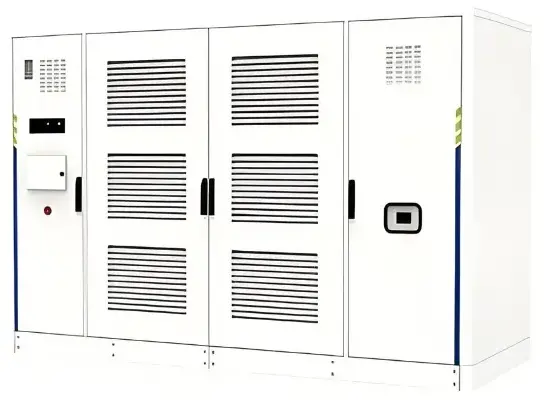
RW Series Solid State Transformers
2. Global Primary Voltage Landscape – Full 13-Level Coverage
Combining IEC 60038 and ANSI C84.1/IEEE standards, the global medium-voltage primary voltages can be summarized into the following 13 key levels. For SSTs to achieve "global full coverage," each insulation platform must be addressed individually.
Level 1: 3.3 kV / 3.6 kV (IEC Low-End)
-
Um = 3.6 kV, BIL ≈ 20–40 kV.
-
Applications: Industrial distribution networks in some countries, mining, large industrial plants. Classified in IEC 60038 as "not recommended for new public distribution systems."
-
Regions: Historical installations in Austria, Belgium, and other European countries; parts of Eastern Europe and Russian-influenced systems. SST demand is small; can be absorbed into the 7.2 kV platform via downward compatibility.
Level 2: 6.6 kV / 7.2 kV (IEC 7.2 kV Class)
-
Um = 7.2 kV, BIL = 60 kV, Power-frequency withstand = 20 kV.
-
Frequency: 50/60 Hz coexistence.
-
Regions: Japan (Eastern Japan primary), South Korea (industrial), Australia, New Zealand, parts of Eastern Europe (Russian 6 kV), South Africa (historical).
-
Note: In IEC 60038, 6.6 kV corresponds to Um = 7.2 kV and is a "general-purpose" level.
Level 3: 10 kV / 11 kV (IEC 12 kV Class)
-
Um = 12 kV, BIL = 75 kV, Power-frequency withstand = 28 kV.
-
Frequency: Primarily 50 Hz.
-
Regions: Core of the UK and former British Commonwealth/colonial systems; one of the most widely used levels globally—India, Australia, New Zealand, South Africa, Egypt, Kenya, Nigeria, UAE (DEWA/ADDC), Qatar, Kuwait, Oman, Bangladesh, Nepal, Malaysia, Sri Lanka, etc.
-
Note: IEC 60038 lists both 10 kV (older Continental European system) and 11 kV (British system). Equipment is uniformly designed for the Um = 12 kV / BIL = 75 kV platform.
Level 4: 12.47 kV / 13.2 kV / 13.8 kV (IEEE 15 kV Class)
-
Um ≈ 15 kV, BIL = 95 kV (110 kV optional in some cases), Power-frequency withstand ≈ 36 kV.
-
Frequency: 60 Hz.
-
Regions: Absolute backbone of North America (USA, Canada), covering >60% of U.S. medium-voltage load; Latin America (Brazil, Mexico, Argentina, Chile); Philippines.
-
Note: 12.47 / 13.2 / 13.8 kV all belong to the same "15 kV Insulation Class" under ANSI C84.1. Insulation, arresters, and cables are selected by Class, not by nominal voltage. This is a universal rule in North American distribution.
Level 5: 15 kV (IEC System, Non-Preferred Value) – [Key Addition]
-
Um = 17.5 kV, BIL = 95 kV, Power-frequency withstand = 38 kV (cable rating: 8.7/15 kV).
-
Frequency: 50 Hz.
-
Standard Reference: In IEC 60038 Series I, (17.5) — (15) is shown in parentheses as a "non-preferred" value, but it remains a recognized voltage.
-
Core Application Regions – East Africa (Horn of Africa):
-
Ethiopia: The medium-voltage distribution backbone consists of 15 kV and 33 kV dual levels. The distribution network is fed by 132/33 kV, 132/15 kV, and 45/15 kV step-down transformers. Ethiopian Electric Power (EEP) has initiated bulk replacement of 15 kV and 33 kV switchgear in multiple substations (e.g., Haramaya II, Chellenko II, Woliso, etc., at 132/33/15 kV). The majority of feeder lines in Addis Ababa operate at 15 kV.
-
Kenya: Historical networks include 15 kV alongside 11/33 kV systems.
-
Tanzania, Uganda, and other East African Community members: Some 15 kV applications exist due to regional grid coordination.
-
Turkey: Medium voltage includes 15 kV (alongside 6.3 / 11 / 20 / 34.5 kV).
-
North Africa / Middle East: Some older legacy systems in individual countries operate at 15 kV.
-
⚠️ Critical Design Warning (Common Pitfall for SST Exporters):
-
IEC 15 kV has Um = 17.5 kV, whereas the IEEE 13.8 kV "15 kV Class" has Um ≈ 15 kV. Although both have BIL = 95 kV, the highest voltage for equipment differs.
-
Arrester residual voltage, creepage distances, power module voltage balancing, and cable insulation must be calculated for 17.5 kV.
-
Do not use the IEEE 15 kV hardware platform for IEC 15 kV applications—insulation margin will be insufficient, leading to long-term breakdown risks. Conversely, using the IEC 17.5 kV platform in North America results in excessive cost.
-
Therefore, IEC 15 kV (Um = 17.5 kV) and IEEE 15 kV Class (Um ≈ 15 kV) must be treated as two completely independent insulation platforms.
Level 6: 20 kV / 24 kV (IEC 24 kV Class)
-
Um = 24 kV, BIL = 125 kV, Power-frequency withstand = 50 kV.
-
Frequency: Primarily 50 Hz.
-
Regions: Mainland European standard distribution—Germany, France, Netherlands, Belgium, Austria, Switzerland, Denmark, Norway, Sweden, Finland, Spain, Portugal, Italy; also parts of Latin America (Brazil has mixed 20 kV distribution).
-
Note: IEC 60038 lists both 20 kV and 24 kV (20 kV as rated, 24 kV as Um). Equipment is uniformly designed for Um = 24 kV / BIL = 125 kV. France uses both 20 kV and 33 kV.
Level 7: 22 kV (Regional De Facto Standard)
-
Um = 24 kV, BIL = 125 kV, Power-frequency withstand = 50 kV.
-
Frequency: 50 Hz.
-
Regions: Indonesia, Thailand, Vietnam (Southeast Asian IEC-system countries); South Korea also includes 22 kV (KEPCO standard distribution voltage is 22,900 V, i.e., 22.9 kV, 60 Hz); Western Japan uses 22 kV.
-
⚠️ Critical Reminder: 22 kV is not in the IEC 60038 preferred sequence; it is a regional operational drift voltage. However, equipment must be designed for Um = 24 kV, BIL = 125 kV. Mismatching will cause failure in lightning/impulse tests on site in Southeast Asia. IEC 60038 notes that 22.9 kV (with Um = 24.2 or 25.8 kV) is used in "some countries"—specifically referencing South Korea.
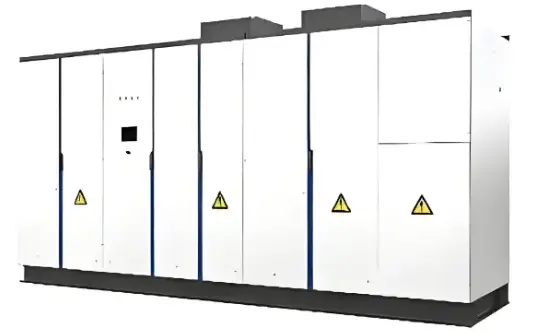
RW Series Hybrid AC-DC Solid State Transformer
Level 8: 24.94 kV / 26.4 kV (IEEE 25 kV Class)
-
Um = 27 kV, BIL = 125 kV (150 kV optional), Power-frequency withstand ≈ 50 kV.
-
Frequency: 60 Hz.
-
Regions: North America (U.S. suburban, light-load rural long feeders, corresponding to 24.94 kV GrdY/14.4 kV); parts of Latin America.
-
Note: Classified as "25 kV Class" under ANSI C84.1. Insulation levels are close to IEC 24 kV, but system voltage tolerances differ.
Level 9: 30 kV / 33 kV (IEC 36 kV Class)
-
Um = 36 kV, BIL = 170 kV, Power-frequency withstand = 70 kV.
-
Frequency: 50 Hz.
-
Regions: UK mainland (33 kV primary distribution), India (33 kV HT), South Africa (Eskom), Egypt, Kenya, Nigeria and other African nations, Australia, New Zealand (33 kV), Middle East Gulf (UAE, Saudi Arabia, Qatar, etc.), Ethiopia (33 kV alongside 15 kV as backbone).
-
Note: IEC 60038 lists 30 kV and 33 kV in parallel; both are designed for Um = 36 kV / BIL = 170 kV. Some African countries classify 33 kV as "high voltage" for tariff purposes.
Level 10: 34.5 kV (IEEE 35 kV Class)
-
Um = 38 kV (or 36 kV class), BIL = 200 kV (150 kV optional), Power-frequency withstand = 80 kV.
-
Frequency: 60 Hz.
-
Regions: North America (U.S., Canada – rural long feeders, renewable energy interconnection), Brazil, Mexico, other Latin American (secondary distribution/sub-transmission), Philippines (34.5 kV).
-
Note: Classified as "35 kV Class" under ANSI C84.1. This is the mainstream voltage for renewable power plant interconnection in North America.
Level 11: 35 kV (IEC, Some Countries)
-
Um = 40.5 kV, BIL = 200 kV (145 kV lower tier in some cases).
-
Frequency: 50 Hz.
-
Regions: France, parts of Northern Europe, Eastern Europe, Russian-influenced systems, Vietnam (35 kV), parts of South America.
-
Note: This is the upper end of IEC 60038 Series I. Although numerically close to IEEE 34.5 kV, insulation (Um = 40.5 vs. 38 kV) and frequency (50 vs. 60 Hz) differ. SSTs must be adapted separately.
Level 12: 45 kV / 66 kV (Distribution–Transmission Transition)
-
Um = 52 kV / 72.5 kV, BIL ≈ 250 kV / 325 kV respectively.
-
Regions: Ethiopia (45 kV, 66 kV sub-transmission), UK (66 kV), South Africa (66 kV), New Zealand (66 kV), North America (69 kV).
-
Note: These approach the MV/HV boundary. If SSTs are applied here, design must follow the 72.5 kV class. This report focuses primarily on voltages up to 38 kV.
Level 13: Single-Wire Earth Return (SWER) – Special Case
-
IEC 60038 Table 7: Um = 24 kV corresponds to system voltages of 13.9 kV / rated 12.7 kV; Um = 36 kV corresponds to 20.8 kV / 19.1 kV. Primarily used in remote areas of Australia and New Zealand (12.7 kV / 19.1 kV SWER).
-
SST applications are limited, but the insulation still anchors to the 24 kV / 36 kV classes.
3. Breakdown by Standard System
3.1 IEC Standard System (Series I, Predominantly 50 Hz)
IEC 60038 Series I preferred rated voltage sequence (1–35 kV):
3.3 — 6.6 — 11 — (15) — 22 — 33 — (35) kV
Corresponding Um sequence:
3.6 — 7.2 — 12 — (17.5) — 24 — 36 — (40.5) kV
Regional Groupings:
-
Continental Europe (20/24 kV system): Germany, France, Netherlands, Nordic countries, etc. Insulation: Um = 24 kV / BIL = 125 kV.
-
UK & Commonwealth System (11/33 kV sequence): UK, India, Australia/New Zealand, South Africa, Middle East, most of Southeast Asia. Corresponds to Um = 12 kV (BIL 75) and Um = 36 kV (BIL 170).
-
Southeast Asia 22 kV Mixed: Indonesia, Thailand, Vietnam – anchored to the Um = 24 kV platform.
-
East Africa 15 kV System (Key Focus): Ethiopia (15+33 kV backbone), Kenya, Tanzania, etc. 15 kV operates as an independent platform at Um = 17.5 kV / BIL = 95 kV. This is the most significant real-world application of the IEC non-preferred 15 kV value globally.
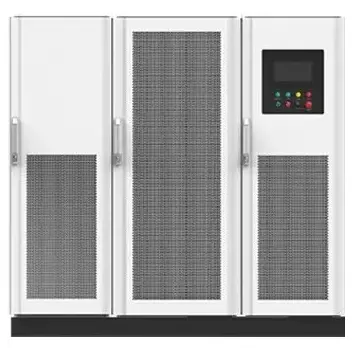
RW Series 40.5kV SST Solid State Transformer
3.2 IEEE/ANSI Standard System (Series II / C84.1, 60 Hz)
North American voltages derive from the 120 V × √3 progression (2.4 → 4.16 → 12.47 → 13.8 → 24.94 → 34.5 kV), fundamentally different from the European 220 V base (3.3/6.6/11 kV).
Insulation Class (Voltage Class) per ANSI C84.1 + IEEE C57.12.00:
-
5 kV Class: Covers 4.16 kV, Um ≈ 4.76 kV, BIL = 60 kV.
-
15 kV Class: Covers 12.47 / 13.2 / 13.8 kV, Um ≈ 15 kV, BIL = 95 kV (110 kV optional).
-
25 kV Class: Covers 24.94 kV, Um = 27 kV, BIL = 125 kV (150 kV optional).
-
35 kV Class: Covers 34.5 kV, Um = 38 kV, BIL = 200 kV (150 kV optional).
Major Regions:
-
North America Core (13.8 kV + 34.5 kV): USA, Canada.
-
Latin America (13.8/34.5 kV): Brazil, Mexico, Argentina, Chile, etc.
-
Asia-Pacific 60 Hz (IEEE System): Philippines (13.8/23/34.5 kV), South Korea (22.9/34.5 kV, 60 Hz), Saudi Arabia (parts at 13.8 kV, 60 Hz for oil/gas/municipal).
⚠️ Critical Reminder: The North American "15 kV Class" is an insulation-class concept, where 12.47/13.2/13.8 kV share the same insulation platform. This must not be confused with IEC 15 kV (Um = 17.5 kV).
3.3 Mixed and Special Cases
-
Japan (50/60 Hz Coexistence – the world’s only East-West frequency split):
-
Eastern Japan (Tokyo, Hokkaido, etc., 50 Hz): 6.6 kV primary, with 22 kV in central Tokyo and for large users (SST requires 22 kV platform).
-
Western Japan (Kansai, Kyushu, etc., 60 Hz): 22 kV primary.
-
Medium-voltage range: 6.6 kV to 66 kV; distribution backbone approx. 740,000 km. Interconnected via 4 HVDC frequency converter stations.
-
SST Strategy: Requires 7.2 kV and 24 kV platforms + 50/60 Hz dual-frequency firmware switching.
-
South Korea (60 Hz, IEC Voltage + IEEE Frequency Hybrid):
-
Standard distribution voltage: 22,900 V (22.9 kV); also has 6.6 kV and 34.5 kV.
-
22.9 kV is classified under IEC as close to the 24 kV class (Um = 24.2/25.8 kV), BIL = 125 kV.
-
SST Strategy: 24 kV platform + 60 Hz; must comply with KEPCO grid-connection technical specifications (especially anti-islanding, harmonics, DC injection <0.5%, power factor >90%).
-
South Africa, Australia: Nominally IEC, but have multiple coexisting voltages (11/22/33 kV), and Australia has 12.7/19.1 kV SWER.
4. SST Primary Insulation and Key Parameter Mapping
SSTs employ power electronic conversion (AC-DC-AC + high-frequency isolation transformer). Primary insulation coordination must satisfy both: (a) grid-side withstand voltage standards, and (b) internal IGBT/MOSFET/SiC module turn-off overvoltage and voltage balancing.
Key Insulation Mapping:
| System Voltage |
Um |
BIL |
Power-Frequency Withstand |
Frequency / System |
| 3.3 kV |
3.6 kV |
≈40 kV |
≈10 kV |
IEC |
| 6.6 / 7.2 kV |
7.2 kV |
60 kV |
20 kV |
IEC (50/60 Hz) |
| 10 / 11 kV |
12 kV |
75 kV |
28 kV |
IEC (50 Hz) |
| 12.47 / 13.2 / 13.8 kV |
≈15 kV |
95 kV |
36 kV |
IEEE 15 kV Class (60 Hz) |
| IEC 15 kV |
17.5 kV |
95 kV |
38 kV |
IEC 50 Hz – East Africa (Ethiopia, etc.) ⚠️ Independent |
| 20 / 22 / 24 kV |
24 kV |
125 kV |
50 kV |
IEC 24 kV Class (50 Hz) |
| 24.94 kV (IEEE 25 kV Class) |
27 kV |
125–150 kV |
≈50 kV |
IEEE (60 Hz) |
| 30 / 33 kV |
36 kV |
170 kV |
70 kV |
IEC (50 Hz) |
| 34.5 / 35 kV |
38 / 40.5 kV |
200 kV (145 kV opt.) |
80 kV |
IEEE / IEC (60/50 Hz) |
Capacity Range:
-
Typical MV distribution SST: 100 kVA – 10 MVA
-
Renewable plants / industrial storage: up to 20 MVA
-
Entering "power transformer" territory: >63 MVA
Secondary Side Outputs:
-
IEC systems: 400/230 V (three-phase four-wire), vector group Dyn11 mainstream.
-
IEEE systems: 480Y/277 V, 208Y/120 V, 600Y/347 V, 240/480 V (single-phase).
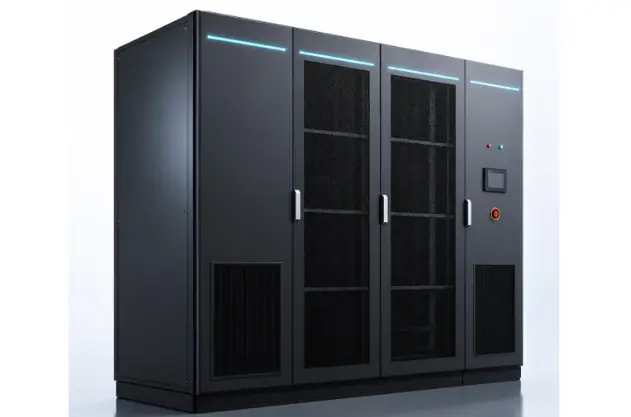
RW SST DC Solid State Transformer
5. Global Primary Voltage Quick Reference (by Market Group)
Europe (IEC, 50 Hz)
-
Germany / Western Europe: 20 kV, Um=24 kV / BIL=125 kV; requires EN 50588 energy efficiency, VDE/TÜV, CE.
-
France / Southern Europe: 20 kV (some 33 kV), Um=24/36 kV; NF standards.
-
UK / Ireland: 11 / 33 kV (plus 66 kV), Um=12/36 kV; requires ENA/DNO (e.g., UK PN) standards.
-
Nordic: 20 kV, Um=24 kV; cold-climate/corrosion-resistant design.
Asia-Pacific · IEC (50 Hz)
-
India: 11 / 22 / 33 kV; BIL 75/125/170 kV; BIS certification + Star Labelling efficiency.
-
Indonesia: 20 / 30 / 33 kV (includes 22 kV zones), designed to Um=24 kV; PLN tender specifications.
-
Thailand: 22 / 33 kV, 50 Hz; PEA/MEA standards.
-
Vietnam: 22 / 35 kV, 50 Hz (post-reform IEC); EVN standards.
-
Malaysia / Singapore: 11 / 22 / 33 kV; 50 Hz.
-
Australia / New Zealand: 11 / 22 / 33 kV (Australia also has 12.7/19.1 kV SWER); AS/NZS 60076.
Middle East · Africa (Predominantly IEC, 50 Hz)
-
Gulf (UAE, Qatar, Kuwait, Oman, Bahrain): 11 / 33 kV; DEWA/ADDC/SEC etc. local standards + high-temperature/sandstorm design.
-
Saudi Arabia: Part 13.8 kV (60 Hz, oil/gas/municipal) + 33 kV (50/60 Hz coexistence).
-
South Africa: 11 / 22 / 33 kV; Eskom/NRS 029 standards.
-
Egypt: 11 / 22 / 33 kV; government bulk procurement.
-
Kenya / Nigeria (East/West Africa): 11 / 33 kV; Kenya has 15 kV applications.
-
Ethiopia (Key Focus): 15 kV + 33 kV backbone (plus 45/66 kV sub-transmission); EEP/EEU specifications, World Bank–financed projects (e.g., PRIME-1) with strict FAT and IEC 60076 compliance; high-altitude plateau (2000m+) insulation correction.
North America (IEEE, 60 Hz)
-
USA: 13.8 kV (15 kV Class, mainstream) + 34.5 kV (35 kV Class); mandatory DOE 2016 (10 CFR 431) efficiency + UL/cUL + NEMA 3R + IEEE 693 seismic + NESC. SSTs must adapt to ZGS pad-mounted/dead-front elbow connector configurations (IEEE C57.12.34).
-
Canada: Same as U.S., 12.47/13.8/34.5 kV; CSA certification (C227 series).
Latin America (IEEE, 60 Hz)
Asia-Pacific · IEEE / Mixed (60 Hz)
-
South Korea: 22.9 kV (24 kV class) + 34.5 kV, 60 Hz; KS C IEC 60076 + KEPCO distributed generation grid codes (anti-islanding, harmonics, DC injection <0.5%, PF >90%).
-
Philippines: 13.8 / 23 / 34.5 kV, 60 Hz.
-
Japan: 6.6 kV (East · 50 Hz) / 22 kV (West · 60 Hz); JEC 3550 + dual-frequency compatibility.
6. Key Export Risks for SSTs (Six Major + Ethiopia/15 kV Special)
Risk 1: 50 Hz vs. 60 Hz – Not Directly Interchangeable.
-
A 60 Hz transformer used on a 50 Hz grid increases core flux density by ~20%, causing sharp rise in no-load losses, temperature rise, and noise.
-
Although pure power-electronic SSTs lack a line-frequency iron core, filter inductors, cooling fans, protection settings, and PLL bandwidths must be recalculated per frequency.
-
Nameplates must clearly state: 50 Hz / 60 Hz / 50-60 Hz dual-frequency.
Risk 2: IEC 15 kV vs. IEEE 15 kV Class – Um Difference (Critical).
-
Both have BIL = 95 kV, but IEC 15 kV Um = 17.5 kV, while IEEE 15 kV Class Um ≈ 15 kV.
-
For Ethiopia, East Africa, and other IEC 15 kV markets, a dedicated Um = 17.5 kV platform must be developed independently. Arresters, creepage distances, and module voltage balancing must be calculated for 17.5 kV.
-
Do not use a single "15 kV platform" for all applications.
Risk 3: 22 kV Must Be Designed to 24 kV Class (Um=24 kV / BIL=125 kV).
Risk 4: North American Structural & Efficiency Barriers.
-
Structure: IEEE C57.12.34 dead-front + loadbreak elbows are essential for underground distribution.
-
Efficiency: DOE 2016 (10 CFR 431) is mandatory for U.S. market entry.
-
Certification: UL/cUL, CSA, NEMA 3R, IEEE 693 seismic.
Risk 5: Mandatory Country-Specific Certifications.
-
EU: CE + EN 50588; USA: UL/DOE; India: BIS/Star; South Korea: KS/KEPCO; Australia: AS/NZS; Ethiopia: EEP acceptance + World Bank FAT requirements.
-
Certifications must be integrated during the R&D phase—not retrofitted before shipment.
Risk 6: Insulation Medium, Cooling, and Environmental Protection.
-
Although SSTs lack traditional oil-filled transformers, high-frequency transformers and power modules (especially SiC) still require attention to: fire safety (FR3 or dry-type), IP protection, high-altitude insulation correction (e.g., Ethiopia 2000m+, Um must be corrected per IEC 60076-1), and high-temperature/sandstorm environments (Middle East).
Special Focus: East Africa (Ethiopia) Market Points
-
Voltage: 15 kV + 33 kV dual backbone; radial distribution network with relatively low reliability (high SAIDI/SAIFI). SSTs offer real value for service restoration and anti-islanding capabilities.
-
Environment: High altitude, large temperature swings—insulation and cooling margins must be increased.
-
Projects: Mostly World Bank / African Development Bank–financed, with strict technical specifications, local content requirements, and witnessed FAT.
-
Opportunities: Distribution network expansion (e.g., CEEC, EEP MV projects) + renewable energy integration (wind/solar, e.g., Assela Wind, Jimma) + industrial parks. SSTs can enter high-value scenarios such as "distribution automation + storage + microgrids."
7. Full-Coverage Design Recommendations (SST Primary Voltage Platform Strategy)
To achieve global (ex-China) primary voltage coverage, SST hardware should be platformized along two dimensions: (Um/BIL) + Frequency (50/60 Hz).
Recommended 8 core insulation platforms:
IEC · 50 Hz Platforms:
-
7.2 kV Class – Covers 6.6 kV (Eastern Japan, South Korea industrial, Australia/New Zealand, Eastern Europe).
-
12 kV Class – Covers 10/11 kV (British-system global – largest single regional market).
-
17.5 kV Class – Covers IEC 15 kV (Ethiopia, East Africa, Turkey, etc.). Independent platform – do not merge with IEEE 15 kV Class.
-
24 kV Class – Covers 20/22/24 kV (Europe + Southeast Asia 22 kV + South Korea 22.9 kV).
-
36 kV Class – Covers 30/33 kV (British-system sub-transmission, India, Africa, Middle East, Ethiopia 33 kV).
IEEE · 60 Hz Platforms:
-
15 kV Class – Covers 12.47/13.2/13.8 kV (North America mainstream, Latin America, Philippines).
-
27 kV Class – Covers 24.94 kV (North American suburban/rural).
-
38/40.5 kV Class – Covers 34.5 kV (North American renewables) + 35 kV (IEC Eastern Europe/Vietnam).
Coverage Assessment: These 8 platforms cover approximately >95% of global (ex-China) medium-voltage primary requirements.
Dual-Frequency & Special Adaptations:
-
Japan: 7.2 kV + 24 kV platforms + 50/60 Hz dual-frequency firmware switching.
-
South Korea: 24 kV platform (for 22.9 kV) + 60 Hz.
-
High-altitude / High-temperature: Ethiopia, Middle East projects require altitude correction on Um and increased cooling margins on the applicable platform.
Platformization Principles:
-
Power modules (SiC MOSFET / IGBT) sub-units designed with a common multiple; series count adjusted to suit different voltage classes.
-
Arresters, bushings, cable terminations selected independently per Um/BIL class – strictly no cross-class reuse.
-
Control and protection (grid connection, anti-islanding, harmonics, DC injection) should be software-configurable, enabling a single hardware platform to adapt to multiple national grid codes.
8. Conclusion
-
Dual-Standard Reality: Global MV distribution is dominated by IEC (50 Hz) and IEEE (60 Hz) systems, with fundamentally different voltage progressions (220 V base vs. 120 V base). SSTs must adopt a multi-insulation-platform + dual-frequency strategy; simple mapping is impossible.
-
22 kV / 22.9 kV: These are regional de facto standards (Southeast Asia, South Korea) but equipment must be designed to the IEC 24 kV class (Um=24 kV, BIL=125 kV). This is a critical detail for project site acceptance.
-
IEC 15 kV is a Key Underestimated Tier: With Um = 17.5 kV, BIL = 95 kV, 50 Hz, its largest real-world application is in East Africa (Ethiopia 15+33 kV backbone, Kenya, etc.). Although it shares the same BIL as the IEEE 15 kV Class, the Um differs. SSTs must establish an independent insulation platform for it. No single "15 kV platform fits all." This report presents IEC 15 kV and IEEE 15 kV Class as two parallel, independent threads—a core correction compared to generic voltage lists.
-
North American 15 kV Class (13.8 kV etc.): The largest single MV segment under IEEE, but it is an insulation-class concept and incompatible with IEC 15 kV. U.S. market entry also requires structural (ZGS/elbow connectors), efficiency (DOE 2016), and certification (UL/cUL) compliance.
-
Frequency Differences (50/60 Hz): Equipment cannot be freely interchanged. Nameplates must specify frequency or support dual-frequency adaptive capability. Japan and South Korea are typical mixed markets requiring dedicated adaptation.
-
Efficiency Regulations & Certifications: National energy efficiency mandates (DOE 2016, EN 50588, BIS Star, KS, AS/NZS) and mandatory certifications are invisible barriers. They must be planned during early R&D, not retrofitted before shipment.
-
Emerging Market Opportunity: East Africa (especially Ethiopia, Kenya) presents a high-value entry point for SSTs combining distribution automation + storage + microgrids, driven by grid expansion, renewable integration, and industrial parks. However, special attention is required for high-altitude insulation correction, high-temperature dust protection, local content, and World Bank/FAT compliance.
Appendix: Key Standards & Reference Documents
-
IEC 60038:2009+AMD1:2021 – IEC Standard Voltages, Table 3 (Series I / II, including 17.5/15, 24/22, 36/33, 40.5/35, etc.)
-
IEC 60076 Series – Power Transformers (Part 1: General, Part 3: Insulation Levels, Part 5: Short-Circuit Withstand)
-
IEC 62271-200 – AC Metal-Enclosed Switchgear for Rated Voltages >1 kV up to 52 kV
-
ANSI C84.1 – Electric Power Systems and Equipment – Voltage Ratings (60 Hertz) (2020, R2025)
-
IEEE C57.12.00 – General Requirements for Liquid-Immersed Distribution, Power, and Regulating Transformers
-
IEEE C57.12.34 – Pad-Mounted Three-Phase Distribution Transformers
-
IEEE C57.12.90 – Test Procedures
-
National Grid Codes: EEP/EEU (Ethiopia), KPLC/KETRACO (Kenya), KEPCO (South Korea) Distributed Generation Grid Code, CEA/BIS (India), ANEEL/INMETRO (Brazil), AS/NZS (Australia/New Zealand), EN 50588 (Europe), DOE 10 CFR 431 (USA)
-
Global Frequency & Voltage Directories (PDH Online, Cambridge EPRG Electric Power Distribution in the World, various national electrical guideline documents)
Edited From:Echo

 Login
Login