When designing a medium-voltage distribution system, choosing between a dry-type and an oil-immersed grounding transformer is one of those decisions that looks simple on paper but has long-term consequences for safety, maintenance, and total cost of ownership.
This guide breaks down the key differences, pros and cons, and typical application scenarios — so you can make the right call for your project.
How They Work — The Core Difference?
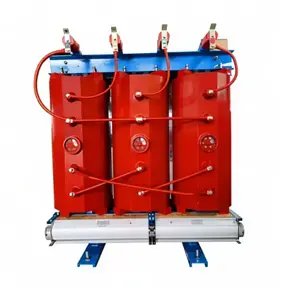
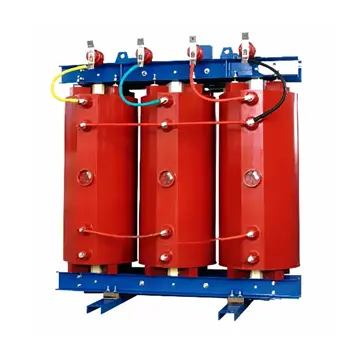
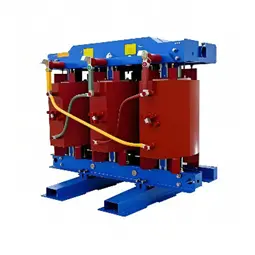
Dry-type grounding transformers use solid insulation (epoxy resin cast or VPI-impregnated windings) and rely on air circulation for cooling. The core and windings are visible and accessible.
Oil-immersed grounding transformers submerge the core and windings in insulating oil, which serves as both the dielectric medium and the coolant. Heat is dissipated through radiators or cooling fins.
Everything else — safety, maintenance, cost, installation — flows from this fundamental distinction.
Dry-Type Grounding Transformers
Advantages
- Fire-safe: No flammable liquid. Self-extinguishing (Class F, 155°C). No explosion risk. Can be installed indoors, in basements, or in occupied buildings.
- Low maintenance: No oil testing, filtering, or replacement. Routine checks are limited to dust cleaning, connection inspection, and infrared thermography.
- Zero oil leakage: No risk of soil or water contamination. Environmentally friendly.
- Compact installation: Can be placed side-by-side with LV switchgear in the same room. No bund wall or fire-rated enclosure required — saving on civil works.
- Low no-load losses: With high-grade core steel or amorphous alloy, no-load losses can match or beat equivalent oil-filled units, reducing running costs over time.
Disadvantages
- Higher upfront cost: Typically 20–50% more expensive than an oil-immersed unit of the same rating.
- Limited capacity and voltage: Generally available up to 2,500 kVA and 10–35 kV. Rarely offered at higher levels.
- Lower overload capability: Solid insulation conducts heat less effectively than oil. Short-term overload is typically limited to 1.2–1.5× rated capacity for no more than 2 hours.
- Sensitive to humidity: Requires IP30 (or higher) enclosure with space heaters in high-moisture environments.
- Costly repairs: Winding damage usually means stripping and recasting the epoxy — repair costs can approach the price of a new unit.
- Slightly higher noise: Typically 55–65 dB(A), though premium designs with low flux density can achieve below 50 dB(A).
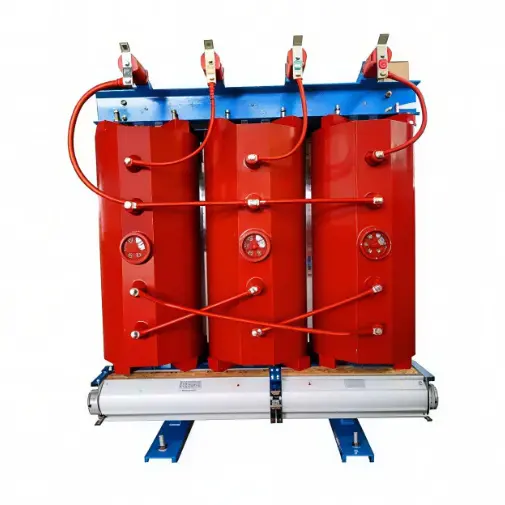
Dry-type Neutral Grounding Transformer Factory China 6kV -35kV
Oil-Immersed Grounding Transformers
Advantages
- Lower upfront cost: 20–50% cheaper than dry-type for the same rating.
- Excellent cooling: Oil has high specific heat and thermal conductivity, supporting continuous high-load operation.
- Strong overload capability: Higher thermal mass handles short-term overloads and冲击 loads well.
- Wide voltage and capacity range: Available from LV to EHV, with virtually no capacity ceiling.
- Humidity-resistant: Oil is insensitive to moisture — ideal for coastal, tropical, or harsh outdoor environments.
- Easier to repair: Damaged windings can be replaced by lifting the core; no need to redo the entire insulation system.
Disadvantages
- Fire and explosion risk: Insulating oil is combustible. Requires bund walls, fire barriers, and suppression systems.
- Higher maintenance burden: Regular oil testing (DGA, moisture, dielectric loss), silica gel replacement, and oil filtering/replacement every 3–5 years.
- Leakage risk: Aging seals can leak, contaminating soil and groundwater.
- Larger footprint: Needs a dedicated outdoor pad or building with fire separation and an oil containment pit.
- Cannot be installed in occupied buildings: Most fire codes prohibit or strictly restrict this.
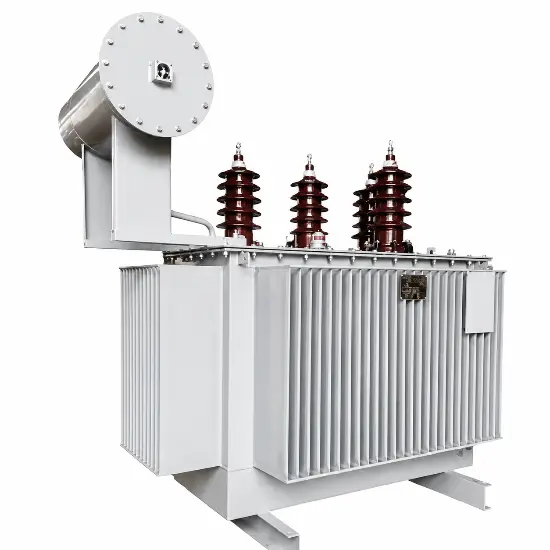
Three Phase Z-type Oil-Immersed Earthing Transformer OEM China 10kV-35kV
Why Grounding Duty Changes the Equation?
A grounding transformer is different from a power transformer: it normally carries only a small unbalanced current and sees significant load only during a single-phase earth fault. This operating profile shifts the balance between the two types:
- Dry-type benefits are amplified. Since the unit runs near no-load most of the time, low no-load loss matters more, and the weaker overload capability is rarely a concern.
- Oil-cooling advantages are underutilized. The superior heat dissipation of oil doesn't add much value when the transformer is seldom loaded.
- Zero-sequence impedance is critical. This parameter directly determines earth fault current magnitude and relay settings — it must be specified in the tender documents.
- Integration with neutral equipment. Grounding transformers are often paired with arc-suppression coils or neutral earthing resistors. Dry-type units can share the same room; oil-filled units require fire separation.
- Offshore and marine applications. Where oil leakage is unacceptable and space is at a premium, dry-type is essentially the only option.
Application Scenarios at a Glance
| Scenario |
Recommended Type |
Why |
| High-rise buildings, basements, data centres, metros |
Dry-type |
Fire safety, indoor installation, zero leakage |
| Hospitals, schools, shopping malls |
Dry-type |
Self-extinguishing, meets fire codes |
| Offshore platforms, ships, mines |
Dry-type |
Zero oil tolerance, compact footprint |
| Outdoor substations, industrial switchyards |
Oil-immersed |
Lower cost, proven reliability, dedicated O&M |
| Wind/solar step-up stations (outdoor) |
Oil-immersed |
Large capacity, outdoor layout, cost-driven |
| Heavy industry (steel, chemicals) with冲击 loads |
Oil-immersed |
Strong overload capability, harsh-environment tolerant |
| Rural networks, temporary construction supply |
Oil-immersed |
Low capex, acceptable maintenance level |
| New residential distribution rooms |
Dry-type |
Code preference, saves civil and fire-protection costs |
How to Choose — A 5-Step Checklist?
- Installation location first. Indoor, basement, or occupied building → dry-type. Outdoor standalone yard → oil-immersed is viable.
- System voltage and capacity. ≤35 kV and medium capacity → both options. Higher voltage → oil-immersed is usually the only practical choice.
- Maintenance capability. A dedicated oil-testing team makes oil-immersed manageable. Limited O&M resources favour dry-type.
- Life-cycle cost, not just capex. Dry-type costs more upfront but saves on civil works, fire protection, and ongoing maintenance. Oil-immersed is cheaper to buy but carries higher long-term O&M and environmental compliance costs.
- Check efficiency standards. For the Chinese market, refer to GB 20052-2024 (Grade 1 or 2). For export projects, align with IEC 60076, IEEE C57, U.S. DOE 2016, or EU 548/2014, depending on the target market.
Bottom Line
Choose dry-type for safety, indoor installation, and low maintenance. Choose oil-immersed for large capacity, outdoor deployment, and lowest upfront cost.
For grounding transformer applications specifically — where the unit operates near no-load for most of its life — the dry-type has become the preferred choice in most new urban MV distribution projects.
Looking for a specific recommendation? Share your system voltage, required capacity, and installation environment, and we can help narrow it down.

 Login
Login