In coastal environments characterised by salt spray, high humidity, large day-to-night temperature swings and condensation, a dry type transformer that relies only on a higher IP rated enclosure, while its windings, core, terminals, fasteners and creepage distances are not designed for corrosion and condensation resistance, is generally more prone to insulation failure than an oil immersed transformer.
The advantage of the oil immersed transformer lies in the fact that the tank and the oil paper insulation system together form a closed system. As long as the sealing is sound, external salt spray and moisture can hardly reach the main insulation directly. In a dry type transformer, by contrast, the windings, insulating surfaces and metal connecting parts depend far more on the enclosure, coatings, seals and environmental control to maintain their insulation level.
This does not mean that dry type transformers cannot be used in coastal environments. The key point is that an IP rating must not be treated as a corrosion protection class, and enclosure protection must not be equated with insulation system protection.
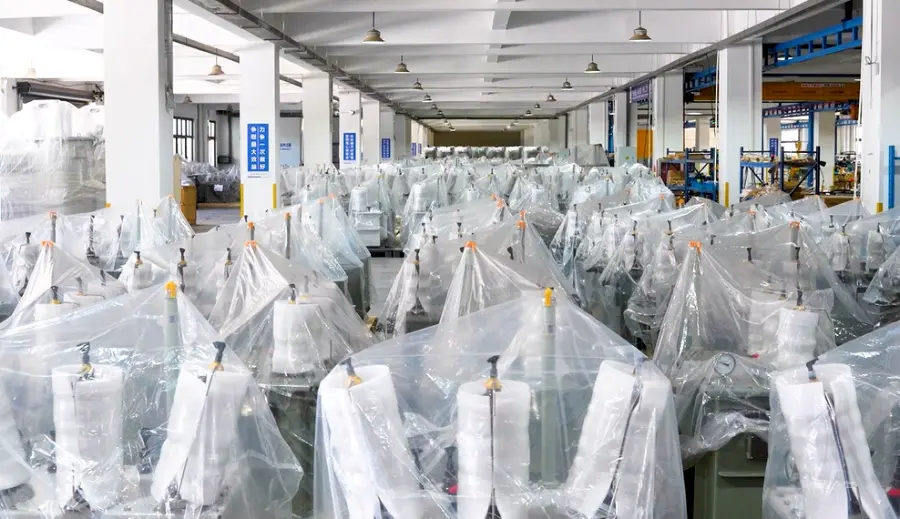
Finished Oil-Immersed Power Transformer Workshop
| Risk source |
Impact on oil immersed transformers |
Impact on dry type transformers |
| Salt spray deposition |
Mainly corrodes the tank, radiators, bushings and external connections, while the main insulation is protected by the tank |
Salt spray entering the enclosure tends to deposit on winding surfaces, terminals and insulating parts |
| Condensation at high humidity |
Moisture ingress occurs if the breather or seals fail, but an oil paper barrier still exists overall |
Condensation can directly reduce surface insulation resistance and induce creepage and partial discharge |
| Conductive salt film |
Affects external insulation and metal parts but does not directly enter the main insulation |
Once moistened, deposited salt forms a conductive film that significantly reduces surface withstand voltage |
| Metal corrosion |
Corrosion of the tank, bolts and grounding parts affects sealing and contact quality |
Corrosion of terminals, clamping structures and fasteners leads to poor contact and local overheating |
| Insulation ageing |
A damp oil paper system requires treatment of both the oil and the solid insulation |
Once epoxy resin cracks or the VPI varnish film is damaged, moisture and salt penetrate more easily |
The greatest danger of coastal salt spray is not simply that it corrodes metal. It is that salt deposited on insulating surfaces forms a conductive film under high humidity or condensation, which increases surface leakage current and in turn triggers creepage, pollution flashover and partial discharge.
Where the winding surfaces, insulating supports and terminal blocks of a dry type transformer remain in such an environment over the long term, the risk is more direct than in an oil immersed unit.
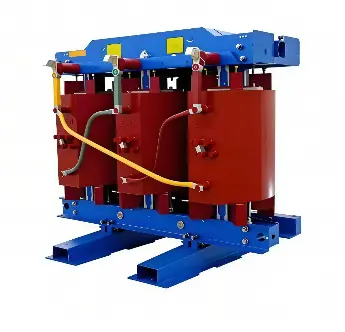
Cast Resin Dry Type distribution Transformer source manufacturer
Why is raising the IP rating alone not enough?
An IP rating only describes an enclosure's ability to keep out solid foreign objects and water, for example dust tight, water jet resistant or spray resistant. It does not evaluate salt spray corrosion, condensation, UV ageing, coating durability, creepage distance, terminal corrosion protection or long term sealing reliability.
Common problems include the following:
- A high IP rating does not mean salt spray protection. IP65 or IP56 can block water jets, but salt spray particles can still enter through gaps, breathing holes, cable entries and aged seals.
- Condensation forms inside the equipment. Even if no water enters the enclosure, the day-to-night temperature difference can produce condensation inside the housing and dampen insulating surfaces.
- Seals age. Rubber gaskets, sealants and cable joints gradually lose their protective capability after long exposure to salt spray and UV radiation.
- Terminals and fasteners remain weak points. However good the enclosure protection, terminals, bolts and grounding bars without corrosion protection treatment will still corrode, overheat and reduce insulation reliability.
- Excessive enclosure sealing can impair heat dissipation. Dry type transformers rely on air cooling. If the enclosure is sealed too tightly without a rational airflow path and dehumidification measures, internal heat and moisture become even harder to discharge.
Therefore, when selecting a dry type transformer it is not enough to specify an enclosure rating of IP54 or IP65. A more rational approach is to treat the IP rating as a baseline requirement and to add salt spray protection, anti-condensation design and external insulation creepage requirements.
- Enclosure material upgrade. Give preference to 304 or 316L stainless steel, or steel plate with a high quality anti-corrosion coating, and select fasteners in salt spray resistant materials.
- Reinforced sealing structure. Use weather resistant seals for door seams, viewing windows, cable entries and ventilation openings so that salt spray cannot blow directly onto the windings.
- Anti-condensation measures. Install heaters, temperature and humidity controllers or forced ventilation to reduce condensation inside the enclosure.
- Stronger winding insulation. Use vacuum pressure impregnation (VPI), epoxy resin casting or a higher grade moisture resistant insulation system to reduce the risk of micropores and moisture absorption.
- Corrosion protection for terminals and connections. High voltage and low voltage terminals, grounding bars and bolts should be tin plated, silver plated, stainless steel or equivalently protected against corrosion.
- Increased external insulation creepage distance. In coastal salt spray environments, verify the specific creepage distance against a higher pollution class and, where necessary, use silicone rubber composite insulating parts or extend the creepage path.
- Verification of salt spray and damp heat performance. Ask the supplier for salt spray test, damp heat test, condensation test and partial discharge test reports, rather than an IP rating certificate alone.
In coastal environments, oil immersed transformers can still develop the following problems:
- Moisture ingress caused by failure of tank welds, gaskets or the breather;
- Corrosion of bushings, terminals and radiators;
- Intake of moisture once the breather silica gel becomes saturated;
- Rising moisture content in the oil over long term operation, which lowers dielectric strength.
Compared with dry type transformers, however, the main insulation of an oil immersed transformer is isolated by the tank and the insulating oil. As long as the sealing and breathing systems are reliable, external salt spray has relatively little direct effect on the main insulation. This is also an important reason why oil immersed transformers remain widely used in coastal, outdoor and heavily polluted environments.
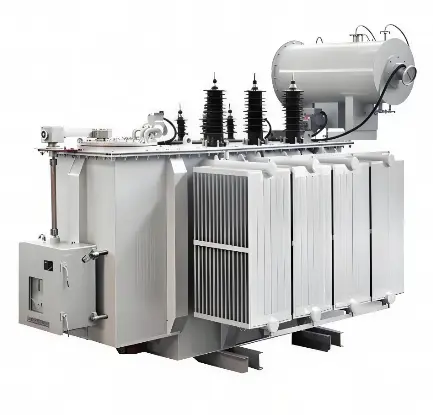
Oil-Immersed Power Transformer supplier
Selection conclusion
- Higher risk of insulation failure. Dry type transformers, especially those that rely only on a higher IP rated enclosure and have no salt spray or anti-condensation design.
- Stronger environmental isolation. Oil immersed transformers, although attention must be paid to tank sealing, breathers, bushings and corrosion protection of external metal parts.
- An IP rating cannot solve corrosion on its own. It is only an enclosure ingress protection index, and cannot replace salt spray protection, anti-condensation design, external insulation creepage verification and material corrosion validation.
For technical documentation aimed at overseas customers, it is advisable to specify all of the following at the same time in the datasheet: enclosure IP rating, corrosivity category of the installation environment, salt spray test duration in hours, anti-condensation solution, specific creepage distance, terminal corrosion protection process and partial discharge limits. This is more professional than simply writing "IP65 corrosion resistant dry type transformer", and it is also more likely to pass project acceptance.
Edited From:Echo

 Login
Login