• Product
  • Suppliers
  • Manufacturers
  • Solutions
  • Free tools
  • Knowledges
  • Experts
  • Communities
Search


Policy-Driven Transformation: Eco-Friendly Solutions Take Center Stage

Baker
Field: News
Engineer
4-6Year
Canada

With the implementation of the EU’s new F-Gas Regulation (Regulation (EU) 2024/573), the power equipment industry is entering a countdown toward environmental transformation. The regulation explicitly prohibits, starting in 2026, the use of fluorinated greenhouse gases in medium-voltage switchgear rated at 24 kV and below. This restriction will be extended to equipment up to 52 kV from 2030 onward, accelerating the industry’s shift away from sulfur hexafluoride (SF₆)—a gas with a high global warming potential.
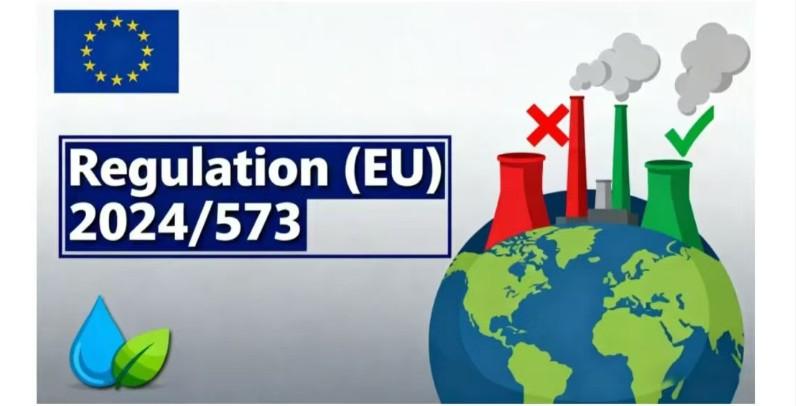
Regulation.jpg

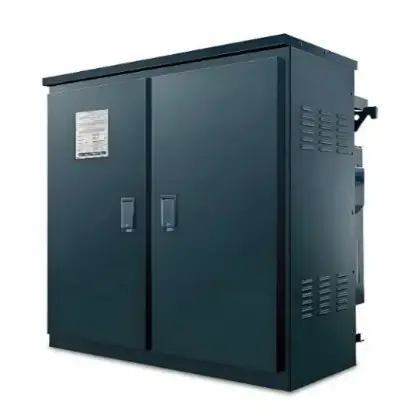
ROCKWILL has launched a highly competitive eco-friendly switchgear solution: the QGG Series Solid Insulated Switchgear. Integrating decades of product development expertise from both Air-Insulated Switchgear (AIS) and Gas-Insulated Switchgear (GIS), the QGG series represents a major breakthrough in medium-voltage technology, offering exceptional operational safety. As a core component of power distribution networks, it is widely deployed across various distribution systems.

The QGG series utilizes vacuum interrupters for arc quenching, and all high-voltage live parts are fully encapsulated using solid insulating materials—specifically epoxy resin—with superior dielectric performance. This design eliminates the need for a pressurized gas chamber (previously operating at 0.03 MPa), achieving true full insulation, complete sealing, and maintenance-free operation.

Equipped with an intelligent online monitoring system, the QGG series enables real-time monitoring of critical internal components, continuously collects operational parameters, and automatically assesses potential fault risks—providing robust protection for both the switchgear itself and the entire distribution line.

After years of dedicated R&D, ROCKWILL’s solid insulated switchgear has evolved into four distinct product series (IV Series), each tailored with unique features to meet diverse application requirements.
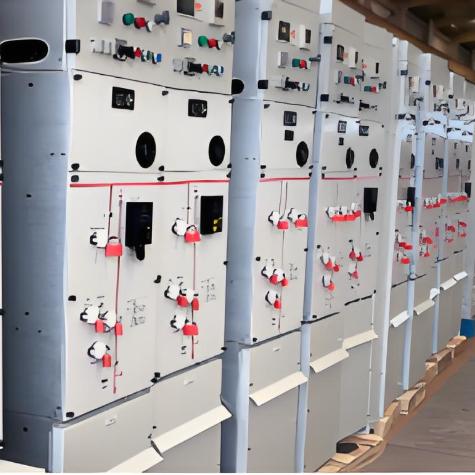
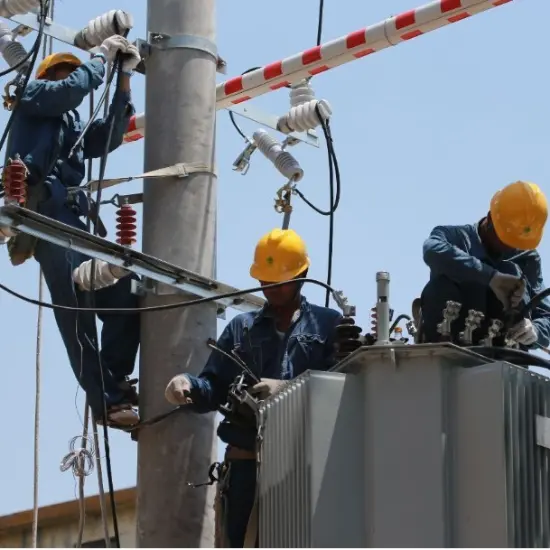
Maintenance-Free solid insulated switchgear Ensuring Stable Power

Give a tip and encourage the author!
Recommended
Impact of DC Bias in Transformers at Renewable Energy Stations Near UHVDC Grounding Electrodes
Impact of DC Bias in Transformers at Renewable Energy Stations Near UHVDC Grounding ElectrodesWhen the grounding electrode of an Ultra-High-Voltage Direct Current (UHVDC) transmission system is located close to a renewable energy power station, the return current flowing through the earth can cause a rise in ground potential around the electrode area. This ground potential rise leads to a shift in the neutral-point potential of nearby power transformers, inducing DC bias (or DC offset) in their
01/15/2026
HECI GCB for Generators – Fast SF6 Circuit Breaker
1.Definition and Function1.1 Role of the Generator Circuit BreakerThe Generator Circuit Breaker (GCB) is a controllable disconnect point located between the generator and the step-up transformer, serving as an interface between the generator and the power grid. Its primary functions include isolating generator-side faults and enabling operational control during generator synchronization and grid connection. The operating principle of a GCB is not significantly different from that of a standard c
01/06/2026
Distribution Equipment Transformer Testing, Inspection, and Maintenance
1.Transformer Maintenance and Inspection Open the low-voltage (LV) circuit breaker of the transformer under maintenance, remove the control power fuse, and hang a “Do Not Close” warning sign on the switch handle. Open the high-voltage (HV) circuit breaker of the transformer under maintenance, close the grounding switch, fully discharge the transformer, lock the HV switchgear, and hang a “Do Not Close” warning sign on the switch handle. For dry-type transformer maintenance: first clean the porcel
12/25/2025
How to Test Insulation Resistance of Distribution Transformers
In practical work, insulation resistance of distribution transformers is generally measured twice: the insulation resistance between thehigh-voltage (HV) windingand thelow-voltage (LV) winding plus the transformer tank, and the insulation resistance between theLV windingand theHV winding plus the transformer tank.If both measurements yield acceptable values, it indicates that the insulation among the HV winding, LV winding, and transformer tank is qualified. If either measurement fails, pairwise
12/25/2025
Send inquiry
+86
Click to upload file

IEE Business will not sell or share your personal information.

Download
Get the IEE Business Application
Use the IEE-Business app to find equipment, obtain solutions, connect with experts, and participate in industry collaboration anytime, anywhere—fully supporting the development of your power projects and business.