The horizontal double-column center-break design is one of the most widely adopted structural configurations for high-voltage disconnect switches worldwide.
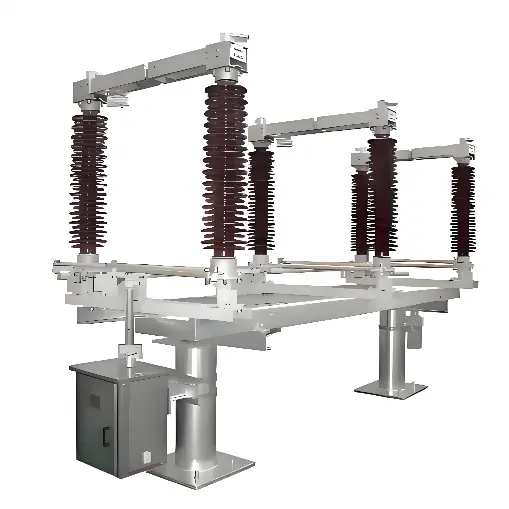
Its core structural features are: each phase consists of two insulating columns, each supporting half of the conducting blade; during opening and closing operations, the two columns rotate in the horizontal plane (typically through 90°), with the blades meeting or separating at the center point between the two columns.
This design offers the following significant advantages:
1. Structural and Mechanical Advantages
- Simple structure, high mechanical reliability: The transmission linkage mechanism is relatively straightforward, without the complex mechanical folding mechanisms found in single-column pantograph (or scissor-type) designs. With fewer moving parts and a direct mode of operation (pure horizontal rotation), the mechanical failure rate is low, and routine maintenance is highly convenient.
- Symmetric force distribution, smooth operation: The simultaneous rotation of both columns (or one active column driving the other) ensures that mechanical forces during operation are highly balanced. The absence of long cantilever arms eliminates eccentric torque, resulting in excellent performance against wind loads and seismic events. For example, Rockwill's RDS series high-voltage disconnect switches employ three-pole linked motor mechanisms at 252 kV, and independent single-pole motor mechanisms with interlocking capability at 363 kV, ensuring smooth and reliable opening and closing operations.
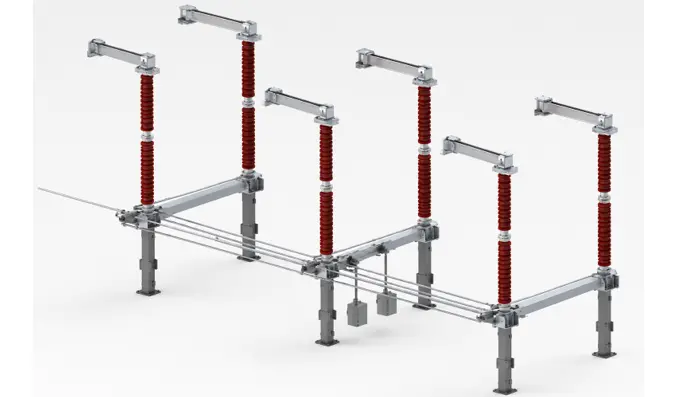
Rockwill RDS 363kV High voltage disconnect switch
2. Operational and Environmental Adaptability Advantages
- Superior ice-breaking and self-cleaning capabilities: This is the most outstanding environmental advantage of this configuration. At the moment of closing, the two sets of contacts meet at the center and undergo a horizontal rotational "shearing" or "wiping" action. This frictional motion generates substantial mechanical force that can easily break through ice coatings; simultaneously, the wiping action removes oxide films and contaminants from the contact surfaces, providing effective self-cleaning that ensures reliable current-carrying performance.
- Low center of gravity, strong resilience to natural disasters: Compared with vertical-break or single-column designs, the overall equipment has a lower center of gravity, and the dual-column support provides greater stability against extreme conditions such as high winds and earthquakes.
3. Safety and Electrical Advantages
- Large and clearly visible disconnecting gap: In the open position, the two conductive arms swing outward horizontally, creating a wide physical air gap at the center. This open gap is highly conspicuous and intuitive, providing an unmistakable visible break that offers maximum safety assurance for maintenance personnel.
- Reliable insulation distance: The insulation gap at the center break relies entirely on the air clearance, and the horizontal opening configuration makes it easy to control phase-to-phase and across-the-break creepage distances, ensuring stable insulation performance.
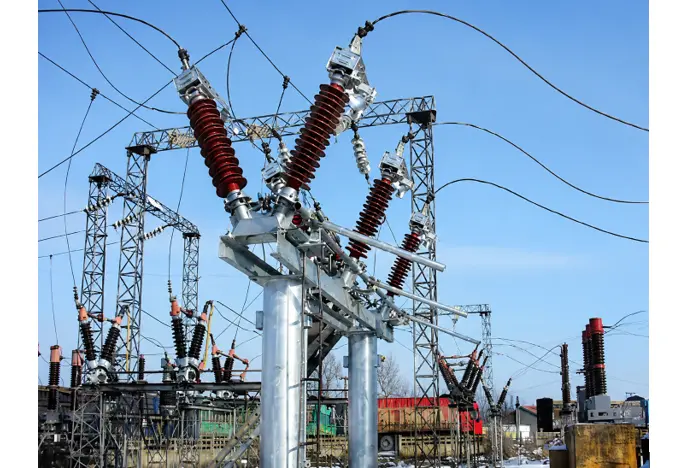
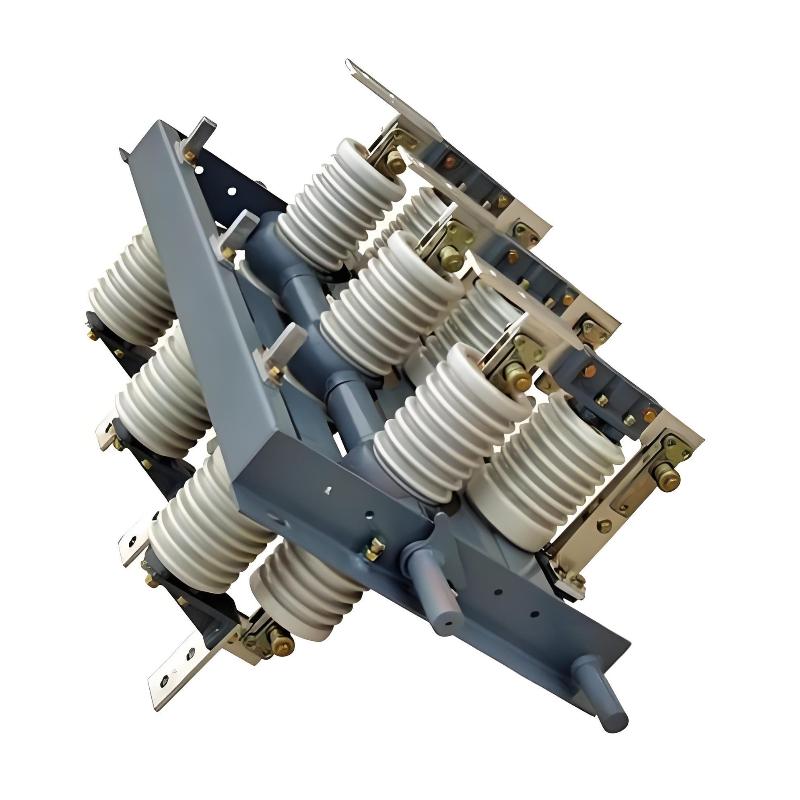
Rockwill RDS 126kV High voltage disconnect switch
4. Economic and Engineering Layout Advantages
- Cost-effective, high value for money: As the most classic and mature type of disconnect switch, its manufacturing processes are well-established, with a high degree of component standardization (e.g., bases, bearings, conductive tubes), resulting in relatively low production costs.
- Flexible configuration of earthing switches: The double-column base design readily accommodates the installation of earthing switches on one or both sides of the main disconnect switch, and the mechanical interlocking (five-interlock) devices between the main blade and the earthing switch are simple to design and reliably operate. Taking Rockwill's RDS series as an example, engineers can flexibly choose to install earthing switches on one or both sides according to the actual wiring requirements of the substation. These earthing switches are typically manually operated, further ensuring absolute reliability and safety during grounding operations after de-energization.
- Minimal vertical space requirement: Compared with vertical-telescoping disconnect switches, this design does not require substantial overhead clearance, making it particularly suitable for conventional outdoor air-insulated substation (AIS) arrangements.
Summary
The horizontal double-column center-break disconnect switch, with its outstanding ice-breaking and self-cleaning capabilities, high mechanical reliability, clearly visible and safe open gap, and economical cost, holds a central position in high-voltage and extra-high-voltage transmission and distribution networks (particularly in outdoor substations from 35 kV to 252 kV and above). It remains the industry's most widely adopted isolation and control device.
Rockwill's RDS series outdoor high-voltage disconnect switches exemplify this mature technological approach. The series employs a horizontal double-column center-break structure per phase—with the conducting blades mounted on rotating insulating columns and opening at the center to create a highly visible isolation gap that establishes a robust safety barrier for equipment maintenance. The lightweight operating torque, combined with refined contact technology, ensures consistently stable mechanical characteristics and excellent conductive performance throughout the equipment's long service life.
Edited From:Garca

 Login