What Are the Differences Between Substations, Switching Stations, and Distribution Rooms?
What Are the Differences Between Substations, Switching Stations, and Distribution Rooms?
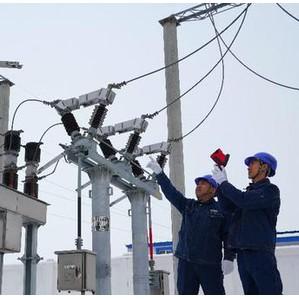
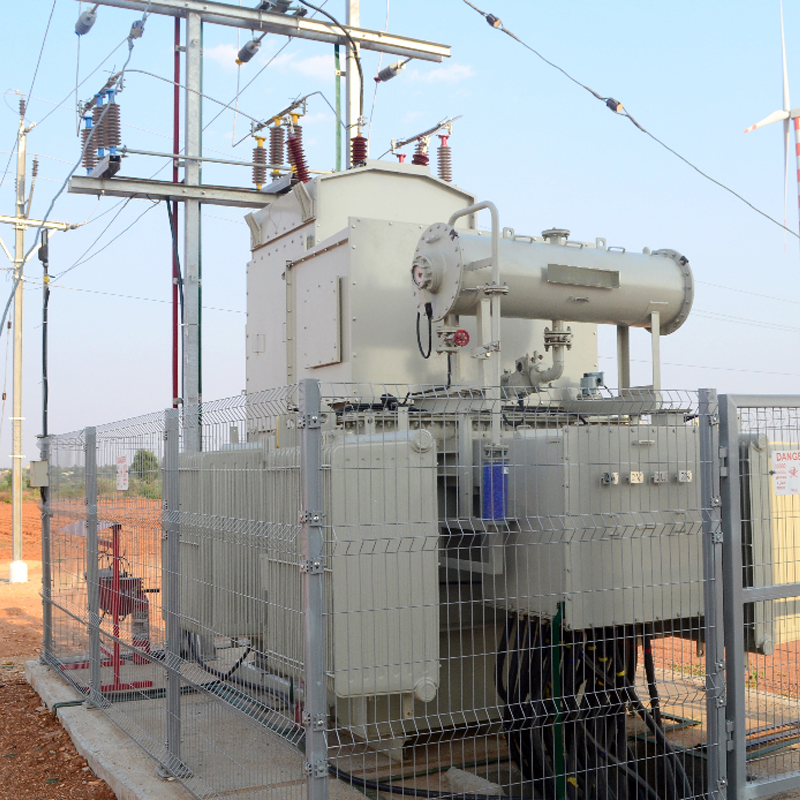
A substation is a power facility in the electric power system that transforms voltage levels, receives and distributes electrical energy, controls the direction of power flow, and adjusts voltage. It interconnects power grids of various voltage levels through its transformers. In specific applications—such as submarine power cables or long-distance transmission—some systems use high-voltage direct current (HVDC) transmission. HVDC overcomes the capacitive reactance losses inherent in AC transmission and offers energy-saving benefits.
Substations primarily step down high voltage to medium voltage or step down high voltage to a slightly lower high voltage level. They occupy relatively large areas, with land requirements varying according to voltage level and capacity. Hence, some people refer to them as “transformer stations.”
Function:
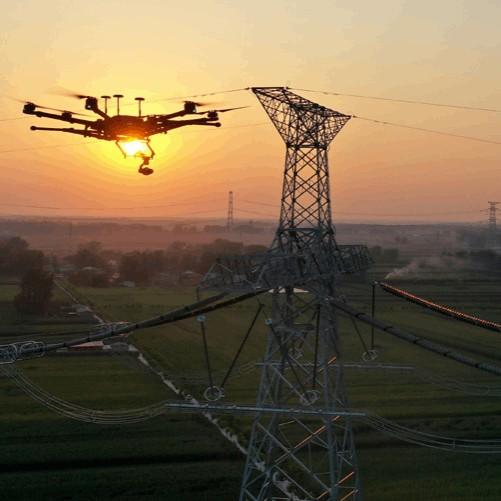
A substation serves as an intermediate facility between power plants and end users. Since power plants are often located far from cities and factories, and the voltage generated by power plants is relatively low, the resulting high current would cause significant heat loss in transmission lines according to Joule’s law. This could damage the lines, and the conversion of electrical energy into heat represents a major inefficiency. Therefore, substations are used to step up the voltage from the power plant for efficient long-distance transmission to urban and industrial areas. Upon arrival, local substations then step down the voltage to the required levels, which are further distributed via distribution networks to provide standard 220 V for everyday use.
Location:
From an economic standpoint, substations should be located close to load centers. From an operational perspective, they should not interfere with production activities or internal transportation within a facility, and access for equipment delivery must be convenient. For safety reasons, substations should avoid flammable or explosive areas. In general, substations should be situated on the upwind side of a site, away from areas where dust and fibers tend to accumulate, and should not be placed in densely populated zones. Substation siting and construction must also account for fire suppression, corrosion resistance, pollution control, waterproofing, rain and snow protection, seismic resistance, and prevention of small animal intrusion.
Distribution Substation
Definition:
A distribution substation is also a facility for changing voltage levels. It is a location in the power system where voltage and current are transformed, centralized, and distributed. To ensure power quality and equipment safety, voltage regulation, current control, and protection of transmission/distribution lines and major electrical equipment are also performed here. Substations can be categorized by application into power distribution substations and traction substations (used for electric railways and trams). According to China’s national standard GB50053-94 "Code for Design of 10 kV and Below Substations," a substation is defined as “a facility where AC power at 10 kV or below is stepped down by a power transformer to supply electrical loads.” Any facility meeting this definition qualifies as a substation.

Function:
The role of a substation is to receive electricity from power stations, typically at voltages no higher than 1–2 kV. Direct long-distance transmission at such low voltages would result in very high line currents, causing excessive power losses and low transmission efficiency. Therefore, transformers are used to step up the voltage to tens or even hundreds of kilovolts (depending on distance and power demand) to reduce line current. To interconnect power lines of varying distances and capacities into a unified grid and enhance overall system reliability, multiple substations are needed to match and link different voltage levels. Similarly, after high-voltage power reaches its destination, it must be stepped down to levels such as 10.5 kV, 6.3 kV, or 400 V (i.e., 380/220 V) to meet diverse user needs. Thus, numerous substations are required in practice. Typically, a main substation refers to a primary substation, with secondary substations downstream. The primary substation handles high-voltage switching and distribution but does not perform voltage transformation itself.
Distribution Room (or Switchgear Room)
Definition:
A distribution room is also called a distribution substation. According to national standards, a distribution room is defined as “a facility containing only high-voltage switchgear for opening/closing circuits and distributing electrical power, with no main power transformer on the busbar.” Distribution rooms operate at voltage levels below 35 kV and house equipment such as circuit breakers, instrument transformers, capacitors, and associated protective and metering devices. In simple terms, it is a building that houses high-voltage switchgear cabinets, incoming/outgoing line panels, etc.—this constitutes a distribution room (or chamber). Larger facilities may include multiple high-voltage and low-voltage switchgear cabinets to perform voltage transformation and power distribution.
The terms “substation” and “distribution room” often refer to transformer and distribution rooms in residential complexes or commercial buildings. The distribution room is a critical component of a building’s power supply system. Dedicated electricians provide 24-hour operational monitoring. Unauthorized personnel are prohibited from entering without approval from the property management manager or department head. Operators must be certified, familiar with the equipment, operation procedures, and safety protocols. They must closely monitor readings from voltmeters, ammeters, and power factor meters, and must never allow air circuit breakers to operate under overload conditions. The floor and equipment surfaces in the distribution room must be kept clean and dust-free at all times. Switching operations are performed by on-duty personnel with a supervisor present; two people must never perform switching operations simultaneously to avoid errors.
Switching Station (or Switchgear Station)
Definition:
A switching station refers to a distribution substation that does not perform voltage transformation but uses switching equipment to open or close electrical circuits. It is a power facility located one level below a substation in the power system, distributing high-voltage electricity to one or multiple surrounding power consumers. Its key characteristic is that the incoming and outgoing line voltages are identical. While regional substations may also perform switching functions, it should be clearly noted that a switching station is distinct from a substation.
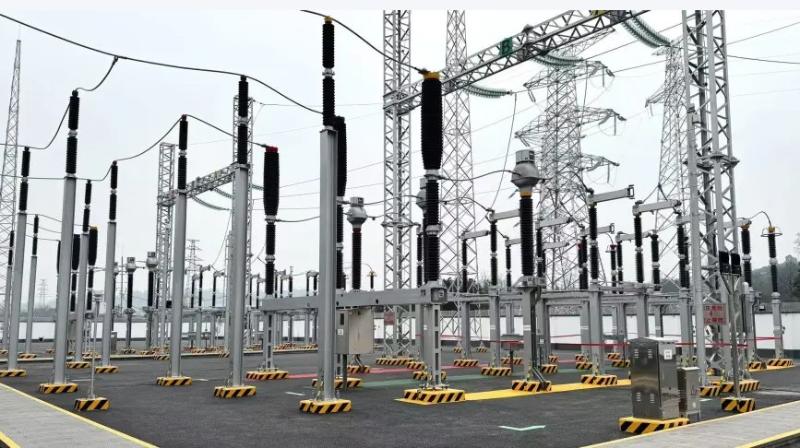
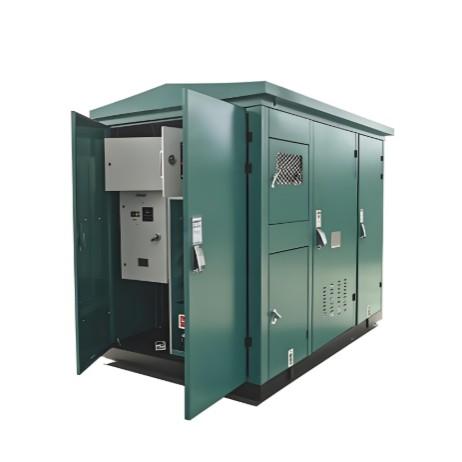
A switching station is also defined as a power supply and distribution facility used to receive and distribute electric power. In high-voltage transmission networks, it is commonly called a "switching station" or "switchyard." In medium-voltage distribution networks, switching stations are typically used for receiving and distributing 10 kV power. Such stations usually have two incoming feeders and multiple outgoing feeders (commonly 4 to 6). Depending on specific requirements, circuit breakers or load break switches may be installed on the incoming and outgoing lines. The equipment is typically an all-metal enclosed switchgear assembly rated for outdoor operation at voltage levels up to 10 kV. A typical switching station has a transfer capacity of approximately 8,000 kW and supplies medium-voltage power to local transformer or distribution rooms within a district or area.
Function:
Segments the power supply feeder to limit the scope of outages during faults, thereby improving power supply reliability and flexibility;
Reduces the complexity of substations;
Does not change voltage levels but increases the number of feeder circuits—functionally equivalent to a distribution substation.
Location:
Switching stations are typically located near railway stations, freight yards, electric locomotive depots, hub stations, or other locations with large concentrated loads.