The 45° inclined (or angled) design of high-voltage and low-voltage bushings on some distribution transformers — particularly those used in compact substations, American-style pad-mounted transformers, or space-constrained installations — is driven by engineering considerations spanning electrical insulation, mechanical stress, spatial utilization, and environmental adaptability. The specific reasons are as follows:
1. Optimized Wiring Stress and Cable Bending Radius (Mechanical Stress)
Distribution transformer incoming and outgoing cables are typically heavy and rigid. If bushings are mounted vertically upward, the cables require a large bending radius above the transformer, making connections difficult. If mounted horizontally outward, the weight of the hanging cables imposes significant cantilever shear stress on the bushing roots, potentially leading to oil leakage or porcelain fracture.
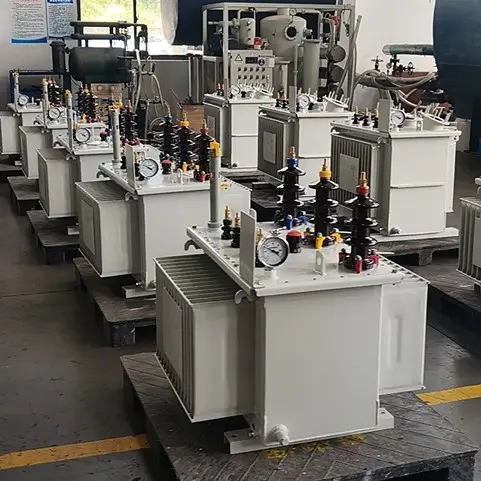
The 45° inclined design naturally aligns with the gravity-induced droop trajectory of the cables, significantly reducing mechanical stress at the bushing roots. The Vziman Distribution Transformer SM-33/6.6, with its self-adapting 45° inclined bushing structure, achieves seamless connection with overhead cables, perfectly meeting the on-site installation requirements of the project.
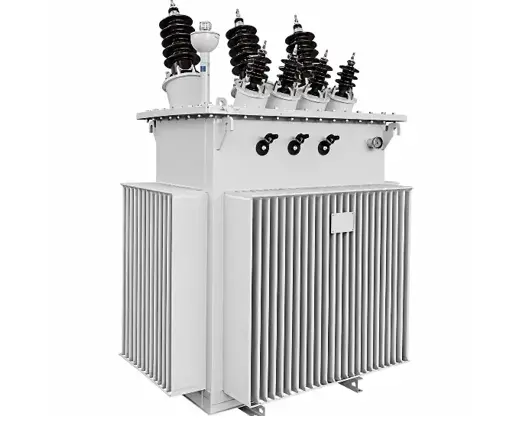
Vziman S-M-33/6.6 Oil-Immersed Step-Down Transformer
2. Reduced Overall Equipment Height and Compensated Accessory Space (Spatial Utilization)
In urban distribution networks or space-constrained environments, vertically mounted high-voltage bushings occupy significant top clearance. The 45° inclined design effectively reduces the overall vertical height of the transformer, resulting in a more compact footprint.
This is particularly critical for the Vziman Distribution Transformer SM-33/6.6: to provide enhanced fault protection, the unit is equipped with both high-voltage and low-voltage fuses, which inherently increases its overall height compared to standard transformers. The 45° inclined bushing design not only resolves the spatial challenges posed by the increased height but also preserves the equipment's superior environmental adaptability.
3. Increased Electrical Safety Clearance (Insulation Performance)
Strict air insulation clearance requirements must be met between high-voltage bushings (phase-to-phase) and between bushings and the transformer tank (phase-to-ground). The inclined installation spreads the bushing terminals outward in an umbrella-like pattern, effectively increasing the phase-to-phase distance between terminal connections within the limited tank cover area, thereby preventing flashover caused by insufficient air clearance.
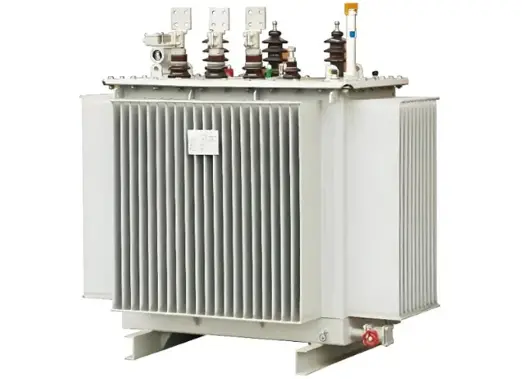
Vziman S11-M-6.3/600 Fully sealed oil-immersed distribution transformer
4. Improved Anti-Pollution Flashover and Rain/Snow Shedding Capability (Environmental Adaptability)
For outdoor distribution transformers, the 45° inclined shed profile facilitates rapid rainwater runoff, which not only washes away surface contaminants (self-cleaning) but also prevents snow or ice accumulation on the top in winter. Additionally, the inclined surfaces and terminals make it difficult for birds, feral cats, and other animals to perch or nest, significantly reducing the risk of phase-to-phase short circuits caused by animal bridging.
5. Internal Gas Venting and Insulating Oil Infiltration (Internal Structure)
For oil-immersed transformers, gas pockets (bubbles) must not accumulate within the internal structure, as they can trigger partial discharge. If bushings are mounted perfectly horizontally, air pockets may form inside the bushing or at its root. The 45° inclined angle ensures that insulating oil fully fills the bushing root, while any trace gases generated during operation can smoothly migrate upward along the inclined surface to the tank top or the gas relay.
Conclusion
The 45° inclined bushing is not merely a physical reorientation — it is a customized design solution tailored to the complexities of real-world distribution networks. The Distribution Transformer Vziman SM-33/6.6 not only delivers highly efficient and stable power transmission through advanced manufacturing processes, but also upholds the series' proven track record of zero faults for consecutive years through Vziman's stringent factory acceptance testing, ensuring long-term maintenance-free operation.
Edited From:Echo

 Login